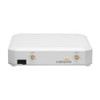
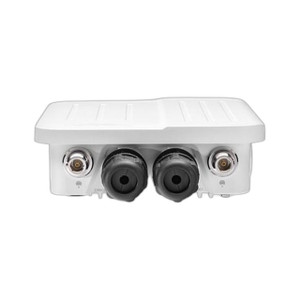
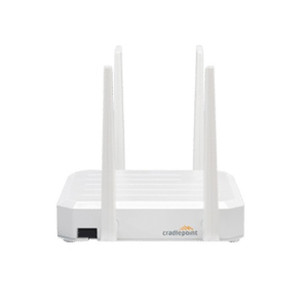
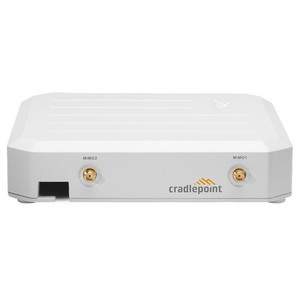
Cradlepoint BE03-1850-5GC-GN 5G Wideband Adapter
The Cradlepoint BE03-1850-5GC-GN is a managed 5G wideband adapter purpose-built for branch office and remote site connectivity where primary or backup wireless WAN is required. It combines a unified 5G/4G/LTE modem with 2.5 Gigabit Ethernet uplink—a meaningful step up from standard gigabit connections when you need to maximize throughput on the fixed side of the radio link. Deploy it where SD-WAN, MPLS failover, or hybrid connectivity strategies demand a compact, remotely manageable cellular device.
Key Features
- 5G, 4G, and LTE Modem: Multiprotocol cellular fallback means the adapter will connect via whichever carrier standard has the strongest signal and best availability at your site—no manual mode switching required. Useful when 5G coverage is spotty or carrier handoffs are frequent.
- 2.5 Gigabit Ethernet Uplink: Unlike standard 1GE adapters, the 2.5GE port delivers higher throughput to your LAN or WAN aggregate, reducing bottlenecks when cellular bandwidth scales up with newer 5G devices. Pairs well with enterprise edge routers and network aggregation points.
- NetCloud Management Platform: Centralized provisioning, performance monitoring, and firmware updates across all deployed units eliminate manual SSH access and streamline policy enforcement. Real-time signal strength and connection metrics feed directly into dashboards—essential for tracking cellular reliability across dispersed sites.
- Desktop or Wall-Mount Form Factor: Small footprint (wall-mount bracket available separately) suits both pole-mounted outdoor enclosures and indoor desk deployments. Dimensions and weight are modest enough for retrofit into existing cabinet spaces without major rework.
- Power over Ethernet (PoE) Injection: Device operates over PoE, reducing cabling complexity on remote towers and outdoor installations—no separate 12VDC or 110-240VAC run required if your power infrastructure already supports PoE delivery to the site.
- Multi-Carrier Cellular Support: Works across major North American and international carriers with support for multiple frequency bands. Simplifies inventory and spares management when deploying across regions with different carrier dominance.
Integration & Compatibility
The BE03-1850-5GC-GN integrates with Cradlepoint's Cradlepoint NetCloud management suite for visibility and control. It also supports standard network interfaces—Ethernet handoff works with any layer 3 switching or routing architecture that speaks TCP/IP, making it vendor-agnostic downstream of the cellular modem. Enterprise deployments often pair this with enterprise-grade network switches to manage PoE injection at scale and enforce VLAN isolation between sites.
For remote sites with existing IP security cameras or industrial sensors already on the network, the BE03-1850-5GC-GN serves as the WAN gateway. NetCloud can track application performance, prioritize traffic, and monitor link health—a feature set that justifies the management overhead in multi-site operations.
When to Choose a Different Model
If your sites have reliable, high-capacity wired WAN already in place (fiber, MPLS) and you only need basic cellular failover without management overhead, a simpler, non-managed 4G/LTE adapter may be sufficient and reduce operational burden. If you deploy in sub-Saharan Africa, Southeast Asia, or other regions with limited 5G infrastructure, verify carrier band support before ordering—4G/LTE fallback is robust, but 5G availability varies widely.
Frequently Asked Questions
Q: Does the BE03-1850-5GC-GN require a separate power supply?
A: No. It operates over PoE (Power over Ethernet), so if you have PoE delivery to your site, no additional power infrastructure is needed. This is especially valuable for remote locations where 110-240VAC or 12VDC lines are inconvenient or absent.
Q: Can I deploy this without NetCloud management?
A: Technically yes—the modem will function in standalone mode and connect to cellular networks. However, you lose centralized monitoring, remote configuration, and firmware update capabilities. For single or dual-site deployments, standalone operation is workable; for 10+ sites, NetCloud management pays for itself through reduced troubleshooting time.
Q: What WAN protocols does it support?
A: It provides a standard Ethernet interface, so it supports any layer 2 or layer 3 protocol your upstream network speaks—Ethernet, IP, VLAN tagging, etc. VPN, SD-WAN overlays, and dynamic routing protocols all work as expected on the wired side.
Q: Is 2.5 Gigabit Ethernet necessary, or is standard 1GE sufficient?
A: For most sites, 1GE is ample—cellular bandwidth rarely saturates gigabit pipes. However, if you aggregate multiple streams (video, VoIP, cloud sync) or expect sub-100ms latency SLAs, the 2.5GE headroom reduces contention and packet loss. It's especially relevant if your site is a hub for other branches via SD-WAN mesh.
Q: What's the warranty?
A: Refer to your Cradlepoint service agreement or contact the distributor for warranty terms. Standard enterprise warranties are common; extended support and on-site replacement options are typically available.
Q: Does this support redundant cellular (dual modem)?
A: The BE03-1850-5GC-GN is single-modem. For carrier redundancy, deploy two units in an active-passive or active-active load-balance configuration at the site—NetCloud can orchestrate failover between them.
Ted PerryPerspective based on aggregated IP Security Depot and affiliated engineering team experience.
The Cradlepoint BE03-1850-5GC-GN (often searched as BE03 1850 5GC GN) is a solid choice for branch connectivity where cellular is primary or backup WAN and you need visibility across multiple sites. The 2.5GE uplink is the standout spec here—it removes a common pinch point in hybrid WAN designs where 1GE gateways become the bottleneck when 5G starts delivering real throughput. PoE operation is a genuine convenience for remote tower and outdoor cabinet deployments.
Technical Highlights:
- 2.5 Gigabit Ethernet Uplink: Eliminates the 1GE ceiling that plagues older cellular gateways. When 5G or dual-carrier aggregation is live, you won't see throughput collapse below the radio link's actual capacity. Matters most in hub-and-spoke SD-WAN topologies where site aggregation is high.
- Multi-Protocol 5G/4G/LTE Fallback: Automatic mode selection means no manual intervention when coverage shifts. Beats single-protocol gateways on reliability, especially in regions with patchy 5G rollout or carrier congestion during peak hours.
- NetCloud Centralized Management: Remote firmware push, KPI dashboards, and policy provisioning save weeks of manual site visits across 20+ locations. The management overhead is real—don't deploy this in a single-site scenario expecting zero operational load.
Deployment Considerations:
- Standalone vs. Managed: The unit works in standalone mode (bare modem), but lose NetCloud, and you're doing carrier troubleshooting via SSH. Not ideal for distributed teams or compliance-heavy environments.
- Single Modem Architecture: One radio means one carrier at a time (with fallback). For true carrier diversity and sub-second failover, you need two units. Plan your redundancy strategy upfront—NetCloud can handle active-active orchestration if your WAN router supports load balancing.
- PoE Power Dependency: Convenient for remote sites, but if your PoE injector or source fails, the gateway goes dark. Ensure redundant power delivery at the injection point—dual PSU injection, UPS backup, or carrier-grade PoE switches with hot-swappable modules.
Best fit: multi-site branch offices, SD-WAN edge hubs, and remote warehouse or logistics facilities where cellular is WAN primary and you have 15+ locations to manage. Skip this if you have a single site with stable fiber WAN and only need dumb cellular backup—the management tax isn't worth it.