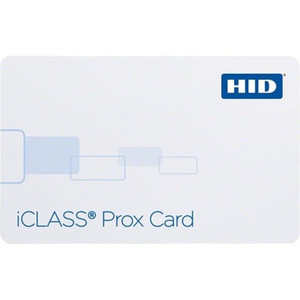
HID 2122BG1MNN Composite Prox 16K/16 Prog F-Gloss Card
When you're deploying access control systems that demand both physical durability and flexible credential programming, composite prox cards bridge the gap between standard clamshell cards and higher-security solutions. The HID 2122BG1MNN delivers 16K bits of memory with 16 programmable application areas, enabling multi-application deployments where a single credential handles building access, parking, time and attendance, and logical access without carrying multiple cards.
Key Features
- Composite construction combines PVC layers with polyester core for increased durability over standard PVC cards
- 125 kHz proximity technology compatible with HID ProxPoint and ProxPro readers already in your infrastructure
- 16K-bit memory with 16 programmable application areas supports multi-technology deployments
- F-gloss finish provides professional appearance suitable for photo ID badge programs
- Standard CR80 credit card dimensions (3.375" x 2.125") fit existing badge holders and lanyards
- Enhanced bend and break resistance compared to PVC-only cards reduces replacement costs in high-use environments
- Direct-to-card printable surface accepts dye-sublimation and thermal transfer printing
- Programmable format allows site-specific configuration for facility code and card number ranges
The composite construction matters in real-world deployments. Where standard PVC prox cards crack or delaminate in extreme temperatures or high-flex environments—industrial facilities, outdoor gates, employee badges that go through wash cycles—the polyester core layer maintains structural integrity. The F-gloss finish accepts high-quality photo ID printing while resisting scratching and surface wear that degrades card appearance over the credential lifecycle.
The programmable 16-application architecture future-proofs installations where you're consolidating multiple legacy systems onto a single card platform. Program one application area for building access, another for parking gate control, another for print release, and reserve additional areas for systems you'll integrate later. This eliminates the workflow disruption and credential reissuance costs that come with migrating from single-application cards to multi-technology credentials as system requirements expand.