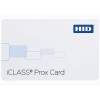
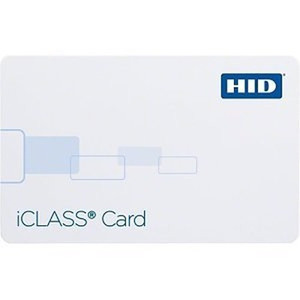
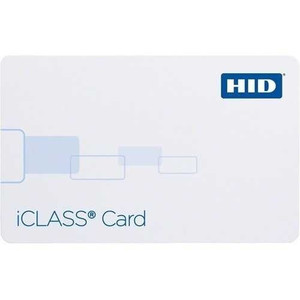
HID 2122BGGMNN Composite iClass/Prox 16K/16 Prog F-Gloss Matching iClass# NO Slot
When you're migrating from legacy proximity to iClass but need to maintain backward compatibility across mixed-reader environments, composite credentials eliminate the hardware replacement bottleneck. The HID 2122BGGMNN delivers dual-technology iClass 16k bit and 125 kHz prox in a single card form factor, allowing phased system upgrades without stranding existing cardholders or requiring simultaneous infrastructure replacement across all entry points.
Key Features
- Dual-technology iClass 16k bit (13.56 MHz) and proximity (125 kHz) credentials in single card body
- 16k bit memory with 16 application areas provides capacity for multiple applications beyond access control
- Programmed format with matching iClass and proximity facility codes for seamless migration paths
- Front-side glossy finish on both sides delivers professional appearance and durability in high-visibility applications
- No slot punch — smooth card face prevents delamination points and maintains structural integrity
- Standard CR80 credit card dimensions compatible with existing photo ID badge programs
- Composite construction balances durability with cost-effectiveness for large-scale deployments
The composite card construction uses PVC-polyester layering that provides adequate durability for typical access control deployments while keeping per-credential costs manageable during large-scale rollouts. The glossy finish on both faces accepts direct-to-card printing and thermal transfer overlaminate, integrating with photo badging workflows already in place. Programmed credentials arrive with matching facility codes across both technologies, eliminating the programming coordination headaches that plague mixed-technology migrations.
The 16k memory architecture supports segmented application areas, enabling you to run access control on primary sectors while reserving capacity for cashless vending, time-and-attendance, or print-release systems on the same credential. The no-slot design eliminates a common failure point where punched holes create stress concentrations that lead to premature card breakage. Plan on read ranges typical of composite credentials — slightly shorter than clamshell prox but sufficient for standard reader mounting in controlled entry scenarios.