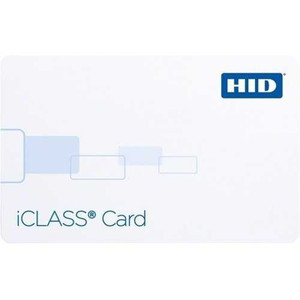
HID 2100PG1MV Composite iClass 2K/2 Programmable Proximity Card
When you're managing facilities with mixed legacy proximity and newer iClass systems, dual-technology credentials eliminate the headache of swapping cards during migration. The HID 2100PG1MV delivers both 125 kHz prox and 13.56 MHz iClass SE technology in a single composite card, letting you phase out older readers at your own pace without reissuing credentials to every cardholder.
Key Features
- Dual-technology design combines 125 kHz proximity and 13.56 MHz iClass SE in one credential
- 2K bit (256 byte) memory with 2 application areas for access control plus additional data
- Composite PVC construction provides durability for daily carry and moderate wear environments
- Programmable format allows customization to existing facility codes and card formats
- Standard CR80 credit card size fits existing badge holders and slot readers
- iClass SE platform with SIO (Secure Identity Object) for encrypted credential data
- Compatible with existing HID prox and iClass readers without infrastructure changes
- Supports both high-security and standard proximity applications on a single card
The programmable format capability is critical for integrators working with established access control systems. You can encode the prox side to match legacy facility codes while provisioning the iClass SE side with secure credentials for newer high-security zones. This means end users can present the same card at both older warehouse perimeter readers and newer executive suite installations without carrying multiple credentials.
The composite construction strikes a balance between cost and durability for most commercial applications. It's not designed for extreme industrial environments or heavy lamination, but it handles typical indoor office use and moderate outdoor exposure. The 2K memory split across two application areas gives you room for access control credentials plus secondary data like cashless vending or print management. If you're running a phased reader upgrade across multiple buildings or campuses, this dual-tech approach keeps the project manageable without forcing a total rip-and-replace scenario.