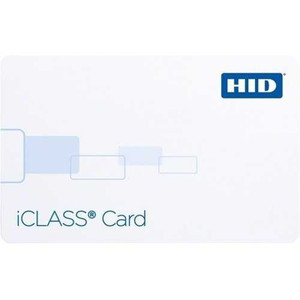
HID 2100PGGAV Composite iClass 2K/2 Programmable Access Card
When you need durable, reliable credentials for high-throughput environments where PVC cards won't survive the wear, composite construction delivers the resilience your deployment demands. The HID 2100PGGAV combines iClass 13.56 MHz contactless technology with composite card construction, built to withstand the physical stress of frequent handling, extreme temperatures, and harsh environmental conditions that cause standard PVC cards to crack, warp, or delaminate.
Key Features
- iClass 13.56 MHz contactless smart card technology for secure, fast credential presentation
- Composite construction (PVC/PET blend) engineered for superior durability in demanding environments
- 2K bit (256 byte) memory with two application areas for access control and additional applications
- Programmable format allows site-specific customization and multi-technology migration strategies
- Standard CR80 credit card dimensions (3.375" x 2.125") for universal compatibility with existing card printer infrastructure
- Operating temperature range exceeds standard PVC limitations for outdoor and industrial applications
- Resistant to cracking, warping, and delamination under repeated use and environmental stress
- Compatible with HID iClass readers and multi-technology platforms
Composite card construction solves the chronic durability problems that plague high-volume access deployments. In manufacturing facilities, warehouses, hospitals, and outdoor gate applications, standard PVC credentials fail prematurely from temperature cycling, UV exposure, and mechanical stress. The PVC/PET composite blend maintains structural integrity across wider temperature ranges and resists the physical damage that forces premature card replacement and drives up total cost of ownership.
The programmable 2K/2 format provides the flexibility modern access systems require. You can configure credentials to match existing site codes during migrations, implement dual-use scenarios where the same card handles both access control and cashless payment or time tracking, or reserve memory space for future applications without reissuing cards. This programmability reduces deployment complexity when integrating with legacy systems or planning phased technology upgrades across multiple facilities.