
Speco Technologies H6HRLN2TB vs Speco Technologies H6WHRLN10TB: Specification Comparison
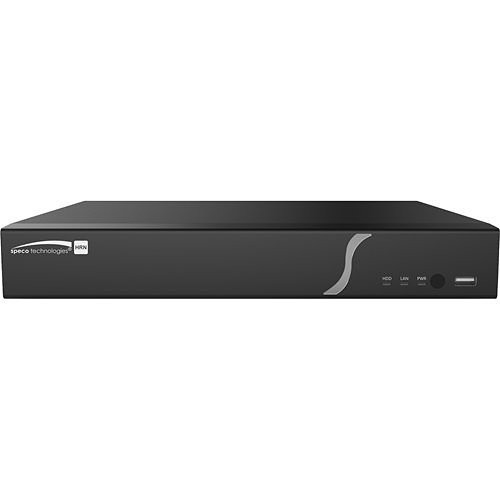
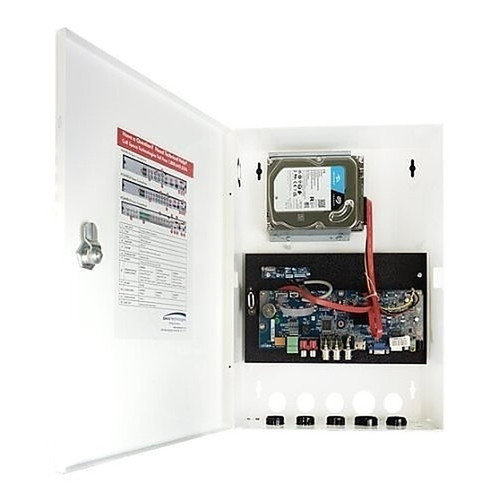
Both the H6HRLN2TB and H6WHRLN10TB are Speco Technologies 6-channel hybrid recorders designed for mixed TVI-analog and IP camera deployments. Each offers 4 hybrid TVI/IP channels plus 2 dedicated IP channels, H.265/H.264 compression, and NDAA compliance. The primary decision axis between these two units is storage capacity and physical form factor: the H6HRLN2TB is a rack-mount unit shipping with 2TB, while the H6WHRLN10TB is a wall/ceiling-mount unit shipping with 10TB. Both carry identical 2-year warranties.
In This Guide
- How much onboard storage does each recorder provide, and what does that mean for retention at 6 channels?
- How does each unit mount, and what are the physical and power requirements at the installation site?
- How do these recorders integrate with cameras and enterprise systems, and what compliance certifications apply?
- Which should you choose: the H6HRLN2TB or the H6WHRLN10TB?
- Side-by-Side Specs
- FAQ
How much onboard storage does each recorder provide, and what does that mean for retention at 6 channels?
The H6HRLN2TB ships with a 2TB internal hard drive. At 6 simultaneous channels — all recording at standard frame rates — 2TB will deliver a materially shorter retention window. For reference, 6 channels of H.265 at 1080p/15fps typically yields roughly 7–10 days of continuous footage on 2TB; the exact figure varies with scene complexity and bitrate settings.
The H6WHRLN10TB ships with 10TB of built-in storage — five times the capacity of the H6HRLN2TB. Under equivalent recording conditions, 10TB extends that retention window proportionally to roughly 35–50 days of continuous footage across all 6 channels. Neither model's datasheet specifies maximum drive expansion bays or upper storage limits beyond the shipped configuration, so buyers requiring capacity beyond the shipped drives should verify expandability directly with Speco before purchase.
For any deployment where 30+ day retention is a compliance requirement — retail loss prevention, municipal installations, or healthcare facilities — the H6WHRLN10TB's 10TB advantage is decisive without adding external NAS.
How does each unit mount, and what are the physical and power requirements at the installation site?
The H6HRLN2TB is a rack-mount unit. Its specified dimensions are 11.8" x 9.8" x 1.8" (with a second dimension set of 15" x 10.6" x 1.8" also listed — the datasheet appears to cover a family including H16HRLN and H24HRLN, so installers should confirm the exact 6-channel chassis dimensions). Rack ears are noted as included for the H16HRLN and H24HRLN models; the 6-channel unit should be verified separately. Power supply is specified as DC 12V/2A (with DC 12V/4A also listed for larger family members). The rack form factor suits server-room or IDF-closet deployments with existing 19" rack infrastructure.
The H6WHRLN10TB is a wall- and ceiling-mount unit with confirmed dimensions of 17.6" x 4.0" x 13.0" and a shipping weight of 5.0 lbs. No rack-mount option is specified. Its form factor suits installations where rack space is unavailable — retail back-of-house walls, warehouse columns, or facility utility rooms. No power supply voltage is cleanly specified in the provided specs for the H6WHRLN10TB; the listed 'Nominal Voltage' field references LED/Horn Strobe values that appear to be a data-population error and should not be relied upon. Buyers should confirm power requirements from the Speco datasheet at /content/product-datasheets/H6WHRLN10TB.pdf.
Installation teams should note that the H6HRLN2TB's rack mount integrates cleanly into structured-cabling environments, while the H6WHRLN10TB's wall mount offers placement flexibility closer to the camera field without rack infrastructure — at the cost of a potentially less secured physical location.
How do these recorders integrate with cameras and enterprise systems, and what compliance certifications apply?
Both units share the same 6-channel hybrid architecture: 4 channels accept either TVI analog or IP cameras (mixed within the same recorder), and 2 channels are dedicated IP. Both support H.265 and H.264 compression and are NDAA compliant — a mandatory procurement requirement for U.S. federal, state, and many municipal contracts.
The H6HRLN2TB explicitly specifies ONVIF-compatible IP video, which is the industry standard for VMS interoperability with platforms such as Milestone, Genetec, Avigilon, and others. It also specifies a single RJ45 10M/100Mbps (and a second 10M/100M/1000Mbps) network interface, two-way audio, and an embedded Linux operating system. Remote monitoring, recording, playback, and configuration are noted as supported capabilities.
The H6WHRLN10TB does not explicitly list ONVIF compatibility or network interface specifications in the provided data. 'Compatible With: mixed-format' confirms hybrid input support but stops short of a specific VMS integration claim. Buyers deploying into an enterprise VMS environment should confirm ONVIF or SDK compatibility for the H6WHRLN10TB directly with Speco prior to specification. Both units carry identical 2-year warranties, and neither lists operating temperature range or humidity tolerance in the provided specs.
Which should you choose: the H6HRLN2TB or the H6WHRLN10TB?
Our take: The H6HRLN2TB is the stronger choice when rack-mount installation, confirmed ONVIF VMS integration, and lower upfront cost on a shorter-retention site are the priorities. The H6WHRLN10TB is the stronger choice when extended on-device retention is the primary requirement and wall- or ceiling-mount installation is preferred or necessary. The three concrete spec deltas are: (1) storage — 10TB vs 2TB, a 5× difference that directly determines retention without external storage; (2) form factor — wall/ceiling mount vs rack mount, which dictates whether the unit fits existing infrastructure; (3) network integration — the H6HRLN2TB explicitly documents ONVIF compatibility and a defined Ethernet interface, while the H6WHRLN10TB does not in the available specs. Both are NDAA compliant and carry 2-year warranties. Sites with rack rooms and sub-2-week retention needs suit the H6HRLN2TB; distributed installations requiring 30+ day retention without NAS suit the H6WHRLN10TB.
Side-by-Side Comparison
Spec-for-spec, from manufacturer data.
| Specification | Speco Technologies H6HRLN2TB | Speco Technologies H6WHRLN10TB |
|---|---|---|
| Recording Channels (Total) | 6 | 6 |
| Hybrid TVI/IP Channels | 4 | 4 |
| Dedicated IP Channels | 2 | 2 |
| Storage Capacity (Shipped) | 2TB | 10TB |
| Compression | H.265, H.264 | Not specified in provided specs |
| NDAA Compliant | Yes | Yes |
| ONVIF Compatible | Yes (specified) | Not specified in provided specs |
| Mount Type | Rack | Wall / Ceiling |
| Dimensions | 11.8" x 9.8" x 1.8" | 17.6" x 4.0" x 13.0" |
| Weight | Not specified | 5.0 lbs |
| Housing Color | White | White |
| Power Supply | DC 12V/2A | Not reliably specified |
| Operating System | Embedded Linux | Not specified |
| Audio | Two-way | Not specified |
| Network Interface | RJ45 10M/100Mbps | Not specified |
| Warranty | 2 years | 2 years |
Frequently Asked Questions
Which should you choose: the H6HRLN2TB or the H6WHRLN10TB?
The H6HRLN2TB is the stronger choice when rack-mount installation, confirmed ONVIF VMS integration, and lower upfront cost on a shorter-retention site are the priorities. The H6WHRLN10TB is the stronger choice when extended on-device retention is the primary requirement and wall- or ceiling-mount installation is preferred or necessary. The three concrete spec deltas are: (1) storage — 10TB vs 2TB, a 5× difference that directly determines retention without external storage; (2) form factor — wall/ceiling mount vs rack mount, which dictates whether the unit fits existing infrastructure; (3) network integration — the H6HRLN2TB explicitly documents ONVIF compatibility and a defined Ethernet interface, while the H6WHRLN10TB does not in the available specs. Both are NDAA compliant and carry 2-year warranties. Sites with rack rooms and sub-2-week retention needs suit the H6HRLN2TB; distributed installations requiring 30+ day retention without NAS suit the H6WHRLN10TB.
Is the H6HRLN2TB or H6WHRLN10TB better for larger deployments?
At 6 channels, both recorders are identically limited in camera count. Neither supports more than 6 channels per unit (4 hybrid TVI/IP plus 2 dedicated IP). For larger deployments requiring more channels, Speco's higher-channel lineup would need to be evaluated. Within a 6-channel requirement, the H6WHRLN10TB's 10TB provides significantly longer on-device retention, which can reduce the need for early drive swaps in high-camera-count distributed sites.
Can I add more storage to either unit beyond what it ships with?
Neither model's provided specifications detail internal drive bay count, maximum supported drive size, or external storage expansion options. The shipped capacities are 2TB for the H6HRLN2TB and 10TB for the H6WHRLN10TB. Buyers who anticipate needing to expand storage beyond the shipped configuration should consult the respective datasheets (/content/product-datasheets/H6HRLN2TB.pdf and /content/product-datasheets/H6WHRLN10TB.pdf) or contact Speco Technologies directly before purchase.
Will either recorder work with my existing ONVIF VMS platform?
The H6HRLN2TB explicitly lists ONVIF-compatible IP video in its specifications, making it a documented fit for ONVIF-compliant VMS platforms. The H6WHRLN10TB does not list ONVIF compatibility in the available specifications. If VMS integration via ONVIF is a hard requirement, the H6HRLN2TB is the confirmed option; H6WHRLN10TB buyers should request a compatibility confirmation from Speco before committing.
More NVR Comparisons
- Speco Technologies H6HRL10TB vs Speco Technologies H6WHRLN10TB
- Speco Technologies H6HRL10TB vs Speco Technologies H6HRLN
- Speco Technologies H6WHRLN10TB vs Speco Technologies H6HRLN
- Speco Technologies H6HRN4TB vs Speco Technologies H6HRL10TB
- Speco Technologies H6HRN4TB vs Speco Technologies H6WHRLN10TB
- Speco Technologies H6HRN6TB vs Speco Technologies H6HRL10TB
Get a Second Opinion on Your Camera Choice
Share your site layout, coverage goals, and budget. Our team will validate the camera selection, flag anything we would change, and recommend products that match the use case.