
i-PRO S15600-V2LN vs i-PRO X15600-V2L: Specification Comparison
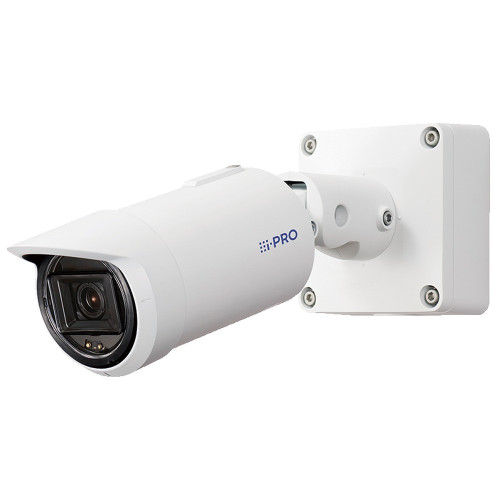
Both the i-PRO WV-S15600-V2LN and WV-X15600-V2L are 6MP fixed outdoor bullet cameras sharing the same 1/1.8-type CMOS sensor, 4.3–8.6 mm motorized varifocal lens, and 70 m IR range. They target perimeter surveillance installations where buyers are choosing between a proven PoE (802.3af) platform with FIPS hardware security and a newer PoE+ (802.3at) platform featuring an upgraded SoC, image stabilization, IP67 sealing, and an expanded AI analytics suite—all in an identical physical chassis.
In This Guide
How do the imaging specs compare?
Both cameras deliver 3328×1872 (6MP) resolution at 30 fps and share the same 1/1.8-type CMOS sensor, 4.3–8.6 mm motorized varifocal lens (F1.5–F2.4), 53°–104° horizontal field of view, and 70 m IR illumination range. Minimum illumination is specified at 0.03 lux (B&W, F1.5, 1/30 s) for the S15600-V2LN; the X15600-V2L lists the same 0.03 lux figure under equivalent conditions. Maximum WDR is 132 dB Super Dynamic on both models, though the S15600-V2LN achieves this at Level 30 or above at 15 fps, while the X15600-V2L specifies Level 31. Detection/observation/recognition/identification distances at DORI are identical across both units.
The SoC differs meaningfully: the S15600-V2LN uses an Ambarella CV22, while the X15600-V2L moves to the Ambarella CV52. The X15600-V2L also adds an electronic image stabilizer (gyro sensor), which is absent on the S15600-V2LN. Extra digital zoom extends to 6.0x on the S15600-V2LN (at 1280×720) versus 10.4x on the X15600-V2L (at 640×360). Shutter speed minimum differs: 1/30 s on the S15600-V2LN versus 1/60 s on the X15600-V2L, with the X15600-V2L also listing a Maximum Shutter spec of 1/4000 s not published for the S15600-V2LN. The X15600-V2L specifies the AI analytics suite as covering 10 detection types; the S15600-V2LN lists AI Video Motion Detection as the primary analytics engine, plus the same four AI sound classifications (Gunshot, Yell, Vehicle Horn, Glass Break).
What about installation and environment?
The two cameras are physically identical: 133 mm (W) × 133 mm (H) × 383 mm (D), aluminum die-cast and stainless-steel construction, IK10 impact resistance, and wind resistance to 40 m/s (≈89 mph). The S15600-V2LN weighs approximately 2.4 kg (5.3 lbs) versus 2.5 kg (5.6 lbs) for the X15600-V2L. Both carry IP66 dust/water resistance; the X15600-V2L adds IP67 and explicit NEMA 4X (UL50E / Type 4X) ratings, giving it a marginally higher ingress protection tier. The S15600-V2LN carries IP66 and NEMA 4X from its spec sheet.
Power requirements diverge: the S15600-V2LN runs on DC 12 V / 1.0 A or PoE 802.3af (Class 0, ≤15.4 W budget), while the X15600-V2L requires DC 12 V / 1.2 A or PoE+ 802.3at (Class 4, ≤30 W budget)—meaning existing 802.3af-only switches cannot power the X15600-V2L without a midspan or switch upgrade. Operating temperature range is -40 °C to +60 °C for the S15600-V2LN (power-on: -30 °C to +60 °C) versus -40 °C to +55 °C for the X15600-V2L, a 5 °C narrower upper bound. The S15600-V2LN spec sheet documents a Temish element + heater + moisture absorption gel anti-condensation system; this is not listed in the X15600-V2L spec. The S15600-V2LN also exposes a composite video monitor output (1.0 V, 75 Ω) for lens adjustment; this is not documented for the X15600-V2L.
Which fits your VMS and analytics better?
Both cameras support ONVIF Profiles G, M, S, and T; H.265/H.264 CBR/VBR with unicast and multicast; MJPEG at 10 quality steps; G.726, G.711, and AAC-LC audio compression; and up to 14 simultaneous users. Both include a 3.5 mm stereo audio input and output jack, full-duplex audio, VMD (4 areas), SCD (1 area), and up to 8 privacy zones. SD card recording covers H.265/H.264 and JPEG with pre/post alarm and schedule modes on both units; the X15600-V2L explicitly lists 64 GB/128 GB/256 GB/512 GB microSDXC capacity options, while the S15600-V2LN references SDXC/SDHC/SD without publishing a maximum validated capacity.
Security posture: the S15600-V2LN specifies FIPS 140-2 Level 3 with an NXP SE050F hardware security element; the X15600-V2L lists FIPS 140-2 Level 3 and HTTPS/authentication but does not name the NXP SE050F in its published spec. The X15600-V2L documents Secure Boot; the S15600-V2LN lists Signed Firmware. The S15600-V2LN external I/O is 3× Alarm IN / 1× Alarm OUT / 1× AUX OUT; the X15600-V2L provides 4 alarm I/O terminals (IN1/IN2/IN3, OUT, AUX OUT)—one additional alarm input. Both cameras support 9 GUI languages and Microsoft Edge, Firefox, and Google Chrome browsers. Both carry a 5-year warranty.
Which should you choose: the S15600-V2LN or the X15600-V2L?
Our take: The S15600-V2LN is the stronger choice when your switch infrastructure is limited to 802.3af PoE, you need operation above +55 °C (up to +60 °C), or your security policy mandates a documented NXP SE050F hardware root-of-trust. The X15600-V2L is the stronger choice when the installation demands IP67 sealing (vs. IP66), requires electronic image stabilization for vibration-prone mounting positions, benefits from the higher-capability Ambarella CV52 SoC and expanded 10-type AI analytics suite, or needs the extended 10.4x extra zoom. The key installation constraint is power: the X15600-V2L's PoE+ (802.3at, Class 4) requirement means any site running 802.3af-only infrastructure must budget for switch or midspan upgrades before deploying it. Both carry identical 5-year warranties, the same chassis, and the same 132 dB WDR ceiling.
Side-by-Side Comparison
Spec-for-spec, from manufacturer data.
| Specification | i-PRO S15600-V2LN | i-PRO X15600-V2L |
|---|---|---|
| Resolution | 6MP (3328×1872) | 6MP (3328×1872) |
| Image Sensor | 1/1.8-type CMOS | Approx. 1/1.8-type CMOS |
| System on Chip (SoC) | Ambarella CV22 | Ambarella CV52 |
| Lens / Focal Length | 4.3–8.6 mm motorized varifocal | 4.3–8.6 mm motorized varifocal |
| Horizontal FOV | 53°–104° (16:9) | 53°–104° (16:9) |
| Max Frame Rate | 30 fps | 30 fps |
| Minimum Illumination | 0.03 lux (B&W, F1.5, 1/30 s) | 0.03 lux (B&W, F1.5, 1/30 s) |
| IR Range | 70 m (30 IRE) / 50 m (50 IRE) | 70 m (230 ft) |
| Wide Dynamic Range | Max. 132 dB (Super Dynamic On, Level 30+, 15 fps) | Max. 132 dB (Super Dynamic On, Level 31) |
| Image Stabilization | — | Yes (gyro sensor) |
| IP Rating | IP66, NEMA 4X | IP66 / IP67, NEMA 4X (UL50E Type 4X) |
| IK / Impact Rating | IK10 (IEC 62262) | IK10 (IEC 62262) |
| Operating Temperature | -40 °C to +60 °C (power-on: -30 °C to +60 °C) | -40 °C to +55 °C |
| Power Input / PoE Class | DC 12 V / PoE 802.3af (Class 0) | DC 12 V 1.2 A / PoE+ 802.3at (Class 4, 14 W) |
| Edge Storage | SDXC/SDHC/SD (capacity not specified) | microSDXC up to 512 GB |
| AI Analytics | AI Video Motion Detection; 4 AI sound types | 10 AI detection types; 4 AI sound types |
| Security | FIPS 140-2 Level 3, NXP SE050F, HTTPS, 802.1X | FIPS 140-2 Level 3, HTTPS, Secure Boot |
| External Alarm I/O | 3× Alarm IN, 1× Alarm OUT, 1× AUX OUT | 3× Alarm IN (IN1/IN2/IN3), 1× OUT, 1× AUX OUT |
| ONVIF Profiles | G / M / S / T | G / M / S / T |
| Dimensions (W×H×D) | 133 × 133 × 383 mm | 133 × 133 × 383 mm |
| Weight | Approx. 2.4 kg (5.3 lbs) | Approx. 2.5 kg (5.6 lbs) |
| Warranty | 5-Year | 5-Year |
Frequently Asked Questions
Which should you choose: the S15600-V2LN or the X15600-V2L?
The S15600-V2LN is the stronger choice when your switch infrastructure is limited to 802.3af PoE, you need operation above +55 °C (up to +60 °C), or your security policy mandates a documented NXP SE050F hardware root-of-trust. The X15600-V2L is the stronger choice when the installation demands IP67 sealing (vs. IP66), requires electronic image stabilization for vibration-prone mounting positions, benefits from the higher-capability Ambarella CV52 SoC and expanded 10-type AI analytics suite, or needs the extended 10.4x extra zoom. The key installation constraint is power: the X15600-V2L's PoE+ (802.3at, Class 4) requirement means any site running 802.3af-only infrastructure must budget for switch or midspan upgrades before deploying it. Both carry identical 5-year warranties, the same chassis, and the same 132 dB WDR ceiling.
Can I power the X15600-V2L from my existing 802.3af PoE switch?
No. The WV-X15600-V2L requires PoE+ (802.3at, Class 4, up to 30 W). The WV-S15600-V2LN operates on standard 802.3af (Class 0, up to 15.4 W). If your switches are 802.3af-only, you would need to add a PoE+ midspan injector or replace affected switch ports before deploying the X15600-V2L.
Is the S15600-V2LN or X15600-V2L better suited to high-vibration mounting locations?
The WV-X15600-V2L is better suited. It includes an electronic image stabilizer (gyro sensor) listed in its specifications. The WV-S15600-V2LN does not document an image stabilizer.
Which camera has stronger cybersecurity credentials based on published specs?
The WV-S15600-V2LN explicitly documents a FIPS 140-2 Level 3 rating backed by an NXP SE050F dedicated hardware security element. The WV-X15600-V2L lists FIPS 140-2 Level 3 and Secure Boot but does not name a discrete hardware security chip in its published specification. Buyers with supply-chain or hardware attestation requirements should request i-PRO's security white paper for the X15600-V2L before specifying it.
Get a Second Opinion on Your Camera Choice
Share your site layout, coverage goals, and budget. Our team will validate the camera selection, flag anything we would change, and recommend products that match the use case.