
Hanwha SMT-3231PV vs Hanwha SMT-3211PVM: Specification Comparison
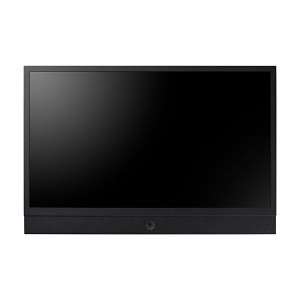
Both the Hanwha SMT-3231PV and SMT-3211PVM are 32-inch commercial LED monitors with integrated 2MP cameras, designed for public-view surveillance applications in retail, transit, and similar environments. A buyer evaluating either unit expects a single-device solution combining a full-HD display with a built-in IP camera, PoE power capability, and network connectivity. The comparison below examines display and camera performance, power and environmental specifications, and network integration — the three dimensions most relevant to a security integrator selecting a public-view monitor for a deployed system.

In This Guide
- How do the display quality and integrated camera capabilities compare between the SMT-3231PV and SMT-3211PVM?
- What are the power delivery options, operating environment ratings, and local storage capabilities of each unit?
- How do the two monitors compare for network integration, platform compatibility, and cybersecurity features?
- Which should you choose: the SMT-3231PV or the SMT-3211PVM?
- Side-by-Side Specs
- FAQ
How do the display quality and integrated camera capabilities compare between the SMT-3231PV and SMT-3211PVM?
The SMT-3231PV provides a 31.55-inch panel with a specified brightness of 400 cd/m², a contrast ratio of 1300:1, a 178°/178° horizontal/vertical viewing angle, a 25ms response time, and a rated panel life of 30,000 hours. Resolution is confirmed at 1920×1080 via HDMI input format range. Display color depth is specified at 16.7M colors. The SMT-3211PVM lists a 32-inch display and 1080p resolution, but brightness, contrast ratio, viewing angle, response time, panel life, and color depth are not specified in the provided data.
The SMT-3231PV's integrated camera uses a 1/2.8-inch 2MP CMOS sensor with a stated minimum illumination of 0.03 Lux (F1.6, 1/30sec), a 120dB Wide Dynamic Range, and AI-driven analytics including face and person detection, intrusion, loitering, virtual line/area, motion and object detection, people counting, queue management, and heatmap. The FOV is noted at 107.7°. Video compression covers H.265, H.264, and MJPEG with WiseStream III smart codec. The SMT-3211PVM specifies a 2MP HD integrated camera and 1080p resolution; minimum illumination, WDR value, FOV, compression formats, analytics capabilities, and smart codec are not specified in the provided data.
What are the power delivery options, operating environment ratings, and local storage capabilities of each unit?
The SMT-3231PV supports dual power input: DC 24V or High Power over Ethernet (IEEE 802.3bt / PoE++), with a rated power consumption of 56W. Operating temperature is specified as 0°C to +40°C (32°F to 104°F) and operating humidity as 10% to 80% non-condensing. Local edge storage is provided via a single Micro SD/SDHC/SDXC slot supporting up to 256GB. The unit includes 2GB RAM and 1GB Flash onboard.
The SMT-3211PVM specifies PoE as the power type but does not identify the PoE standard (e.g., 802.3at or 802.3bt) or maximum wattage. Operating temperature in the provided data shows a storage range of -20°C to +60°C under the 'Storage' field — this appears to be a storage (non-operating) temperature value rather than an operating range; no operating temperature is separately specified. Power consumption, operating humidity, onboard RAM/Flash, and local storage slot specifications are not provided for the SMT-3211PVM.
How do the two monitors compare for network integration, platform compatibility, and cybersecurity features?
The SMT-3231PV includes a 10/100BASE-T RJ-45 Ethernet port, supports ONVIF Profile S/G/T/M, and exposes SUNAPI (HTTP API) for VMS integration. Network security features include HTTPS, SRTP, WSS (WebSocket Secure), 802.1X authentication (EAP-TLS, EAP-LEAP, EAP-PEAP MSCHAPv2), Digest Authentication, brute-force attack prevention, IP-address-based access control, secure boot, signed and encrypted firmware, SD card partition encryption, and a Hanwha Private Root CA device certificate. Alarm I/O is 1 input / 1 output, with alarm events triggerable via email, FTP, NAS recording, HTTP/HTTPS/TCP, and alarm output. The unit also supports eight polygonal motion detection zones and 32 privacy masking zones.
The SMT-3211PVM specifies Ethernet connectivity and PoE power delivery. ONVIF support, API compatibility, VMS integration, cybersecurity features (authentication, encryption, secure boot, certificates), alarm I/O, motion detection zones, and privacy masking specifications are not provided in the available data for this model. The card bullets reference HDMI and VGA inputs, suggesting broader input flexibility, but connector specifications beyond 'Entry Direction VQ7' are not formally detailed in the structured spec fields.
Which should you choose: the SMT-3231PV or the SMT-3211PVM?
Our take: The SMT-3231PV is the stronger choice when a verified, specification-driven selection is required for a networked public-view monitor deployment. Three concrete spec deltas support this: first, the SMT-3231PV's camera delivers a documented 120dB WDR and 0.03 Lux minimum illumination, while the SMT-3211PVM provides no equivalent low-light or dynamic range figures; second, the SMT-3231PV specifies 802.3bt (PoE++) power at 56W with a confirmed DC 24V alternative, whereas the SMT-3211PVM's PoE standard and wattage are unspecified, creating installation uncertainty; third, the SMT-3231PV documents ONVIF Profile S/G/T/M, SUNAPI, full cybersecurity controls, and edge AI analytics, none of which are confirmed for the SMT-3211PVM. A buyer integrating into a Hanwha Wisenet VMS or requiring AI analytics, ONVIF compliance, or documented cybersecurity posture should specify the SMT-3231PV. The SMT-3211PVM cannot be ruled out for simpler deployments, but its specification gaps prevent a comparable evaluation.
Side-by-Side Comparison
Spec-for-spec, from manufacturer data.
| Specification | Hanwha SMT-3231PV | Hanwha SMT-3211PVM |
|---|---|---|
| Product Type | LED Monitor with Integrated IP Camera | LED Monitor with Integrated Camera |
| Display Size (nominal) | 32" (31.55" measured) | 32" |
| Resolution | 1920×1080 (FHD) | 1080p |
| Brightness | 400 cd/m² | — |
| Contrast Ratio | 1300:1 | — |
| Viewing Angle (H/V) | 178° / 178° | — |
| Response Time | 25ms | — |
| Panel Life | 30,000 hours | — |
| Camera Sensor | 1/2.8" 2MP CMOS | 2MP HD (sensor size not specified) |
| Min. Illumination | 0.03 Lux (F1.6, 1/30sec) | — |
| Wide Dynamic Range | 120dB | — |
| AI Analytics | People counting, queue mgmt, heatmap, intrusion, loitering, motion/object, virtual line/area | — |
| Video Compression | H.265 / H.264 / MJPEG (WiseStream III) | — |
| ONVIF Support | Profile S / G / T / M | — |
| Power Input | DC 24V or PoE++ (802.3bt) | PoE (standard not specified) |
| Power Consumption | 56W | — |
| Edge Storage | Micro SD/SDHC/SDXC, 1 slot, up to 256GB | — |
| Alarm I/O | 1 input / 1 output | — |
| Ethernet | 1× RJ-45 10/100BASE-T | Ethernet (spec not detailed) |
| HDMI Inputs | HDMI 1.4 × 2 | — |
| Operating Temperature | 0°C to +40°C | Not specified (storage: -20°C to +60°C) |
| VESA Mount | 100×100, 200×100, 200×200mm | — |
| Weight | 12.4 kg | 29.98 (unit not specified) |
| Secure Boot / Firmware Encryption | Yes | — |
| Housing Color | Black (cabinet) / White (housing) | White |
| Warranty | — | 3 years |
Frequently Asked Questions
Which should you choose: the SMT-3231PV or the SMT-3211PVM?
The SMT-3231PV is the stronger choice when a verified, specification-driven selection is required for a networked public-view monitor deployment. Three concrete spec deltas support this: first, the SMT-3231PV's camera delivers a documented 120dB WDR and 0.03 Lux minimum illumination, while the SMT-3211PVM provides no equivalent low-light or dynamic range figures; second, the SMT-3231PV specifies 802.3bt (PoE++) power at 56W with a confirmed DC 24V alternative, whereas the SMT-3211PVM's PoE standard and wattage are unspecified, creating installation uncertainty; third, the SMT-3231PV documents ONVIF Profile S/G/T/M, SUNAPI, full cybersecurity controls, and edge AI analytics, none of which are confirmed for the SMT-3211PVM. A buyer integrating into a Hanwha Wisenet VMS or requiring AI analytics, ONVIF compliance, or documented cybersecurity posture should specify the SMT-3231PV. The SMT-3211PVM cannot be ruled out for simpler deployments, but its specification gaps prevent a comparable evaluation.
Which unit — the SMT-3231PV or SMT-3211PVM — supports AI analytics like people counting and intrusion detection?
Based on the provided specifications, only the SMT-3231PV documents AI analytics capabilities, including people counting, queue management, heatmap, motion and object detection, virtual line/area detection, intrusion, and loitering alerts — all processed via an onboard AI engine. The SMT-3211PVM's specifications do not include any analytics features in the data provided.
Can both monitors be powered over a single Ethernet cable, and does the PoE standard matter for my switch selection?
Both units support PoE power delivery over a single Ethernet cable. The SMT-3231PV specifies IEEE 802.3bt (PoE++), which requires a PoE++ capable switch port and draws up to 56W — a standard mid-range PoE switch will not suffice. The SMT-3211PVM lists PoE as its power type but does not specify the IEEE standard or wattage; installers should confirm the required PoE class with Hanwha documentation before switch selection to avoid underpower conditions.
Is the SMT-3231PV or SMT-3211PVM the better fit for a Wisenet VMS or ONVIF-compliant platform?
The SMT-3231PV explicitly supports ONVIF Profile S, G, T, and M, as well as Hanwha's SUNAPI (HTTP API), making it a confirmed fit for Wisenet VMS and any ONVIF-compliant platform. The SMT-3211PVM does not list ONVIF profile support or an API in the provided specifications. Integrators deploying into a managed VMS environment should verify SMT-3211PVM compatibility directly with Hanwha before specifying that model.
Get a Second Opinion on Your Camera Choice
Share your site layout, coverage goals, and budget. Our team will validate the camera selection, flag anything we would change, and recommend products that match the use case.