
Hanwha SMT-3221PV vs Hanwha SMT-3211PVM: Specification Comparison
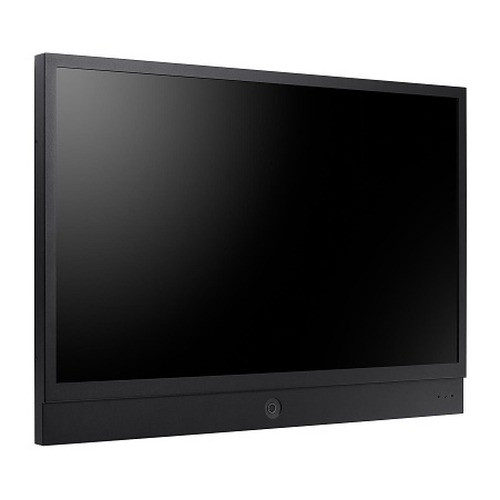
The Hanwha SMT-3221PV and SMT-3211PVM are both 32-inch public-view monitors integrating a 2MP camera into a single enclosure for loss-prevention and customer-facing retail deployments. Both are Hanwha units sharing the same display size and camera resolution class, making them a credible cross-shop for integrators evaluating PoE-powered monitor-camera combos. The comparison centers on AI analytics depth, power standard, environmental tolerance, and integration breadth—the spec areas where the two models diverge most sharply.
In This Guide
- What level of AI analytics and camera performance does each monitor deliver?
- How do the two monitors differ in power delivery, compression, and connectivity?
- Which unit is better suited for long-term deployment from a durability, security, and warranty standpoint?
- Which should you choose: the SMT-3221PV or the SMT-3211PVM?
- Side-by-Side Specs
- FAQ
What level of AI analytics and camera performance does each monitor deliver?
The SMT-3221PV carries a 2MP CMOS imager with a 107.7° FOV, an f/1.6 lens, and a rated minimum illumination of 0.03 lux, combined with 120 dB wide dynamic range (WDR/BLC). Its analytics tier includes object classification, face detection, loitering detection, line crossing, and people counting—a multi-function suite suited to retail shrink and behavioral analysis.
The SMT-3211PVM is rated at 2MP HD (1080p) and lists audio input as a featured capability, but its datasheet-sourced specs do not disclose lens FOV, minimum illumination, dynamic range figures, or any named AI analytics functions. Buyers who need documented low-light performance or analytics beyond camera presence should note that the SMT-3211PVM spec sheet does not supply those values.
How do the two monitors differ in power delivery, compression, and connectivity?
The SMT-3221PV is powered by PoE++ (IEEE 802.3bt) or DC 24V—the highest standard PoE tier, delivering up to 90W, which is required to simultaneously drive a large display and active camera over a single cable. It also supports H.265, H.264, and MJPEG compression up to 30 fps, exposes two HDMI 1.4 ports, and is ONVIF Profile S/G/T/M compliant.
The SMT-3211PVM specifies standard PoE (the exact IEEE tier is not stated in the provided specs) and lists Ethernet connectivity plus HDMI and VGA inputs. No compression standard or ONVIF compliance level is documented in the supplied spec data. The lower PoE tier may limit single-cable deployment options depending on the switch infrastructure in place.
Which unit is better suited for long-term deployment from a durability, security, and warranty standpoint?
The SMT-3221PV specifies an operating temperature range of 0 °C to +40 °C, steel cabinet construction, and a 5-year warranty. Its firmware stack is hardened with secure boot, signed firmware, and firmware encryption—relevant for networked retail deployments where endpoint security audits are required.
The SMT-3211PVM lists a storage temperature range of −20 °C to +60 °C (storage, not operating) and carries a 3-year warranty. Its operating temperature range is not specified in the provided data. No firmware security features are listed in its spec set. The warranty gap—5 years vs. 3 years—is a direct total-cost-of-ownership consideration over a typical retail deployment lifecycle.
Which should you choose: the SMT-3221PV or the SMT-3211PVM?
Our take: The SMT-3221PV is the stronger choice when AI-driven loss prevention, certified low-light performance, and long-term platform security are priorities. First, its analytics layer is concretely specified—object classification, face detection, loitering, line crossing, and people counting—while the SMT-3211PVM lists no named analytics functions. Second, its camera is rated at 0.03 lux minimum illumination with 120 dB WDR, versus no disclosed figures for the SMT-3211PVM. Third, its 5-year warranty exceeds the SMT-3211PVM's 3-year coverage by two years. The SMT-3211PVM may suit lower-budget or simpler deployments where single-cable PoE convenience and VGA legacy input matter more than analytics depth, but its incomplete spec disclosure makes side-by-side evaluation difficult for any technically rigorous procurement process.
Side-by-Side Comparison
Spec-for-spec, from manufacturer data.
| Specification | Hanwha SMT-3221PV | Hanwha SMT-3211PVM |
|---|---|---|
| Display Size | 31.55" (32" class) | 32" (stated) |
| Camera Resolution | 2MP CMOS | 2MP HD (1080p) |
| Lens FOV | 107.7° | — |
| Minimum Illumination | 0.03 lux | — |
| Dynamic Range | 120 dB WDR/BLC | — |
| AI Analytics | Object classification, face detection, loitering, line crossing, people counting | — |
| Video Compression | H.265 / H.264 / MJPEG up to 30 fps | — |
| ONVIF | Profile S/G/T/M | — |
| Power Standard | PoE++ (802.3bt) / DC 24V | PoE (tier not specified) |
| Video Inputs | HDMI 1.4 × 2 | HDMI, VGA |
| Audio | — | Audio input |
| Operating Temp | 0 °C to +40 °C | — |
| Firmware Security | Secure boot, signed firmware, firmware encryption | — |
| Housing Material | Steel | Commercial-grade (material not specified) |
| Housing Color | White | White |
| Warranty | 5-year | 3-year |
Frequently Asked Questions
Which should you choose: the SMT-3221PV or the SMT-3211PVM?
The SMT-3221PV is the stronger choice when AI-driven loss prevention, certified low-light performance, and long-term platform security are priorities. First, its analytics layer is concretely specified—object classification, face detection, loitering, line crossing, and people counting—while the SMT-3211PVM lists no named analytics functions. Second, its camera is rated at 0.03 lux minimum illumination with 120 dB WDR, versus no disclosed figures for the SMT-3211PVM. Third, its 5-year warranty exceeds the SMT-3211PVM's 3-year coverage by two years. The SMT-3211PVM may suit lower-budget or simpler deployments where single-cable PoE convenience and VGA legacy input matter more than analytics depth, but its incomplete spec disclosure makes side-by-side evaluation difficult for any technically rigorous procurement process.
Which monitor supports ONVIF and works with third-party VMS platforms?
The SMT-3221PV explicitly lists ONVIF Profile S/G/T/M compliance, confirming interoperability with ONVIF-compatible VMS platforms. The SMT-3211PVM does not list an ONVIF compliance level in the provided specifications, so VMS compatibility cannot be confirmed from spec data alone.
Can either monitor run on a standard PoE switch, or do I need PoE++ infrastructure?
The SMT-3221PV requires PoE++ (IEEE 802.3bt), which delivers up to 90W and demands 802.3bt-capable switches or injectors—standard PoE (15.4W) or PoE+ (30W) switches will not suffice. The SMT-3211PVM specifies standard PoE without stating the exact IEEE tier, which may allow use with more common PoE+ infrastructure, though this should be confirmed against the full datasheet before deployment.
Is the SMT-3221PV or SMT-3211PVM better for a deployment that requires firmware security hardening?
The SMT-3221PV is the documented choice: its spec sheet lists secure boot, signed firmware, and firmware encryption as features of its operating system and firmware protection stack. No equivalent firmware security features are described in the SMT-3211PVM's provided specifications.
Get a Second Opinion on Your Camera Choice
Share your site layout, coverage goals, and budget. Our team will validate the camera selection, flag anything we would change, and recommend products that match the use case.