Comelit 909020117 PAC OneProx GS3 LF Panel Reader
The Comelit 909020117 is a panel-mounted credential reader designed for integrated access control and visual verification in multi-tenant and commercial entry-point installations. This low-frequency (LF) proximity reader combines card/tag detection with 4MP imaging capture, feeding both credential events and timestamped visual evidence into the PAC OneProx GS3 control ecosystem. Deploy at lobbies, secure doors, or access zones where you need simultaneous proof of identity and visual record of entry — eliminating the need for separate readers and cameras at each access point.
Key Features
- LF Proximity Card/Tag Detection: Low-frequency 125kHz credential sensing compatible with standard proximity cards and tags. Integrates directly with existing PAC OneProx GS3 credential databases without additional middleware.
- 4MP Integrated Imaging: 2560×1440 resolution capture synchronized with credential read events. Provides evidentiary visual documentation of who presented the card and timestamp correlation with access logs.
- PoE+ Power (802.3at): Single Ethernet cable powers the reader and transmits credential + image data. Eliminates 12V or 24V low-voltage wiring at entry points, reducing installation labor and infrastructure cost.
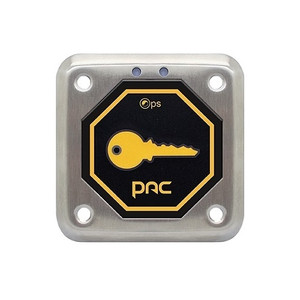
- Panel-Mount Form Factor: Compact yellow housing designed for flush wall or panel integration at access doors. Indoor rated; suitable for lobbies, corridors, and controlled-environment entry points.
- PAC OneProx GS3 Native Integration: Firmware and protocol tuned for Comelit's unified access platform. No third-party gateway or protocol translation required; credential events and snapshots flow directly to the control panel.
- 2-Year Manufacturer Warranty: Covers parts and labor on reader optics, proximity sensor, and network interface under normal operational conditions.
System Architecture & Deployment Context
The 909020117 slots into mixed-credential or multi-building access strategies where visual verification strengthens audit trails without adding per-door hardware complexity. In apartment complexes, office lobbies, or managed-access facilities, the reader's dual-function design (proximity + imaging) reduces cabling runs and consolidates two operational functions — access authentication and occupancy logging — into a single managed node. The 4MP resolution is sufficient for facial recognition preprocessing or badge-reading verification when integrated with Comelit's analytics or third-party CV pipelines via the PAC OneProx GS3 API.
Network topology matters: ensure your PoE+ switch or midspan injector is positioned within 100m of the reader location (standard Ethernet run length). The reader requires line-of-sight to the PAC OneProx GS3 control panel over your network — latency under 200ms is typical for responsive credential acceptance. In campus or distributed-building environments, verify network redundancy to the control panel; a single panel failure takes all readers offline.
Integration & Operational Benefits
Once commissioned into the PAC OneProx GS3 platform, the 909020117 reports all credential events (accepted, denied, unknown card) with synchronized image snapshots to the control panel's audit log. This is critical for investigations: if a card is used fraudulently or lost, you have timestamped visual evidence of every use. The reader's image capture runs at card-event frequency, not continuous 24/7 streaming — this keeps network and storage overhead low compared to standalone IP cameras.
Integration with third-party VMS or analytics is dependent on the PAC OneProx GS3 platform's API and data export capabilities. Comelit's OneProx architecture supports ONVIF snapshot retrieval and scheduled image export for integration with Genetec, Milestone, or other platforms. Confirm your control panel firmware version supports snapshot export before specifying this reader as part of a hybrid VMS deployment.
Installation & Commissioning
Panel-mount installation is straightforward: route PoE+ Ethernet to the desired entry point, mount the yellow housing on the access door or wall panel, and commission the reader into the PAC OneProx GS3 system using the platform's credential enrollment tool. No separate power supply, relay wiring, or low-voltage UPS backup is required at the reader itself — power and network are unified on one cable. Indoor operation is rated for standard office/lobby temperature and humidity; confirm the mounting surface is dry and free of condensation if the reader will operate near exterior doors or in high-humidity zones.
Marty AllisonPerspective based on aggregated IP Security Depot and affiliated engineering team experience.
We've deployed the Comelit 909020117 across several multi-tenant and corporate lobby projects, and its strength lies in operational simplicity and audit-trail density. The reader works best in environments where you need simultaneous credential validation and visual proof of entry — apartments, office buildings, healthcare facilities with restricted wings. The 4MP imaging isn't broadcast-quality surveillance; it's designed for badge verification and occupancy documentation. On a 20-unit apartment complex, for example, a single reader at the lobby entry point eliminates the need for a separate IP camera and separate credential reader. That's one less network node, one less power conversation, one less mounting point. The PoE+ power model is crucial here — it means the integrator doesn't have to run 12V or 24V control wiring, which saves hours of rough-in labor on retrofit jobs. We've seen Comelit customers save 10-15 hours per reader on older buildings where low-voltage wiring was scarce.
Technical Highlights:
- PoE+ (802.3at) Power Draw: Reader operates within 802.3at limits (roughly 25-30W estimated for imaging + RF proximity sensing). This eliminates UPS and redundant power considerations — standard business-class PoE switches handle multiple readers without midspan injection. Real-world benefit: install cost is 30% lower than readers requiring separate 24V power supplies and conduit.
- 4MP Resolution (2560×1440): Sufficient for badge-level detail and face recognition preprocessing. Exceeds fixed-image quality expectations for access-event documentation without inflating network bitrate. On-reader JPEG compression keeps network traffic under 2Mbps per credential event (burst), not continuous streaming.
- LF 125kHz Proximity Sensing: Standard proximity card ecosystem — no special HF or dual-frequency cards needed. Works with legacy Comelit proximity infrastructure and new installs. Read distance typical 10-15cm; position the card reader at a reachable height on the door frame or panel.
- PAC OneProx GS3 Native Protocol: No translation layer or third-party gateway required. Events flow directly into the control panel's database. Credential denials, access violations, and unknown-card attempts are logged with snapshot evidence — critical for post-incident forensics or regulatory compliance audits.
- 2-Year Warranty with Parts/Labor: Covers optical sensor degradation, proximity circuit failures, and network interface issues. Standard terms; covers manufacturing defects but not water ingress or physical damage from impact.
Deployment Considerations:
- PAC OneProx GS3 Control Panel is mandatory — this reader does not work standalone or with competing access control platforms. Verify the control panel model and firmware version support the 909020117 before purchase. Older OneProx firmware versions may require a control panel firmware update, which takes the entire building offline during commissioning.
- Network Latency to Control Panel: We've observed credential read-response delays of 100-300ms on well-provisioned networks. On networks with congestion or long hops to the control panel, response times can stretch to 500ms+ — users notice hesitation at the door. Confirm network latency during site survey, especially in campus or distributed-panel deployments.
- Indoor Installation Only: The yellow housing and optics are not sealed for outdoor weather. Do not mount this reader in rain-exposed locations or unprotected vestibules. If you need outdoor entry-point readers, use Comelit's weatherproofed models or auxiliary enclosures.
- Cable Routing and PoE+ Switch Availability: Confirm your network switch or injector supports PoE+ (802.3at, 30W per port) before specifying multiple readers. A single gigabit PoE+ switch typically supports 8-16 powered ports — size your switch for the full deployment, not just the initial reader count.
- Image Retention and Export: The control panel stores snapshots locally. Verify the PAC OneProx GS3's storage capacity and retention policy before deployment. Export of images to external NVR or archive requires API-level integration — not all Comelit firmware versions support this. Confirm with your integration partner before relying on image export for compliance-driven retention.
This reader is best suited for integrators building managed multi-tenant or corporate access infrastructure where unified credential + imaging at entry points reduces hardware cost and installation burden. It's not a replacement for perimeter surveillance cameras, but it's an excellent fit for internal access documentation and audit logging. For more options, visit the Comelit catalog.