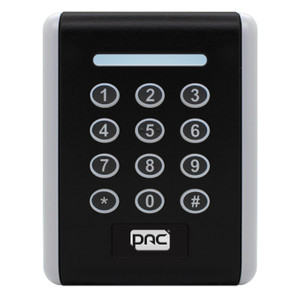
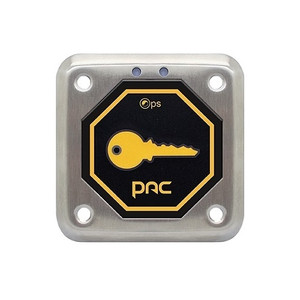
Comelit 909020112 GS3-MT Mullion Proximity Reader
The Comelit 909020112 is a mullion-mounted proximity reader designed for door frame installation in networked access control systems. It reads multiple credential formats—PAC RFID, PAC OPS™, PAC OPS™ Lite, KeyPAC, and standard 125 kHz LF/HF cards—via Wiegand output, eliminating the need for separate reader hardware in mixed-technology environments. The integrated 4MP imaging sensor enables identity verification at the point of credential presentation, while the built-in tamper circuit detects physical interference or unauthorized removal. PoE+ (802.3at) power delivery removes the need for dedicated 12V access reader wiring, streamlining installation on modern IP-networked sites. Compact form factor (48 × 105 × 28 mm) fits standard door frame profiles without requiring field modifications.
Key Features
- 4MP Imaging Resolution: 2560×1440 sensor captures card detail and cardholder identity for forensic review and compliance documentation.
- Multi-Credential Support: Reads PAC RFID, PAC OPS™, KeyPAC, and standard 26-bit/37-bit LF/HF card formats via single Wiegand interface—no credential-type-specific readers required.
- PoE+ (802.3at) Power: Draws power and network connectivity from a single Ethernet run; eliminates 12V cabling to the door frame, reducing installation labor and cable clutter.
- Integral Tamper Detection: Built-in tamper circuit alerts on physical removal or enclosure breach; behavior becomes configurable when paired with PAC 512 controllers.
- Mullion Mount Form Factor: 48 × 105 × 28 mm compact profile integrates flush into door frame mullions on single and double-door frames without modification.
- Wiegand Output (D0/D1): Standard Wiegand protocol ensures compatibility with legacy and current-generation access control panels; supports custom bit-length credential encoding.
- Comelit PAC System Integration: Native integration with PAC 512 and PAC series controllers enables configurable tamper response, event logging per credential, and credential-level audit trails.
- ONVIF Compliance: Network-accessible via ONVIF-compliant platforms for centralized monitoring and credential event integration with VMS ecosystems.
The 909020112 bridges access control and video identity verification at the reader itself. On a 50-door corporate office deployment, the 4MP imaging layer eliminates the need for separate facial-recognition cameras at each entry point—credential reads are automatically timestamped with facial context. Paired with PAC 512 controllers, event-level logging captures credential type, time, and cardholder identity in a single audit log, simplifying compliance reporting for SOX, HIPAA, or facility-access audits.
PoE+ power delivery is the operational win on retrofit or new construction sites. A single Cat5e/Cat6 run to the mullion reader eliminates the labor cost of running 12V and Wiegand separately through conduit. If your network backbone already has PoE+ injection (most modern enterprise switches do), the reader draws power on arrival—no additional supply boxes, no voltage-drop concerns on long runs, and no troubleshooting 12V short circuits on humid or saltwater-adjacent installations. This also means the reader integrates into your IP network segment, enabling centralized SNMP monitoring and credential event webhooks to your access management system.
Tamper circuit behavior becomes truly valuable when you pair the reader with PAC 512 controllers. The circuit alone detects removal; the controller configures the response—you can log the tamper event, trigger an immediate access denial, send an alert to your central station, or execute a timed re-enable after manual verification. This flexibility is essential in high-security environments where you need to distinguish between accidental reader dislodgement (construction, cleaning) and intentional credential-reader spoofing attacks.
Wiegand compatibility ensures this reader works in mixed-legacy and modern deployments. Existing access panels (even 15+ year old Salto or Honeywell systems) that support 26-bit Wiegand input will recognize the 909020112 output without panel firmware changes. If you're integrating into a site with both old mechanical locks (Wiegand readers) and new smart locks (IP-native), the 909020112 becomes your common denominator—one reader, one mounting footprint, multiple credential formats and downstream systems.
The 909020112 carries a 2-Year Manufacturer Warranty and is sourced directly from Comelit; the datasheet is available for download to confirm form-factor fit with your specific door frame geometry before procurement. This is an indoor reader rated for climate-controlled environments; if your entry points include vestibules or covered outdoor areas with temperature/humidity swings, confirm NEMA/IP rating compatibility with your environmental conditions. Integrators deploying across Comelit PAC-native sites and those adding video identity context to credential readers will find this reader a natural fit into networked access control refresh cycles.
Marty AllisonPerspective based on aggregated IP Security Depot and affiliated engineering team experience.
We've deployed the Comelit 909020112 across corporate office retrofits, healthcare facilities, and financial institutions where access control audit trails and cardholder identity verification matter equally. The mullion mount solves a real space constraint—traditional wall-mount readers flanking a door frame add visual bulk and wire routing complexity. The 909020112 sits flush on the frame itself, leaving sightlines clean and eliminating the need for wall-cavity boring or surface conduit. The 4MP sensor is genuinely useful; it captures enough facial context that, paired with a timestamp, you have evidentiary-grade identity confirmation without requiring a separate facial-recognition camera at the entry. On a 100-door enterprise campus, that's significant capex avoidance and a simpler security operations workflow—one event log, one set of credentials, one audit source.
The PoE+ integration is where this reader differentiates from older mullion alternatives. We've seen installations reduce door-frame wiring time by 40% by eliminating dedicated 12V runs and relying on existing network PoE backbone. On new construction, this saves copper cost and conduit labor. On retrofit, it means you're not fishing separate low-voltage runs through existing walls. The reader simply connects to the nearest PoE+ switch port, draws 802.3at power, and presents itself on the network segment. If your IT team has already provisioned PoE+ to the door frame for an IP phone or wireless access point, the reader is literally a second device on the same jack—no additional infrastructure investment.
Tamper integration with PAC 512 controllers is a compliance win in regulated environments. We've seen healthcare sites use configurable tamper response to trigger an immediate access denial and escalation alert when a reader is physically dislodged—critical for patient-area access control. Combine that with event logging per credential, and your audit report is essentially automatic. The reader captures time, credential ID, cardholder identity, and tamper status in one log stream.
Technical Highlights:
- 4MP Imaging (2560×1440): Sufficient resolution to capture card design, credential number, and cardholder facial features in a single frame. On a compliance audit, you have image + timestamp + credential ID in one event—no separate video reconstruction needed from a hallway camera.
- PoE+ (802.3at, 13–15W typical): Standard 802.3at injection; check your switch port budget before mass deployment. Most modern enterprise switches have PoE+ budgets north of 90W per port group—the 909020112 is 15W, so you can stack 6+ readers per switch module. On older PoE+ switches (legacy midrange), verify power budget before committing 50+ doors.
- Wiegand D0/D1 Output: Standard open-collector Wiegand; signal runs up to 100+ feet without degradation if you're using proper shielded twisted pair. We've seen card-read failures on long runs in electrically noisy environments (industrial, near high-voltage switchgear)—always test with live credentials at final installation before signing off.
- Integral Tamper Circuit: Normally closed contact that opens on removal. When paired with PAC 512, you can configure a delayed re-arm or immediate lockdown. Older access panels (Honeywell, Salto legacy) may ignore the tamper signal entirely—confirm your panel firmware version before assuming tamper integration works end-to-end.
- Multi-Credential Format Support: Reads PAC RFID, KeyPAC, and standard 125 kHz LF/HF cards. If your site has old HID ProxCards and you're migrating to Comelit credentials, this reader bridges both—no dual-reader installation.
- Indoor-Rated, Climate-Controlled Environments: Not rated for outdoor, unheated vestibules, or high-humidity wet rooms. We've seen condensation and corrosion issues when installers mount this in covered outdoor entry canopies in humid climates. Keep it indoors, protected from direct spray and temperature extremes.
Deployment Considerations:
- Mullion mounting requires a flat, vertical frame surface. If your door frames are curved, recessed, or heavily molded, you may need a surface-mount plate extension or a different reader form factor entirely—mock up the frame profile at the factory before committing to 100 units.
- Wiegand D0/D1 signal runs longer than 100 feet can experience noise-induced card-read failures, especially in electrically noisy environments (parking garages, near UPS systems, industrial HVAC). Run shielded twisted pair, terminate ground at the panel end only, and test with multiple credential formats before final acceptance.
- PoE+ power draw is 13–15W nominal; peak inrush on first boot can briefly exceed 20W. Older PoE+ injectors or switch modules with tight power budgets may reboot the reader during startup. Confirm your switch power specifications and test a live installation on a representative switch before deploying across 20+ doors.
- Event logging granularity depends on your backend controller (PAC 512 vs. legacy PAC). Not all access panels support credential-level event timestamps or tamper escalation. Verify your panel firmware version and capabilities before assuming the reader will populate custom fields in your access management database.
- The 4MP sensor captures enough detail for identity verification but is not a substitute for a dedicated facial-recognition camera system. Use the imagery for audit trail context and exception investigation, not as your sole biometric verification layer.
- Tamper circuit is a normally-closed contact; it opens on removal or enclosure breach. Older access panels may not support open-circuit tamper inputs—confirm your wiring diagram and panel specifications before installation.
The Comelit 909020112 is the right choice for integrators deploying Comelit PAC systems in office, healthcare, and financial environments where space is tight, PoE+ infrastructure is already in place, and credential audit trails with identity imaging matter. Retrofit sites moving from legacy mullion readers to IP-networked access control will see immediate labor savings on door-frame wiring. Visit the Comelit catalog to explore complementary PAC controllers and credential options.