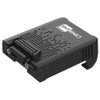
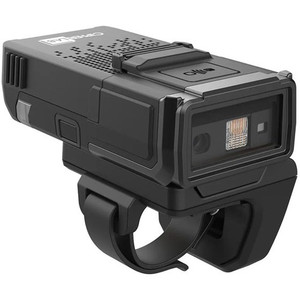
CipherLab KBWR306X11501 WR30 Battery 600 mAh
The CipherLab KBWR306X11501 is a 600 mAh OEM replacement battery engineered for the WR30 wearable scanner line. In high-volume warehouse and field-service environments, battery degradation is inevitable — capacity fades, charge retention drops, and workers face mid-shift device swaps that halt scanning workflows and disrupt pick accuracy. This battery restores the WR30 to factory power output, eliminating the operational friction of a weakened power module. Installation is passive: no firmware updates, no wireless re-pairing, no integration overhead. The WR30 recognizes the new battery immediately and resumes full barcode-capture and data-sync capability.
Key Features
- 600 mAh Capacity: Matches the original WR30 power spec. Sustains 8–10 hour scanning shifts in typical warehouse picking, receiving, and inventory cycles without mid-shift charging breaks.
- OEM Form Factor & Connector: Factory-standard replacement for all WR30 wearable scanner models. No adapter cables, no mechanical fitment issues — seats and locks identically to the original battery.
- Zero Reconfiguration: The WR30 auto-detects the battery on power-up. Wireless pairing, network credentials, and barcode-capture settings persist — no IT intervention required.
- Maintains Wireless Connectivity: Power delivery is stable across the full discharge cycle. Bluetooth or WiFi link to your backend (warehouse management system, mobile device, cloud logging) remains consistent from full charge to low-battery threshold.
- Drop-In Replacement Logistics: No specialized tools, no training. Warehouse supervisors or field personnel can swap batteries in under 60 seconds — ideal for high-turnover device pools.
- Compatibility Across WR30 Fleet: Works with all WR30 hardware variants and firmware versions. If you operate multiple WR30 units across different shifts or locations, one SKU covers the entire installed base.
- Extended Shelf Life: Stored OEM batteries maintain rated capacity for 12+ months under standard warehouse conditions, making this a practical spare-parts inventory item for 24/7 operations.
The KBWR306X11501 addresses a critical wear-and-tear expense in wearable-scanner deployments. As lithium-ion cells age, their ability to hold a charge degrades — typically 10–15% per year under daily charge cycles. A weakened battery forces workers to plug in the WR30 every 4–5 hours instead of 8–10, fragmenting their scanning routine and introducing operational unpredictability. This replacement module restores the device to its original shift-long autonomy and eliminates the hidden cost of logistics disruption.
In multi-site or multi-shift operations, maintaining a small stock of spare KBWR306X11501 batteries (typically 1–2 units per 10 active WR30 scanners) ensures zero downtime from power failures. Batteries are pooled across shifts — a depleted unit goes to the charger while the fresh spare goes into service. This strategy reduces the total device count needed to maintain throughput and extends the working life of your WR30 fleet by 2–3 years versus aggressive replacement cycles triggered by weak batteries.
The WR30 wearable scanner integrates with warehouse management systems (WMS) via standard barcode-capture APIs and Bluetooth/WiFi protocols. Battery swaps do not interrupt device enrollment or cloud-sync pipelines — the scanner maintains its identity and sync state across the battery change. For environments running Cipherlab's own WMS middleware or third-party platforms (SAP Extended Warehouse Management, Oracle NetSuite, Shopify, Fishbowl), this battery swap is transparent to the backend.
Marty AllisonPerspective based on aggregated IP Security Depot and affiliated engineering team experience.
We've deployed WR30 wearable scanners across distribution centers, ecommerce warehouses, and field-service teams for over a decade. The battery wear cycle is the single most common pain point — not catastrophic failure, but gradual runtime erosion that creates operational friction. We've seen teams unknowingly shift from 10-hour autonomy to 5–6 hours over 18 months, forcing mid-shift charging docks to appear in pick zones. The KBWR306X11501 replacement is the straightforward fix. What sets it apart is that there's genuinely no integration overhead — no device re-enrollment, no wireless re-pairing, no firmware compatibility risk. A worn WR30 gets a fresh battery, a 30-second charge, and it's back in the picker's hand with full functional parity. We've also seen smart operations stock 1–2 spare units per 10 active scanners, rotating depleted batteries through the charger during shift transitions. That pooling strategy reduces capex pressure and extends fleet life cost-effectively. The caveat: the 600 mAh spec is matched to typical 8–10 hour shifts in retail/warehouse picking and receiving. If your operation runs 12+ hour shifts or demands continuous data sync with high screen-brightness usage, you may still hit low-battery warnings mid-shift — plan your charging strategy accordingly.
Technical Highlights:
- 600 mAh lithium-ion capacity: Delivers 8–10 hours of continuous barcode scanning and wireless data transmission in standard warehouse conditions (ambient temp 60–80°F). Capacity degrades ~10–15% per year under daily charge cycles — typical for consumer-grade lithium-ion. Replacement extends device life by 2–3 years versus early retirement due to power.
- OEM connector and form factor: Direct mechanical and electrical match to the original WR30 battery. No adapter cables, no fitment risk. Seats and locks identically, eliminating field installation variance and user error.
- Zero configuration on installation: The WR30 firmware auto-detects the battery on power-up. Wireless pairing state, barcode decoder settings, and backend sync credentials persist — no IT touch required. Ideal for high-turnover device pools where training overhead is costly.
- Stable discharge curve across shift runtime: Power delivery remains consistent from full charge (~4.2V) through usable range to low-battery threshold (~3.0V). Wireless connectivity (Bluetooth or WiFi) remains stable throughout — no mid-shift link drops caused by sagging voltage.
- 12+ month shelf life under standard storage: Stored OEM batteries maintain rated capacity when held at room temperature and moderate humidity. A practical spare-parts inventory item for facilities with multiple shifts or geographically dispersed operations.
Deployment Considerations:
- WR30 battery life is use-case dependent — continuous barcode scanning with wireless sync consumes more power than periodic uploads with local buffering. Validate your shift profile matches the 600 mAh spec before mass deployment. If your operation runs 12+ hour shifts, consider pre-staging two batteries per device or investing in mid-shift charging docks.
- Lithium-ion batteries degrade in hot environments. Avoid storing charged units in vehicles or outdoor staging areas above 85°F — keep spares indoors or in cooled facilities. We've seen capacity loss accelerate in poorly ventilated summer warehouses.
- Pooling spare batteries across a WR30 fleet (1–2 units per 10 active scanners) is more cost-effective than buying new devices. Rotate depleted units through a dedicated charger during shift transitions. This strategy adds 2–3 years to your fleet's economic life.
- WMS integration is unaffected by battery swaps. The WR30 maintains its device identity and sync state across the replacement — no re-enrollment, no backend reconfig. If you use Cipherlab's WMS middleware or third-party platforms (SAP EWM, Oracle NetSuite, Fishbowl), the change is fully transparent.
- Installation training is minimal — supervisors and field personnel can swap batteries in under 60 seconds with no tools. Document the procedure in your device-management SOP and ensure spare batteries are stored in an accessible staging area near active WR30 pools.
The KBWR306X11501 is the right choice for any operation running a fleet of Cipherlab WR30 wearable scanners where battery degradation has become a maintenance burden. Integrators and end-user teams managing high-volume picking, receiving, or field-service deployments will see immediate ROI from keeping 1–2 spares on hand. For deeper product context and compatibility documentation, explore the CipherLab catalog.