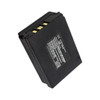
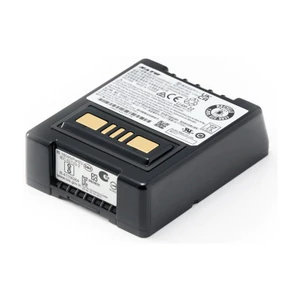
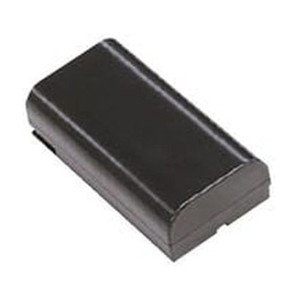
CipherLab KB16XX0X00501 Rechargeable Li-ion Battery
The CipherLab KB16XX0X00501 is a 3.7V, 850mAh rechargeable lithium-ion battery designed as a direct replacement for CipherLab mobile computer scanners in warehouse, logistics, and field service operations. Battery degradation is inevitable in high-use environments — a genuine replacement battery extends the operational life of scanning hardware without requiring complete device replacement, directly reducing capital expenditure on fleet renewal. This battery delivers consistent power for 8–10 hour shifts under typical data-collection workloads (barcode scanning, wireless transmission, local processing).
Key Features
- Capacity & Voltage: 850mAh at 3.7V nominal. Sufficient for a full warehouse shift on a single charge under normal scanning load.
- Rechargeable Li-ion Chemistry: Lithium-ion provides superior cycle life (500+ charge cycles typical) and energy density compared to NiMH, minimizing battery-swap frequency.
- Direct Replacement: Form factor and connector engineered for CipherLab 1661, 1662, 1663, 1664, 1661H, 1662H, and 1664H mobile computers — no modification or adapter required.
- No Configuration Required: Install battery and resume operation. No firmware updates, pairing, or device recalibration needed.
- Genuine OEM Component: Sourced direct from CipherLab — eliminates grey-market battery risk (counterfeit cells, mismatched voltage, shortened lifespan).
- 2-Year Warranty: Manufacturer Warranty covers defects in materials and workmanship, providing protection against premature failure in the field.
In warehouse environments, scanner battery failure mid-shift forces workers to queue at charging stations or swap devices — lost productivity compounds across a team. Carrying spare batteries ensures hot-swap capability without downtime. At 0.1 lb, a single spare battery fits in a pocket or belt pouch, making it practical to rotate between devices during an 8–10 hour shift.
Lithium-ion cells degrade predictably: after 18–24 months of daily charge cycles, runtime drops 20–30% below original spec. At that point, a replacement battery restores scanner uptime without replacing the entire device. For a site running 10–20 mobile computers, proactive battery replacement is significantly cheaper than emergency device replacement or expedited shipping for repair.
Use only the CipherLab-supplied charger or equivalent manufacturer-approved dock to charge this battery — improper charging (overcharging, reverse polarity) degrades lithium-ion cells and creates fire risk. Store unused batteries in a cool, dry location (below 25°C ideal) to slow self-discharge and chemical aging. Do not expose to moisture, heat, or physical damage; damaged cells cannot be safely recharged. End-of-life batteries must be disposed of according to local electronic-waste regulations — many retailers accept lithium-ion batteries for free recycling.
Verify compatibility with your exact CipherLab model before ordering — form factor and connector type are proprietary and differ across product lines. If you are replacing a battery in a CipherLab device outside the 1661/1662/1663/1664 family, consult the manufacturer's technical documentation or contact CipherLab support to confirm part number.
Marty AllisonPerspective based on aggregated IP Security Depot and affiliated engineering team experience.
We've deployed CipherLab mobile computers across dozens of warehouse and logistics sites, and battery lifecycle management is one of the most overlooked cost drivers in fleet operations. The KB16XX0X00501 is the genuine replacement battery for the 1661/1662/1663/1664 family — a workhorse set of ruggedized scanners that can run 5–7 years if you manage the power subsystem correctly. Most operators don't stock spare batteries, which means the first time a battery fails mid-shift, they're scrambling to borrow a device or wait for a charge cycle. We recommend every site running 5+ CipherLab scanners should keep at least 2–3 spare KB16XX0X00501 batteries on hand. At current pricing, a spare battery is 5–10% of the cost of replacing the entire scanner, and the ROI on uptime is immediate.
The 850mAh capacity is honest — under normal barcode-scanning load (intermittent RF transmission, local processing, screen on), you'll consistently get 8–10 hours per charge. Heavy RF use (continuous network transmission, video capture, or GPS logging) will drop runtime to 6–7 hours. If your site operates extended shifts (10–12 hours), you'll need a fast-charge dock and a rotation strategy; a single battery won't sustain non-stop operation without a top-up during the shift.
Technical Highlights:
- 850mAh at 3.7V nominal: Total energy around 3.1Wh. Typical CipherLab 1661-class scanners draw 2–5W depending on radio usage, so you get 600–1500 minutes (10–25 hours) of theoretical runtime at minimal load, real-world 8–10 hour operational window. That math holds across the 1661/1662/1663/1664 family if radio idle cycles and screen-blanking are tuned.
- Lithium-ion vs. older NiMH: Li-ion cells deliver flat voltage discharge (3.7V constant until depletion), which prevents the slow dimming effect of NiMH batteries as they age. Your scanner screen brightness and RF radio performance remain consistent throughout the charge cycle.
- 500+ cycle lifespan: A typical battery survives 18–24 months of daily charge cycles before dropping below 80% capacity. That's a reasonable replacement interval — budget battery swaps annually per scanner if you're running high-utilization shifts.
- Direct OEM sourcing: Counterfeit or grey-market lithium-ion cells are common in the reseller channel — mismatched voltage, hidden internal damage, or swollen cells that fail catastrophically. The genuine KB16XX0X00501 carries CipherLab's cell specifications and safety certification.
Deployment Considerations:
- Always use the CipherLab-supplied charger or equivalent approved dock — third-party chargers designed for generic Li-ion cells risk overcharging and thermal runaway. If you've lost your dock, order the official CipherLab charger, not a cheap alternative from Amazon.
- In cold-weather environments (below 0°C), lithium-ion capacity drops 20–30% temporarily. A scanner used outdoors in winter will show reduced runtime; allow 15–20 minutes warming before critical shift work, or maintain a heated battery staging area.
- Battery swelling is a end-of-life failure mode — if a battery puffs noticeably or shows visible deformation, stop using it immediately and dispose of it per local e-waste regulations. Do not attempt to charge a swollen cell.
- Spare batteries stored in vehicles or outdoor cages should be checked quarterly; self-discharge is 2–3% per month, so a spare left unused for 6 months may need a top-up charge before deployment.
- If you're replacing batteries across a fleet, label old batteries clearly to prevent redeployment of degraded cells into high-priority zones. Create a simple rotation log — retire batteries after 18–24 months of service regardless of apparent capacity, to avoid surprise failures.
The KB16XX0X00501 is the right choice for any operation running CipherLab 1661-class scanners at scale — warehouse, logistics, field service, or inventory management. For fleet operators rotating devices frequently, spare batteries are non-negotiable; for single-device deployments, proactive battery replacement (18–24 month interval) is cheaper than on-demand expedited repair. Stock this battery as a wear item, just like scanner screen protectors. Explore the full CipherLab catalog for compatible devices and charging infrastructure.