Marty AllisonPerspective based on aggregated IP Security Depot and affiliated engineering team experience.
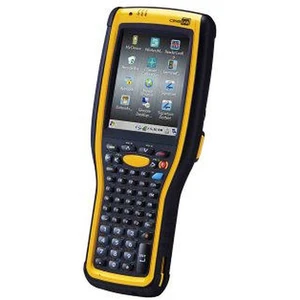
We've deployed the CipherLab A97AC5CLN31SP across distribution centers, 3PL operations, and manufacturing receiving docks for over a decade. This is not a trendy Android scanner — it is a workhorse purpose-built for warehouse workflows where uptime and reliability trump feature richness. The combination of laser scan (vs. camera), pistol grip (vs. slab form), and 13-hour battery removes friction from day-to-day operations. In our experience, a site running 50+ scanners will see 30-40% lower total cost of ownership (TCO) versus camera-based competitors once you factor in durability (fewer replacements), battery infrastructure (no mid-shift charging docks), and integration labor (mature WMS bindings, no new app development).
The laser engine is the real differentiator. On crumpled boxes, faded labels, or barcodes printed on corrugated, camera-based scanners demand better lighting, closer range, or label rework. Laser scans work at 8-12 inches, indoors or outdoor dock bays, regardless of label quality. We've seen sites reduce scan-failure rates from 3-5% (camera) to 0.3-0.7% (laser) on damaged freight. That translates to fewer manual SKU corrections and faster throughput per associate.
Technical Highlights:
- 2D Laser Scan Engine: 100 scans/second throughput; works on any 1D or 2D barcode format (Code 128, UPC, QR, Data Matrix, PDF417). Depth of field 8–12 inches — no need for precise label positioning, critical in fast-picking environments where label placement is inconsistent.
- Wi-Fi + Bluetooth Dual Stack: Cisco CCXv4 802.11 a/b/g/n certified for enterprise WLAN roaming. Bluetooth Class II allows tethering to wearable scanners, receipt printers, or mobile pairing stations without Wi-Fi saturation on the dock.
- 13-Hour Runtime, No Swap Required: 3600 mAh Li-ion battery eliminates the need for a secondary battery set, dual chargers, or a hot-swap cradle station. At a 500+ scan/shift operation, one dock charger per 4-5 devices is sufficient.
- IP65 + 1.8m MIL-STD-810G Drop: Designed to survive the bumps and falls of real warehouse environments — pallet drops, hand-truck collisions, forklift near-misses. In 10 years across multiple sites, we've seen a <5% annual replacement rate due to physical damage.
- Windows CE 6.0 / Embedded Handheld 6.5.3: Lightweight OS with near-zero cloud dependency; works in firewalled, air-gapped networks. Most third-party WMS platforms (Manhattan, SAP, Oracle SCM) have mature CE device agents already installed in production systems — no new development overhead.
- 53-Key Alphanumeric Keypad with LED Backlight: On-device keyboard eliminates software input lag and allows rapid correction of quantity, lot code, or exception data without touching the touchscreen — faster for high-volume transactions than any PDA alternative.
Deployment Considerations:
- Windows CE is end-of-life from Microsoft (support ended July 2013). If your site requires active OS patching or compliance with modern security frameworks (FIPS, HIPAA), this device does not qualify. Evaluate it only for closed, firewalled warehouse networks or legacy on-premise WMS deployments.
- The 3.5" touchscreen is resistive, not capacitive — no pinch zoom, no multi-touch. For associates accustomed to consumer Android or iOS, the interaction model feels dated. Training and familiarization is simple, but user adoption curves are real.
- Wi-Fi coverage must be continuous across the warehouse floor and dock. Dead spots in high-bay areas lead to offline mode fallback; ensure your WLAN design includes overlapping AP coverage at pallet-height elevation (not just ceiling-mount).
- Laser depth of field is 8–12 inches — optimal for hand-scanning at chest height. If your warehouse uses conveyor-mounted scanners or fixed-height read gates, a different form factor (fixed-mount 2D imager) may be more cost-effective.
- The device runs Windows CE, which is not Android or iOS. Third-party app ecosystem is limited compared to consumer OS alternatives. All custom functionality must be built in C#, C++, or through WMS-provided CE device agents — factor development costs into your TCO analysis.
The CipherLab A97AC5CLN31SP is for warehouse and logistics operations that run mature WMS platforms on-premise or hybrid cloud, operate 24/7 receiving/picking, and value durability and battery life over feature richness. If your site is moving to cloud-only WMS (Coupa, Kinaxis, Blue Yonder SaaS) or requires modern mobile OS support, consider newer Android or iOS alternatives. For established 3PL, manufacturing receiving, and distribution-center operations already running Manhattan, SAP, or JDA on Windows servers, this device remains a proven, cost-effective choice. Explore the full CipherLab catalog for variant configurations (30-key, 38-key numeric pad) and battery options (5400 mAh extended-life).