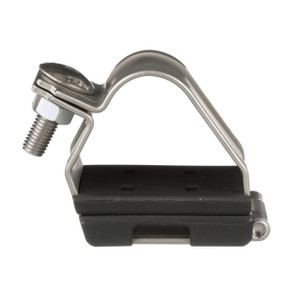
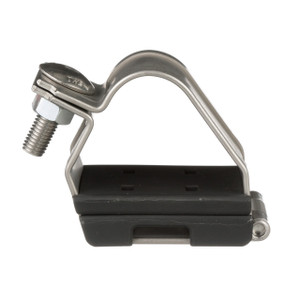
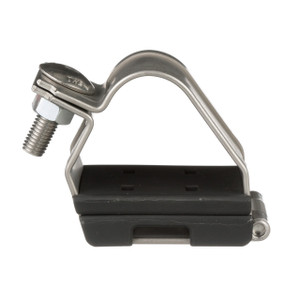
Panduit CCSSTR2025-X Stainless Steel Trefoil Cable Cleat — Pack of 10
The Panduit CCSSTR2025-X is a stainless steel type 316 trefoil cable cleat engineered for three-core cable retention in environments where both physical aggression and the electromagnetic forces of a high-energy short-circuit fault are genuine risks. Rated to a peak fault current of 172 kA and certified to IEC 61914:2015, this cleat is the right hardware when the installation code demands it and the consequences of cable release during a fault event are unacceptable. Sold in packs of 10, the CCSSTR2025-X accepts trefoil cable diameters of 20–25 mm — a range that covers a broad class of medium-voltage and heavy industrial power cables.
Key Features
- 172 kA Peak Fault Current Rating: During a high-energy short-circuit event, magnetic forces between conductors can be violent enough to dislodge unsecured cables and cause secondary faults or fires. The CCSSTR2025-X is tested and rated to retain cables at up to 172 kA peak fault current — the number to check against your coordination study before specifying.
- IEC 61914:2015 Certification: This is the international standard specifically governing cable cleats for electrical installations. Certification means the cleat has been tested for mechanical strength, fault retention, and dimensional conformance — not self-declared. Specify by standard for projects where the engineer of record or authority having jurisdiction (AHJ) requires documented compliance.
- Type 316L Stainless Steel Construction: Grade 316L is the material of choice for corrosive environments: offshore platforms, coastal facilities, chemical plants, and wastewater infrastructure. The 'L' designation (low carbon) resists sensitization during welding or elevated-temperature exposure, making it more durable than standard 316 in thermally cycled installations. Natural finish — no coating to chip, crack, or delaminate over time.
- Removable Separator: The built-in separator that maintains trefoil geometry can be removed, giving installers flexibility if field conditions require repositioning or if the cable configuration changes during the project. This is a detail that matters during commissioning when cable runs are adjusted.
- 20–25 mm Cable Diameter Range: The CCSSTR2025-X accepts trefoil cable diameters across the 20–25 mm range — sized for typical medium-voltage power cable bundles in industrial and infrastructure applications. Confirm your cable OD (including jacket) against this range before ordering; outside this window, a different cleat size is required.
- M8 Bolt Mounting via Fixing Hole: Installs directly onto a cable tray rung through a fixing hole using an M8 bolt supplied by the user, or pairs with a separately sold mounting bracket. The M8 pattern is common in industrial cable management hardware, so integration into existing tray infrastructure is straightforward. Note: the mounting bracket is not included in this pack — source it separately if tray-rung direct-mount is not feasible.
- Pack of 10: Priced and shipped as a 10-unit pack, which aligns with the typical spacing requirements on longer cable runs (cleat spacing is governed by the fault current and cable mass — your installation design should specify spacing intervals). Ordering in pack quantities simplifies procurement for multi-cleat runs.
Integration and Compatibility
The CCSSTR2025-X (often searched as CCSSTR2025 X) is designed for use with three-core cables in trefoil configuration within the 20–25 mm outer diameter range. It installs on standard cable tray rungs via a user-supplied M8 bolt or mounts to a separately available Panduit mounting bracket. Competing part numbers for cross-reference purposes include 9SS6-CCT2125, DSCS-A1925, ER19-23, and HDSS019023 — verify dimensional and rating equivalence before substituting. This cleat is part of the broader Panduit wire routing and management product line and is designed for projects requiring IEC 61914:2015-compliant cable retention.
Frequently Asked Questions
Q: What peak fault current is the CCSSTR2025-X rated for?
A: The CCSSTR2025-X is rated for peak fault currents of up to 172 kA. This rating is validated under IEC 61914:2015 certification.
Q: What cable diameter range does the CCSSTR2025-X accept?
A: It is designed for trefoil cable configurations with an outer diameter of 20 mm to 25 mm. Cables outside this range require a different cleat size.
Q: Is a mounting bracket included with the CCSSTR2025-X?
A: No. The cleat can be installed directly onto a cable tray rung using a user-supplied M8 bolt through the fixing hole. A separate mounting bracket is available from Panduit but is sold independently and is not included in this 10-pack.
Q: What standard does the CCSSTR2025-X comply with?
A: It is certified to IEC 61914:2015, the international standard for cable cleats used in electrical installations.
Q: Why is 316L stainless steel specified instead of standard 304?
A: Type 316L offers superior resistance to chloride-induced corrosion — important in marine, coastal, offshore, and chemical processing environments. The low-carbon variant also resists sensitization at elevated temperatures. For indoor, dry environments, 304 would be sufficient, but if your installation is exposed to corrosive agents, 316L is the correct choice.
Q: How many cleats are included in one order of CCSSTR2025-X?
A: Each order includes 10 cleats (package quantity of 10).
The CCSSTR2025-X is one of those components that gets specified once in the design documents and then has to perform silently for 20-plus years in a plant room or cable basement that nobody checks unless something goes wrong. The 172 kA peak fault rating is the critical number here — that is not a conservative lab figure, it is the IEC 61914:2015 test threshold, and it is higher than what most medium-voltage industrial distribution systems will ever see. The 316L stainless construction tells me this cleat was designed for the installations where corrosion is the other long-term enemy: marine risers, coastal substations, offshore cable ladders, wastewater pump stations.
Technical Highlights:
- 172 kA Fault Retention: Tested and certified under IEC 61914:2015 — the cleat physically restrains cable movement during the electromagnetic force spike of a bolted fault event, preventing cable dislodgement that could cause secondary faults or arc flash escalation.
- Type 316L Stainless Steel: Low-carbon 316 grade resists chloride pitting and sensitization — the right material call for any installation exposed to salt air, wash-down chemicals, or thermal cycling that standard 316 or 304 SS would not survive long-term.
- Removable Separator: The trefoil separator comes out, which is more useful than it sounds during commissioning when a cable run gets adjusted at the last minute and you need to reposition without scrapping the cleat hardware.
Deployment Considerations:
- The M8 fixing bolt is user-supplied — build that into your materials list. If direct tray-rung mounting is not feasible (ladder tray with non-standard rung spacing, for example), the Panduit mounting bracket accessory is sold separately; source it at the same time as this pack to avoid a re-order delay on site.
- Cleat spacing on the cable run must be calculated based on your fault current and cable mass per IEC 61914 — ordering 10-packs makes sense only once you have that spacing interval confirmed. Under-spacing wastes hardware; over-spacing puts you out of compliance with the standard.
The CCSSTR2025-X is the right specification for medium-voltage cable retention on industrial infrastructure projects — offshore platforms, petrochemical facilities, coastal utility substations — anywhere the combination of high available fault current and a corrosive environment rules out painted carbon steel or standard 304 hardware.