Code Blue CB4S00228 PoE Network Switch
Overview
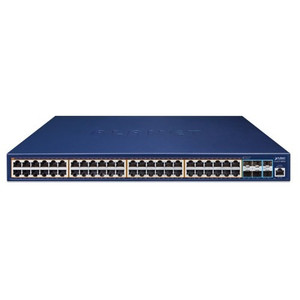
The Code Blue CB4S00228 is a PoE-enabled network switch designed for surveillance system deployments where centralized power and data distribution is required across multiple IP cameras and networked security devices. The CB4S00228 integrates Ethernet connectivity with PoE power delivery, eliminating the need for separate power supplies at each camera location — a significant cost and installation-time advantage in multi-camera surveillance builds.
Key Features
- PoE Power Delivery: Supplies power directly over Ethernet cabling, reducing installation labor by consolidating power and data into a single run. This is particularly valuable in retrofit environments where pulling separate power to each camera location is cost-prohibitive.
- Ethernet Connectivity: Native Ethernet ports for wired connections to IP cameras, NVRs, and management workstations. Ethernet backbone ensures deterministic, low-latency video transport — critical for real-time monitoring and forensic review.
- Surveillance-Grade Design: Purpose-built for security deployments, supporting the bandwidth and reliability demands of simultaneous multi-camera streams without packet loss or frame stuttering.
- Centralized Infrastructure: A single CB4S00228 unit serves as the network backbone, simplifying topology planning and reducing points of failure compared to distributed PoE injectors.
Network Architecture and Integration
The CB4S00228 integrates into standard surveillance VMS architectures via standard Ethernet. It serves as the managed or unmanaged layer between edge IP cameras and the NVR or central monitoring station. All connected cameras receive consistent PoE voltage and data pathways, ensuring uniform frame rates and image quality across the system. The switch's Ethernet infrastructure supports both HD and 4K camera streams without prioritization issues, provided bandwidth planning accounts for simultaneous streams and resolution.
Installation and Deployment Notes
The CB4S00228 is intended for indoor or protected mounting environments where standard network cabinet or wall-mount installation is feasible. PoE delivery voltage and current capacity must match your camera fleet's power draw — verify total wattage of all connected devices does not exceed the switch's rated PoE budget. Ethernet cable runs should follow standard cabling practices (Cat5e or Cat6 minimum for PoE stability) and should not exceed 100 meters per run without active repeaters.
Frequently Asked Questions
Q: What is the maximum PoE wattage available from the CB4S00228?
A: Consult the product specifications or contact the manufacturer directly for precise PoE wattage limits, as this detail is not included in the available evidence.
Q: Is the CB4S00228 managed or unmanaged?
A: The available evidence does not specify whether the CB4S00228 includes management features or operates as a passive PoE delivery device. Verify with the manufacturer or product documentation before integration.
Q: Can the CB4S00228 be stacked or daisy-chained with other switches?
A: Stacking or daisy-chaining capability is not documented in the available evidence. Standard Ethernet best practices apply — consult the manufacturer's integration guide.
Q: What Ethernet standards does the CB4S00228 support?
A: The product supports standard Ethernet connectivity; however, specific protocol versions (802.3, 802.3at, 802.3bt) are not detailed in the available evidence. Verify with the manufacturer for compliance details.
Q: Is the CB4S00228 NDAA compliant or TAA-eligible?
A: No compliance certifications are documented in the available evidence for this model. Contact the manufacturer to confirm regulatory status for federal procurement.
Q: What is the warranty on the CB4S00228?
A: Warranty information is not included in the available evidence. Verify the manufacturer's standard warranty terms before purchase.
The Code Blue CB4S00228 is a solid fit when you're building out a multi-camera surveillance network and need to consolidate power and data infrastructure. PoE delivery eliminates the need to run separate 24VAC power supplies to every camera location — that alone cuts installation time and material cost significantly, especially in sprawling warehouse or campus deployments. The CB4S00228's Ethernet backbone handles simultaneous multi-stream video without the jitter you get from overloaded daisy-chained PoE injectors.
Technical Highlights:
- PoE Power Over Ethernet: All cameras draw power from a single, centralized unit. No separate 24VAC runs, no voltage drop issues over distance — just Cat5e/Cat6 from the switch to each camera.
- Ethernet Connectivity: Standard RJ-45 ports ensure deterministic, low-latency transport of video streams. Ethernet is inherently more reliable than wireless for surveillance, with predictable bandwidth and no interference from competing RF sources.
- Surveillance-Grade Network Backbone: Purpose-built for security deployments, reducing collisions and packet loss that plague consumer-grade or repurposed IT switches in high-bandwidth video environments.
Deployment Considerations:
- Verify the total PoE wattage budget of your camera fleet before connecting; exceeding the CB4S00228's rated PoE capacity will cause brownout or dropped cameras mid-shift.
- The available technical documentation does not clarify port count, management capabilities, or maximum throughput — request a full spec sheet from the manufacturer before finalizing your bill of materials.
The CB4S00228 is most effective in indoor installations (climate-controlled NOC, server room, or cabinet environments) where you have a compact, stable deployment of 6–16 IP cameras and want to eliminate the logistical headache of scattered PoE injectors. For larger enterprise rollouts, consider whether a managed switch with VLAN support and redundancy features might serve your growth trajectory better.