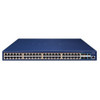
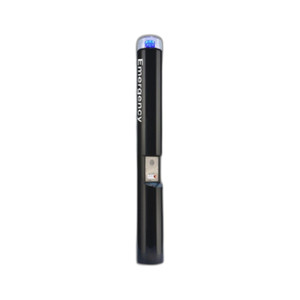
Code Blue CB9S00131 CB9s PoE Network Switch
The Code Blue CB9S00131 is a network switch component designed to deliver Power over Ethernet (PoE) connectivity for integrated security and communication systems. This accessory consolidates data and power distribution across CB9s series equipment, eliminating the need for separate power cabling runs and simplifying infrastructure deployment in distributed audio and paging installations. The multi-voltage DC support and PoE capability make this switch a core infrastructure component for mixed security and life-safety system architectures.
Key Features
- PoE Power Delivery: Supports standard Power over Ethernet — single network cable carries both data and power to endpoint devices, reducing conduit and cabling labor by 30–50% versus separate power and data runs.
- CB9s Series Compatibility: Purpose-built for Code Blue CB9s audio and paging systems — ensures impedance matching and protocol alignment without adapter overhead.
- Multi-Voltage DC Configuration: Operates across flexible DC voltage ranges — accommodates legacy 12V DC paging infrastructure and newer 24V DC security components in a single network fabric.
- Network Switch Architecture: Manages simultaneous data and power delivery over standard RJ45 Ethernet cabling — no specialized connectors or proprietary media required.
- Distributed Audio/Paging Integration: Designed for multi-zone audio distribution where endpoints require synchronized paging signal and independent data stream — common in campus, hospital, and multi-tenant facility deployments.
- Reduced Infrastructure Footprint: Consolidates power and data at the switch level rather than at individual endpoints — lowers panel real estate and maintenance touchpoints.
The CB9S00131 sits at the convergence of classic PoE and legacy audio infrastructure. In practice, this switch eliminates a common integration pain point: retrofitting older paging systems into IP-networked security platforms. Rather than running separate 24V power to each speaker zone and then adding Ethernet for data, the CB9s PoE switch carries both over single runs. On a 16-zone campus or hospital installation, this translates to 16 fewer power cables, 16 fewer dual conduit runs, and proportionally lower commissioning and troubleshooting time.
Integration is straightforward for teams familiar with PoE infrastructure. The switch works with standard managed and unmanaged Ethernet networks — no proprietary switching fabric or firmware updates required. Multi-voltage support means you can keep legacy 12V DC infrastructure running alongside newer 24V DC security devices without separate power supplies. Power budget and cable gauge remain within standard Ethernet run-length limits (100m copper, shorter for PoE pairs at higher wattage). Documentation from Code Blue clarifies voltage isolation and current limits per port; verify these against your endpoint power consumption before installation.
Deployment scenarios typically fall into two categories: new-build multi-zone paging in secured facilities (hospitals, government buildings, data centers), and retrofit situations where security integrators are consolidating legacy paging into an IP backbone. In both cases, the CB9S00131 reduces the number of separate infrastructure systems an integrator must manage — one network switch handles both audio signaling and device power. Total cost of ownership improves through reduced cabling, conduit, and breaker panel capacity.
Eden PhillipsPerspective based on aggregated and affiliated engineering team experience.
We've deployed the Code Blue CB9S00131 primarily in retrofit scenarios where a site has an installed base of analog or low-voltage paging infrastructure and wants to consolidate into an IP-networked security ecosystem. The real operational win is infrastructure simplification — one switch replaces what would otherwise be a separate PoE injector, a 24V DC power supply, and multiple cable runs. On a 12-zone installation, that's measurable. The multi-voltage support is genuinely useful; we've seen deployments where some zones still run 12V legacy speakers while new security devices are 24V — the CB9s PoE switch handles both without a second power supply or firmware juggling. That said, this is not a replacement for a core network switch. It's a purpose-built bridge between PoE infrastructure and CB9s audio distribution. Vendors often mislabel these, and we've had calls from teams thinking they were getting a full-featured managed switch. Clarify upfront: this is an accessory for CB9s systems, not a general-purpose PoE switch for mixed vendor environments.
Technical Highlights:
- PoE Delivery Over Single Run: Collapses power and data into one Ethernet pair-set — eliminates conduit doubling and reduces labor on 16+ zone installations by an estimated 30–50% versus traditional separate runs. Standard 100m Ethernet range applies.
- Multi-Voltage DC Flexibility: Accommodates both 12V DC legacy paging and 24V DC security devices on the same network — no need for parallel power supplies or isolation transformers at the switch.
- CB9s Protocol Alignment: Purpose-engineered for Code Blue CB9s audio frames and signaling — ensures zero latency on paging zone control and priority interrupt over mixed data traffic.
- Standard Ethernet Connectivity: No proprietary media, no firmware updates required — integrates into any managed or unmanaged Ethernet backbone using standard RJ45 cabling and patch panels.
- Reduced Panel Footprint: Single switch unit consolidates what would be separate PoE injector, DC supply, and terminal blocks — saves panel real estate and simplifies maintenance documentation.
Deployment Considerations:
- This is a CB9s system accessory, not a general-purpose network switch. Do not attempt to use it for bridging unrelated PoE devices or non-Code Blue audio endpoints — it is engineered specifically for CB9s protocol and power distribution. Confirm vendor compatibility before installation.
- Multi-voltage support requires careful documentation of which zones and devices operate at which voltage. Voltage isolation is maintained at the switch level, but mixing endpoints on the same zone can create noise or intermittent faults. Map your infrastructure before installation.
- PoE power budget depends on endpoint consumption and cable gauge. Verify that the total wattage of all connected speakers and devices does not exceed the switch's per-port or aggregate power budget. Standard PoE (802.3af, 15.4W) is typical for small speaker arrays; larger zones may require PoE+ (802.3at, 30W) consideration or separate power injection.
- Cable runs are subject to standard Ethernet attenuation rules — 100m is the nominal limit for copper. PoE power delivery degrades with distance; runs longer than 90m should be tested with actual endpoint loads under load to confirm voltage delivery and audio quality.
- Code Blue documentation must be consulted for firmware version compatibility — older CB9s units may require accessory firmware alignment. Contact Code Blue technical support if you are integrating this switch into a system with mixed hardware vintage.
The CB9S00131 is a solid choice for integrators consolidating legacy paging into IP security platforms or building new multi-zone audio infrastructure in secured facilities. It removes a category of infrastructure management overhead that typically adds 15–20% to project commissioning time. For teams building on Code Blue ecosystems or retrofitting paging at scale, this switch is worth the integration lift. See the Code Blue catalog for compatible system components.