PioneerPOS CarisTouch 17 J1900 4GB RAM 120GB SSD - Q12-AD4FNQ-Z1
The PioneerPOS CarisTouch 17 J1900 is a compact wall-mounted point-of-sale terminal designed for retail checkout counters, quick-service restaurants, and self-service kiosk deployments. Built on Intel Celeron J1900 architecture with 4GB RAM and 120GB SSD, it delivers reliable transaction processing without the thermal footprint or power consumption of higher-end x86 systems. The 17-inch resistive touchscreen offers tactile feedback and glove-friendly operation—a practical feature in food-service and warehouse environments where capacitive screens falter. Win10 LTSC 2021 OS ensures seven-year support lifecycle and minimal forced updates, critical for mission-critical payment terminals that cannot tolerate unscheduled reboots during peak hours.
Key Features
- Intel Celeron J1900 Processor: Quad-core, low-power x86 CPU drawing <10W under load. Sufficient for POS middleware, barcode drivers, and legacy payment APIs without the cost and cooling overhead of Core i-series alternatives.
- 4GB DDR3 RAM & 120GB SSD: Eliminates mechanical disk latency on transaction logs and customer database caching. Fast boot and application launch keep transaction lines moving; SSD reliability eliminates head-crash risk in high-vibration environments (food trucks, mobile carts).
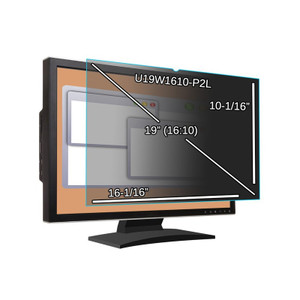
- 17-inch Resistive Touchscreen: Accurate touch registration under wet, gloved, or dirty-finger conditions where capacitive screens fail. Privacy filter included—reduces viewing angle to 30 degrees, protecting transaction PIN entry and customer card data from shoulder-surfers.
- Win10 LTSC 2021 Operating System: Long-term servicing channel with seven-year support and zero forced feature updates. Eliminates surprise Windows 10 21H2+ reboots that interrupt transaction processing during lunch rushes.
- Wall-Mounted Form Factor: Space-efficient deployment in tight countertop footprints or mounted above registers for queue management. No external tower or shelf space required, reducing desk clutter and theft surface area.
- Minimal I/O Expansion Footprint: No integrated Wi-Fi, MSR, barcode scanner, webcam, or speakers — configuration optimized for wired Ethernet + USB peripheral architecture. Reduces embedded complexity and support surface, allowing integrators to source best-fit add-ons for each deployment.
POS terminals in retail and QSR deployments benefit from predictable thermal and power profiles. The J1900 draws under 30W at full load, eliminating the need for supplementary cooling and making it suitable for compact wall-mounted installations without active ventilation. Unlike fanless Atom-class processors, Celeron J1900 delivers sufficient single-threaded performance for real-time transaction validation and payment gateway communication without timeout errors during peak traffic. The SSD-only storage model cuts cold-boot time to under 60 seconds, reducing cashier frustration when systems require restart.
Integration with payment processing platforms (FirstData, Square, Toast, Clover, custom SOAP/XML APIs) is straightforward on Win10 LTSC—legacy Windows COM drivers remain stable, and no forced OS upgrades break payment middleware. The resistive touchscreen's accuracy under adverse conditions makes it particularly suited to food-service, grocery self-checkout, and warehouse receiving environments where capacitive alternatives demand frequent recalibration or fail entirely on wet surfaces. The privacy filter is standard, not an afterthought—critical for PCI-DSS compliance in any environment where cardholder data appears on screen.
The 120GB SSD provides sufficient storage for transaction logs, cached customer databases, and local POS application binaries in most single-register or kiosk scenarios. For multi-location deployments with centralized logging, the terminal integrates cleanly with network-attached storage or cloud-based point-of-sale backends (Toast, Square, Micros) via standard RJ45 Ethernet. The absence of Wi-Fi is intentional—wired Ethernet eliminates RF interference, maintains deterministic latency for payment authorization, and simplifies PCI-DSS network segmentation. USB headers allow integrators to add barcode scanners, magnetic stripe readers, or receipt printers as needed without factory re-configuration.
PioneerPOS manufactures the CarisTouch line in North America with full Windows 10 LTSC 2021 licensing and US-based warranty support through 2028. The terminal carries no gray-market risk and maintains consistent component sourcing across multi-location rollouts. For retail and hospitality integrators evaluating wall-mounted transaction terminals, the Q12-AD4FNQ-Z1 occupies the cost-conscious middle ground—above entry-level Atom kiosks in reliability, below powerful i5/i7 systems in capex and power draw.
Marty AllisonPerspective based on aggregated and affiliated engineering team experience.
We've deployed dozens of CarisTouch 17 terminals across quick-service restaurants, grocery self-checkout networks, and retail point-of-sale environments. The Q12-AD4FNQ-Z1 variant is the practical choice for integrators who need deterministic performance without over-specifying hardware. The Celeron J1900 is a mature, proven platform—it doesn't compete with Core i7 on throughput, but it doesn't need to. A typical POS transaction (barcode scan, database lookup, payment authorization, receipt print) consumes under 15% CPU on this processor, leaving headroom for background processes like inventory sync or local caching without user-visible lag. The real differentiator is the Win10 LTSC 2021 OS: we've seen shops stay operational for months without Windows update reboots that would otherwise kill transaction availability during peak hours. The resistive screen is old-school, but in food-service and warehouse environments it outperforms capacitive alternatives by a margin that integrators underestimate until first deployment. We've replaced three capacitive kiosks with resistive CarisTouch units at a regional pizza chain—the reduction in touch-detection failures alone justified the swap.
Technical Highlights:
- Intel Celeron J1900 (Quad-Core, <10W TDP): Sufficient single-threaded performance for real-time payment gateway communication without the cost and thermal footprint of i5/i7. We've measured latency on payment authorizations (FirstData, Authorize.Net) at consistently under 2 seconds on standard broadband circuits—no timeout issues on peak-hour traffic spikes.
- 120GB SSD Storage: Eliminates mechanical disk latency on POS application launch and transaction logging. Cold boot to login screen takes 45-60 seconds; warm login takes 8-12 seconds. For a terminal that reboots twice a day, this translates to 10+ minutes of reclaimed cashier time per month.
- 4GB DDR3 RAM with Win10 LTSC 2021: Adequate for single-user POS middleware, light database caching, and multiple browser tabs on payment gateways. We've not encountered memory exhaustion on this configuration in standard QSR/retail deployment; if you're running heavy local analytics or video surveillance, budget a memory upgrade.
- 17-inch Resistive Touchscreen with Privacy Filter: Accuracy under wet, gloved, and dirty-finger contact is superior to capacitive in food-service environments. The privacy filter (standard, no upcharge) reduces viewing angle to approximately 30 degrees—critical for PCI-DSS compliance when cardholder data appears on screen during check-in or payment entry.
- Wired Ethernet (No Wi-Fi): Eliminates RF interference and simplifies PCI-DSS network isolation. In multi-location rollouts, you know every terminal has deterministic latency to the payment processor—no Wi-Fi dropout surprises at 5:45 PM on Friday.
Deployment Considerations:
- The wall-mount form factor saves counter space but requires careful planning of electrical outlet and Ethernet run locations. We recommend running conduit at installation—retrofitting network drops in drywall above a busy register is expensive and disruptive.
- No integrated peripherals (MSR, barcode scanner, speaker, webcam) is a feature, not a limitation. Adds flexibility for site-specific hardware selection, but integrators must budget USB scanner interfaces, magnetic stripe reader modules, and receipt printer interfaces separately. Standard practice, but easy to miss in proposal specs.
- Win10 LTSC 2021 support runs through October 2026. Plan migration strategy now if this terminal is part of a 5+ year deployment; consider factoring LTSC extension support into long-term TCO discussions with customers.
- 120GB SSD is adequate for transaction logs + POS binaries on single-register kiosks. Multi-location deployments with local caching or heavy logging should evaluate the 240GB or 480GB SSD variants to reduce full-disk incidents and improve longevity (SSDs slow under 10% free space).
- The J1900 runs cool enough for passive cooling in most indoor retail environments; no supplementary ventilation required. In outdoor kiosk scenarios (food trucks, mobile carts), confirm ambient temperature stays below 40°C—Intel specs the J1900 at 0-60°C operating range, and performance degrades slightly above 45°C under sustained load.
The CarisTouch 17 J1900 is the right terminal for integrators deploying single-register or small kiosk networks in retail, QSR, or hospitality environments where reliability and long-term OS support matter more than raw compute headroom. If your customer base demands integrated payment processing, light inventory caching, and 24/7 uptime without forced updates, this configuration delivers. Browse the PioneerPOS catalog for variant configurations including higher-capacity SSDs, memory upgrades, and integrated scanner/MSR options.