Camden CX-WC11 Pushbutton & Annunciator Controller
The Camden CX-WC11 is a dedicated pushbutton and annunciator controller designed for multi-door restroom access control installations. It manages activation of electric strikes and annunciator feedback (visual and audio signals) in response to pushbutton input — the core logic requirement for barrier-free restroom door automation compliant with Ontario Reg. 368/13 Amendment to 2012 OBC. This controller is the appropriate choice when you need a compact, wired logic module to interface pushbutton switches to electric strike relays and audio/visual feedback devices without deploying a full networked access control panel.
Key Features
- Multi-door Capability: Manages activation across multiple restroom entries from a single controller unit. Scales from 2 to 8+ doors depending on strike and annunciator load.
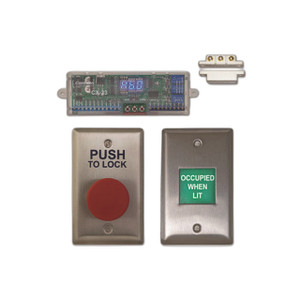
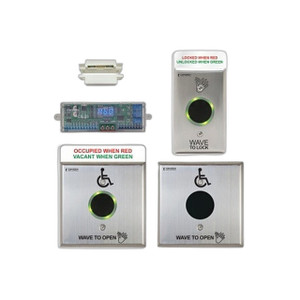
- Electric Strike Integration: Built-in relay outputs drive standard commercial electric strikes. Pre-wired kit options eliminate field relay sourcing.
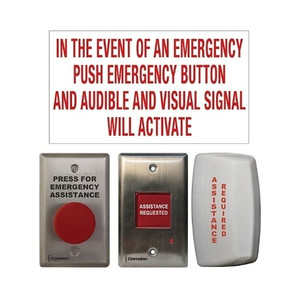
- Annunciator Outputs: Dedicated signal outputs for visual (LED/light beacon) and audio (buzzer/horn) feedback confirming door release to the user.
- Pushbutton Input Flexibility: Accepts standard momentary pushbutton switches; logic debouncing prevents accidental double-triggering on door activation.
- OBC Barrier-Free Compliance: Engineered to meet Ontario Building Code accessible door automation requirements for public and institutional restrooms.
- Column Mount Design: Compact form factor for wall or column installation in restroom vestibules and entry areas; fits standard electrical enclosures.
- Manufacturer Warranty: Factory warranty covers controller electronics and relay components under normal operating conditions.
- Complete Kit Options: Available as part of Camden CX-WC Series restroom control kits, which include pre-wired power supply cabinet, reducing field assembly and commissioning time.
The CX-WC11 eliminates the need for custom relay wiring or PLC programming in straightforward restroom access scenarios. In multi-door facilities (office parks, hospitals, transit terminals), this controller consolidates strike and annunciator logic into a single managed point, reducing panel footprint and maintenance overhead compared to decentralized relay cabinets on each door.
Integration with the Camden CX-WC Series restroom kits means your power supply, strike voltage selection, and annunciator types are pre-matched and tested at the factory. Voltage options typically include 12VDC and 24VDC strike supplies; confirm your specific door hardware voltage before selecting a kit configuration. The controller's relay outputs are current-rated for standard commercial electric strikes (fail-secure and fail-safe strike types); oversized or specialty high-current strikes may require external relay boosters.
Deployment in high-moisture restroom environments requires proper enclosure protection. Mount the CX-WC11 in a NEMA 4X or equivalent stainless steel cabinet if exposed to humidity or cleaning spray. Verify wire gauge for strike output runs — long runs (50+ feet) to remote door strikes may experience voltage drop; consult the datasheet for gauge recommendations. Pushbutton switch wiring uses standard 18-22 AWG; keep these runs away from AC power and strike wiring to avoid signal noise.
The CX-WC11 is purpose-built for restroom automation and does not include networked access control features (RFID readers, card readers, remote unlock). If you need to integrate restroom control with a broader access management system, or require audit logging of door activations, consider a networked access control panel with restroom automation modules instead. For dedicated, standalone restroom barrier-free compliance at multiple facilities, the CX-WC11 kit approach is cost-effective and operationally straightforward.
Marty AllisonPerspective based on aggregated IP Security Depot and affiliated engineering team experience.
We've worked with the CX-WC11 on a handful of OBC-regulated restroom retrofit projects in Ontario institutions. The appeal is straightforward: it's a purpose-built logic controller for accessible restroom door automation, eliminating the overhead of programming a full access panel for a simple pushbutton-to-strike-relay use case. The pre-wired kit format cuts commissioning time in half compared to field-assembled relay cabinets. That said, it's a niche product. It shines when you have 2–4 restroom doors in a building, all with similar strike types and annunciator feedback requirements. Once you're beyond 8 doors or need to coordinate restroom access with card-reader entryways or remote unlock policies, you'll outgrow the CX-WC11 and need a networked controller. We've also seen installations where integrators underestimated the annunciator wiring — don't assume your LED beacons and buzzers are 12VDC by default; confirm voltage with the restroom kit you're specifying.
Technical Highlights:
- Relay Output Ratings: Relay contacts rated for standard commercial strike loads (typically 2–5A @ 12/24VDC). Verify your strike inrush current against the datasheet — oversized or legacy high-current strikes may trip the relay contacts and require an external booster relay.
- Debounce Logic: Built-in pushbutton debounce prevents contact chatter from registering multiple activations. Typical debounce window is 500–1000ms; confirm the exact timing in the datasheet if you're integrating with motion sensors or timed door-hold logic.
- Annunciator Flexibility: Supports both 12VDC and 24VDC annunciator devices (LED beacons, buzzers, audible signals) depending on kit configuration. Mix-and-match is possible if you wire separate annunciator power supplies; don't assume all feedback devices run on strike supply voltage.
- Power Supply Redundancy: When paired with kit power supplies, the CX-WC11 typically includes surge suppression and thermal cutoff to protect relay contacts from nuisance opens. Not a true redundancy feature, but circuit protection that extends relay lifespan in noisy electrical environments.
- Column Mount Footprint: Compact design fits within a 12–18 inch vertical enclosure; useful in tight vestibule spaces where a full-size access panel won't mount cleanly.
Deployment Considerations:
- Confirm strike voltage (12VDC vs. 24VDC) before ordering your kit. The CX-WC11 is controller-only; power supply and strike voltage are dictated by the kit package. Mixing strike types across doors on the same kit can force you into a lowest-common-denominator voltage that underperforms on some strikes.
- Route strike wiring separately from pushbutton and annunciator wiring. Relay output switching noise can couple into low-voltage signal lines if they're bundled in the same conduit; keep at least 6 inches of separation or use shielded twisted-pair for pushbutton runs in electrically noisy restrooms (e.g., those adjacent to mechanical rooms).
- Restroom humidity and cleaning spray are genuine threats. Specify a NEMA 4X stainless enclosure if the controller will be mounted in a public-facing area; plastic or mild-steel cabinets corrode quickly in high-humidity restrooms.
- Annunciator device lifespan varies widely. LED beacons are rock-solid; electromechanical buzzers fail 2–3 years into service in some installations due to moisture ingress. Stock spare buzzers or consider solid-state horns if the facility is high-traffic.
- The CX-WC11 does not log activations. If your audit requirements demand a record of who opened the restroom door and when, this controller is not the answer — you'll need a networked access control system with an event database.
The CX-WC11 is the right choice for single-building or multi-building restroom automation where all doors have similar strike and annunciator requirements, and OBC compliance is non-negotiable. Specifiers in healthcare, education, and transit should review the Camden catalog for other restroom automation products and networked controllers if you need audit logging or remote management.