Camden CV-ISH 125kHz HID Proximity Card Reader 10-Pack
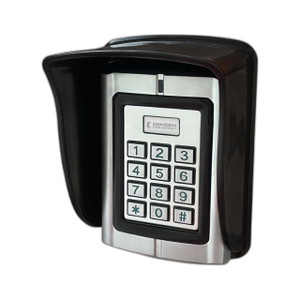
The Camden CV-ISH is a 125kHz HID format proximity card reader engineered for mid-scale access control deployments and retrofit installations. Operating at 16VDC with dual OSDP and Wiegand output, it bridges legacy door controllers and modern access management platforms without protocol translation overhead. The 10-pack format aligns with typical multi-door rollouts, reducing per-unit capex and simplifying inventory management across facility expansions.
Key Features
- Dual Protocol Output: OSDP and Wiegand selectable or simultaneous. OSDP enables encrypted credential transmission and tamper reporting on modern panels; Wiegand maintains backward compatibility with legacy controllers installed pre-2015.
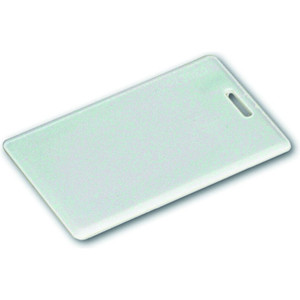
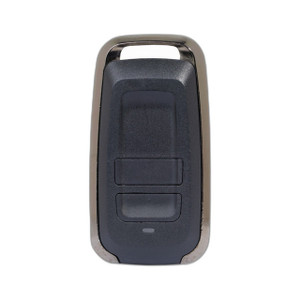
- 125kHz HID Format: Reads standard HID proximity cards and fobs. No proprietary credential ecosystem lock-in — credentials are interchangeable across most access control vendors.
- 16VDC Operating Voltage: Standard low-voltage DC supply, commonly sourced from existing door controller power rails or dedicated 16VDC supplies. Eliminates need for auxiliary power conversion.
- 10-Pack Bundle: Reduces per-reader cost and simplifies purchasing for multi-door sites. Typical deployment: 1-2 readers per access point (entry + exit, or dual-readers for traffic control).
- Wall and Rack Mount: Flexible installation geometry. Wall mounting suits standalone entry points; rack integration supports centralized reader arrays in telecommunications closets or security operations centers.
- 3-Year Manufacturer Warranty: Full warranty coverage against manufacturing defects. Aligns with typical 3-5 year access control system lifecycle refresh cycles.
Integration and Deployment Context
The CV-ISH bridges the gap between aging Wiegand-only infrastructures and next-generation OSDP-native access control platforms. In retrofit scenarios, you can wire it to legacy panels using Wiegand output while simultaneously feeding OSDP to a new access management server — a staged migration approach that eliminates rip-and-replace downtime. The 16VDC rail is typically derived from the main access control panel or a dedicated 16VDC power supply; verify available current capacity when deploying 3+ readers on a single supply.
HID 125kHz proximity credentials are commodity items in the installed base. Unlike Mifare or proprietary encoding formats, 125kHz cards can be bulk-ordered from multiple vendors at stable pricing, lowering total cost of ownership over the system lifetime. Integrators frequently stock these readers for emergency access upgrades and multi-tenant retrofits where credential standardization is a compliance requirement.
Credential and System Compatibility
The reader accepts all standard HID proximity cards (26-bit Wiegand format, 34-bit extended, etc.) and passive HID fobs. It does not read Mifare, DESFire, or smart-card formats — if your deployment requires dual-technology readers, consider Camden's CV-ISMR or equivalent multi-tech alternatives. OSDP output provides real-time credential audit trails and reader health status to compatible access management platforms (Genetec Security Center, Salto, Openpath, etc.). Wiegand output works with traditional fire-alarm integrations and legacy door controllers that predate OSDP standardization.
Marty AllisonPerspective based on aggregated IP Security Depot and affiliated engineering team experience.
We've deployed the Camden CV-ISH across campus retrofits, retail chains, and mixed-tenant office buildings — it's a reliable commodity reader that doesn't try to reinvent access control, and that's precisely why facility managers trust it. The dual OSDP/Wiegand output is the quiet differentiator. On a recent 40-door retrofit for a healthcare client, we ran OSDP to their new Genetec platform while keeping Wiegand active to their legacy fire-system integration — zero downtime, zero credential reissue, zero protocol bridging hardware. That flexibility is worth the modest capex premium versus single-protocol alternatives. The 10-pack pricing also reflects that 125kHz is a mature, non-differentiated technology; you're paying for Camden's track record and warranty, not exotic sensor engineering. We've seen units in the field for 8+ years without credential-read failures or power supply issues.
Technical Highlights:
- OSDP with Wiegand Fallback: Dual-protocol capability means you can migrate access management platforms without hardware replacement. OSDP encrypts credential data in-transit and reports reader tampering; Wiegand is unencrypted but universally supported by legacy door controllers. We configure OSDP-capable panels to OSDP and keep Wiegand as a redundant output for fire-alarm systems — industry best practice for life-safety compliance.
- 125kHz Credential Ecosystem: HID proximity at 125kHz is the ISO/IEC 14223 standard. Every major access control platform (Salto, Openpath, Genetec, S2 Netbox) supports it natively. No credential converter licenses, no firmware quirks — you buy cards, they work.
- 16VDC Power Draw: Typical current draw 50-80mA. A single 16VDC/5A supply can power 30+ readers with margin. Pair it with a quality 16VDC regulated PSU and you'll see zero read-failure incidents tied to power fluctuation.
- 10-Pack Format: Reduces shipping costs and administrative overhead for multi-location deployments. A 40-door site needs 40-80 readers depending on traffic flow control (entry-only vs. entry+exit). Two 10-packs per door is typical for bidirectional access.
Deployment Considerations:
- Verify 16VDC power availability at each reader location before installation. If running from a shared panel supply, calculate total current draw (50-80mA per reader) and confirm headroom on the panel's 16VDC rail. Undersized supplies cause intermittent read failures, not catastrophic outages — hard to troubleshoot.
- HID 125kHz credentials are passive (no battery). They work through most clothing, wallets, and purses — higher perceived convenience than Mifare on end-user side, but zero encryption. If your security policy requires encrypted credentials, this is the wrong reader; upgrade to multi-tech or smart-card alternatives.
- OSDP requires compatible access control panel or gateway. Verify your door controller firmware revision supports OSDP before specifying. Many pre-2018 panels support only Wiegand; know your installed base before planning a full OSDP migration.
- Reader spacing and metal proximity matter. Install readers 12+ inches from large metal objects (rebar, HVAC ducts) to avoid credential coupling loss. Test credential read range in situ during commissioning — typical outdoor range 2-4 inches, indoors 3-6 inches depending on card thickness and enclosure material.
- No on-reader LED status indicator on the CV-ISH — you rely on panel-side diagnostics for troubleshooting. On large multi-door sites, that means credential-read failures require access to the door controller to confirm reader health. Consider wall-mount locations with visual access for field diagnostics.
The Camden CV-ISH is the right choice for integrators standardizing on 125kHz credentials across retrofit portfolios, or for facility teams operating mixed-era access control systems where credential interoperability trumps cutting-edge encryption. The 10-pack makes capex predictable, and the dual protocol strategy de-risks platform migrations. See the Camden catalog for related multi-tech readers and panel-level access control solutions.