Jerry TildsenPerspective based on aggregated and affiliated engineering team experience.
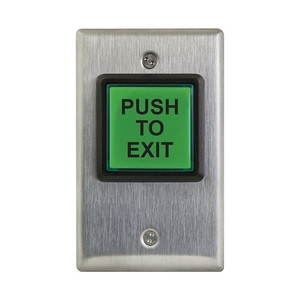
We've installed the Camden CM-310EE across dozens of secure facilities — everything from pharmaceutical labs to data centers to restricted-access back-of-house areas. What sets this unit apart is its simplicity and the double-break fail-safe design. On paper, it sounds straightforward: button presses, timer energizes the lock release coil, occupant exits. In practice, the 30-second timer window is carefully chosen. We've tested it with full occupancy passages through standard 36-inch doors, and the window accommodates two adult passages comfortably — important because the re-trigger capability means a second person arriving mid-cycle doesn't have to wait. The auto-voltage selection eliminates a common integration mistake where installers accidentally configure a 24VDC unit on a 12VDC supply, destroying the LED circuit. Here, the unit just works. The stainless steel faceplate holds up in high-traffic areas and humid environments better than painted options. The only real trade-off is that this is a standalone timer — if you need more sophisticated logic (e.g., timed egress only during business hours, or occupancy-triggered pre-release), you'll need external relay control or a full access control system. For simple, code-compliant emergency exits, however, the CM-310EE delivers exactly what an integrator needs without overcomplication.
Technical Highlights:
- Double-Break Fail-Safe Circuitry: If the timer circuit loses power or the solenoid coil fails, the button's mechanical contact directly breaks the power path to the lock release coil. This redundancy means egress is never blocked by a single component failure — a critical requirement for BOCA compliance and life-safety code.
- Auto-Voltage Detection (12VDC/24VDC): The internal resistor network automatically adjusts for supply voltage. No jumpers, no configuration — plug in 12 or 24VDC and the unit adapts. This is exceptionally useful on retrofit jobs where the existing power supply may differ from the new magnetic lock's rated voltage.
- 30-Second Timer with Re-Trigger Capability: The window is long enough for two occupants to exit in sequence, yet short enough to prevent propping open. Re-triggering resets the timer mid-cycle, so a second person doesn't face a locked door while the first timer expires.
- Illuminated Button with LED Indicator: The green button is bright enough to serve as wayfinding in low-light scenarios (e.g., stairwell exits). The 15,000-hour LED bulb (replacement supplied) outlasts most facility budgets for ballast replacement — typically 5+ years of continuous operation.
- Six-Lead Modular Wiring: Color-coded pairs separate power, LED, and button circuits, reducing installation errors. The wiring diagram is clear, and the leads are long enough to reach standard access control terminal blocks without splicing.
Deployment Considerations:
- The 30-second timer is fixed — there is no adjustment. If your application requires a shorter or longer window (e.g., wheelchair accessibility needing 45 seconds, or high-security requiring 10 seconds), external relay logic or a programmable access control system is needed. Verify timer window requirements before specification.
- Stainless steel faceplate is flush-mount only on 1¾" doorjambs. On thicker or non-standard frame geometry, surface-mount versions or deeper enclosures may be required. Always measure the actual door frame depth during site survey.
- The in-line resistors for 24VDC operation must not be removed or bypassed. Many integrators unfamiliar with LED circuit protection assume resistors are safety ballast and remove them. Removing them will destroy the LED bulb on the first power-up. Clearly mark the resistors in the enclosure during installation.
- The unit controls only the lock release — it does not latch or hold the door open. If magnetic locks are the primary security control on the door, ensure the 30-second release window is sufficient for your occupant traffic. On high-traffic doors, consider dual-button installation or integration with an access control system that extends release time based on occupancy detection.
- LED bulb replacement is straightforward (no special tools required), but the replacement bulb must match the original specs. Installers should stock spares — a burned-out LED can render the button invisible at night, creating wayfinding and emergency egress confusion.
The CM-310EE is the right choice for facility managers and integrators who need a code-compliant, no-configuration emergency exit button for secure doors equipped with magnetic locks. Simple deployments — a lab, a server room, a restricted stairwell — benefit most from its simplicity and reliability. For complex multi-door, multi-zone exit strategies, consider pairing it with a full access control system. Explore the full Camden catalog for complementary door hardware and access controls.