
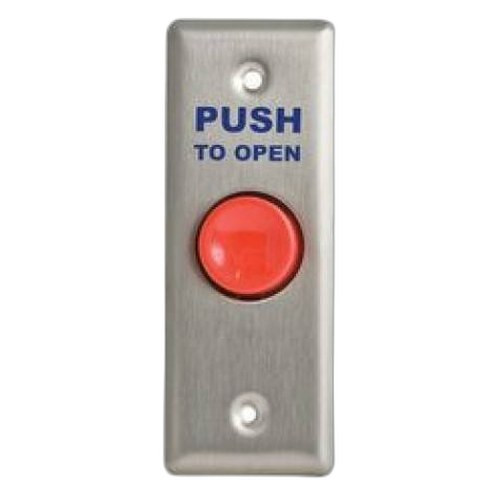


Product images are provided for reference and may not represent the exact model, configuration, or included
components.
Overview
SKU:
CM-RFL354-A
UPC:
670454172921
Condition:
New
Availability:
Usually ships in 24 hours
Warranty
1 Year(s)

Camden CM-RFL354-A Exit Button Credential Reader
Camden CM-RFL354-A Exit Button Credential ReaderThe Camden CM-RFL354-A (often searched as CM RFL354 A) is a credential-based exit button designed for …
Camden CM-RFL354-A Exit Button Credential Reader
$450.00
$283.99
Your recommended setup
Review items below — quantities update pricing automatically.
Item
Qty
Status
Price
Optional Add-Ons recommended
Services optional
Bundle Summary
Bundle Subtotal:
$0.00
Optional Add-Ons:
$0.00
Services:
$0.00
Total:
$0.00
Overview
SKU:
CM-RFL354-A
UPC:
670454172921
Condition:
New
Availability:
Usually ships in 24 hours
Warranty
1 Year(s)
Description

Camden CM-RFL354-A Exit Button Credential Reader
The Camden CM-RFL354-A (often searched as CM RFL354 A) is a credential-based exit button designed for networked access control systems where standard push-to-exit functionality must be enhanced with authentication verification. Operating at 30VDC and communicating via TCP/IP protocol, this device integrates directly into door access platforms that require credential validation at exit points—a critical layer for high-security installations where you need to prevent unauthorized egress or enforce audit trails on departing personnel.
Key Features
- HID-Compatible Credential Reading: Works with HID format credentials, allowing you to leverage existing badge and card systems without parallel infrastructure. This eliminates the cost and complexity of maintaining separate credential ecosystems at entry and exit.
- 30VDC Power Requirement: Operates on 30VDC, meaning you'll need dedicated 30VDC power provisioning at the exit point. This is distinct from lower-voltage or PoE-based readers, so budget accordingly during electrical design and ensure your power distribution supports this demand.
- TCP/IP Network Integration: Communicates over standard TCP/IP, allowing the CM-RFL354-A to integrate into networked access control platforms without proprietary gateways. This simplifies system architecture and reduces single points of failure—critical for enterprise deployments where network redundancy matters.
- Exit Point Authentication: Designed specifically for exit verification, allowing you to require credential authentication when personnel leave a space. This is particularly valuable in secure facilities, data centers, or labs where uncontrolled egress represents a compliance or physical security risk.
- Standard Push-to-Exit Functionality: Supports traditional push-to-exit operation alongside credential authentication, so you can configure the device to enforce credentials only during certain hours or under specific conditions—flexibility without ripping out existing door hardware.
- Networked Door Access System Compatibility: Integrates with door systems and access control platforms that support 30VDC powered devices and TCP/IP communication, making it suitable for modern networked security infrastructure rather than legacy standalone systems.
Integration and Compatibility
The CM-RFL354-A functions as part of a larger networked access control ecosystem. Ensure your access control platform supports TCP/IP credential readers operating at 30VDC; older or closed-architecture systems may not expose the necessary API or network interfaces for integration. Verify that your 30VDC power infrastructure can reliably support the device without voltage sag during peak load. Test credential format compatibility with your existing HID reader population—while the CM-RFL354-A works with standard HID formats, some enterprise systems use proprietary encoding or encryption extensions that may require additional provisioning.
For installations requiring redundancy or failover, coordinate the CM-RFL354-A's network configuration with your access control platform's redundancy architecture. TCP/IP connectivity also means the reader is accessible to network monitoring and firmware updates—essential for maintaining security posture and patching vulnerabilities quickly across your installed base.
Frequently Asked Questions
Q: Does the CM-RFL354-A work with my existing HID credential badges?
A: Yes, the CM-RFL354-A reads standard HID credential formats. However, verify that your access control platform's credential database includes the specific HID format your badges use—some enterprises employ extended encoding or multi-factor badge designs that may require additional configuration.
Q: What TCP/IP port does the CM-RFL354-A use for communication?
A: Consult the product datasheet for exact TCP/IP port specifications and network protocol details. Port configuration is typically handled during commissioning by your access control platform's provisioning process.
Q: Can the CM-RFL354-A operate in failover mode if network connectivity is lost?
A: The device requires active TCP/IP connectivity to authenticate credentials against your access control platform. If network redundancy is critical, implement a secondary connection path (dual NIC, wireless failover) and ensure your access control system supports local credential caching during outages.
Q: Is the 30VDC power supply included with the CM-RFL354-A?
A: The device requires 30VDC power, but power supply inclusion depends on your package configuration. Confirm with your supplier whether a dedicated 30VDC supply is bundled; most installations source this from an existing 30VDC distribution rail in the access control cabinet.
Q: What is the typical credential read range for the CM-RFL354-A?
A: Read range depends on the credential type (proximity card, smart card, etc.) and antenna design. Refer to the datasheet for range specifications specific to your intended credential format.
Q: Does the CM-RFL354-A support audit logging of exit events?
A: Audit logging is a function of your access control platform, not the reader itself. The CM-RFL354-A reports credential reads and exit events via TCP/IP to your platform, which then records them according to its configured logging policy.
Eden Phillips
The Camden CM-RFL354-A is a purposeful tool for environments where uncontrolled egress represents a genuine security or compliance liability. Unlike generic push buttons, this device ties exit verification to your credential infrastructure—meaning departing personnel must authenticate, and every exit gets logged against a known identity. That's not overhead; it's visibility.
Technical Highlights:
- 30VDC Operation: Dedicated 30VDC power keeps the reader isolated from general-purpose building power and PoE networks, reducing electrical noise and cross-talk. Most enterprise access control cabinets already distribute 30VDC for lock control, so you're leveraging existing infrastructure rather than introducing new power domains.
- TCP/IP Credential Validation: Each exit event generates a network message to your access control platform, allowing real-time audit and immediate response to policy violations. No buffering, no batch sync—every credential read is tied directly to your access control database state.
- HID Format Compatibility: Eliminates credential ecosystem fragmentation. If your badges are HID, the CM-RFL354-A reads them natively, allowing you to deploy a single credential type across both entry and exit without intermediate conversion or dual-reader complexity.
Deployment Considerations:
- 30VDC power provisioning must be stable and locally available at the exit point. Long runs of 30VDC can experience voltage drop under load—budget for adequate gauge or local regulation if the device is more than 20 feet from the power source.
- TCP/IP network availability is non-negotiable. If the device loses network connectivity, it cannot authenticate credentials and cannot communicate exit events to your access control platform. Plan for redundant network paths in critical areas or accept that isolated exits will fall back to uncontrolled push-button operation.
- Credential format complexity: ensure your access control platform can provision the specific HID encoding your badges use. Proprietary extensions or multi-tech cards may require additional setup or middleware.
Deploy the CM-RFL354-A at secure facility exits, data center ingress/egress points, or any controlled space where compliance demands a documented trail of who left and when. It's not a convenience feature—it's enforcement hardware for organizations that treat exit control as seriously as entry control.
Specifications
Product Type:
Credential
Communication:
TCP/IP
Credential Type:
HID
Reader Type:
Exit Button
Voltage:
30VDC
package_contents:
d; CM-TX-9 ; Wall Switch Transmitter
warranty:
1 Year(s)
Have Questions?
Ask an Expert.
Your recommended setup
Review items below — quantities update pricing automatically.
Item
Qty
Status
Price
Optional Add-Ons recommended
Services optional
Bundle Summary
Bundle Subtotal:
$0.00
Optional Add-Ons:
$0.00
Services:
$0.00
Total:
$0.00
RELATED PRODUCTS


System Design, Deployment & Technical Support
Support services and planning resources for commercial surveillance, access control, and infrastructure deployments.
Fixed scope • Fixed price
System Design Assistance
- Get help validating product compatibility
- Coverage requirements
- Storage planning and deployment architecture before you buy.
Deployment & Configuration Support
- Access fixed-scope support for rollout planning
- User setup guidance
- Migration and system standardization across single-site or multi-site deployments
Guides, Tools & Calculators
- PoE requirements
- Storage retention
- Camera selection and deployment methodology