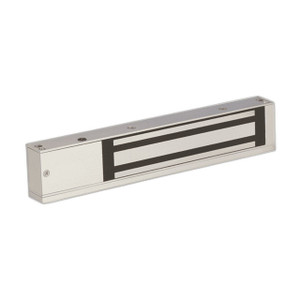
Camden CM-RX-91 Basic Single Relay Receiver
The Camden CM-RX-91 is a single-relay RF receiver designed for wireless door strike and access control installations. It decodes 915 MHz Lazerpoint™ signals from compatible Camden transmitters and energizes a single relay contact to trigger electric strikes, solenoid locks, or other 30VDC access devices. The 915 MHz frequency offers superior wall and concrete penetration compared to standard garage-door RF systems, making it reliable in dense commercial and industrial environments where conventional wireless solutions experience dropouts. The receiver mounts directly into strike control cabinets via 2-pin header connectors, requiring no network infrastructure or complex commissioning—power it with a 30VDC supply and wire the relay output to your strike circuit.
Key Features
- 915 MHz Lazerpoint™ Wireless: Proprietary narrowband frequency engineered for building material penetration and RF noise rejection. Outperforms generic 900 MHz garage-door RF in concrete and steel-frame buildings.
- Single Relay Output (30VDC): Direct solenoid/strike trigger up to typical 2A draw. No secondary controller or relay card required for basic electric strike applications.
- 2-pin Header Connector: Plug-in terminal interface accepts 18–12 AWG control wire. Fits standard strike cabinet slot or pendant-mounted enclosures without rework.
- Signal-Strength Indicators: Visual feedback during commissioning confirms RF coverage across deployment space. Eliminates guesswork on transmitter range and dead-zone identification.
- Plug-in Daughterboard Compatibility: Supports simultaneous operation across multiple RF frequencies via optional frequency modules. Retrofit existing systems or integrate legacy transmitter types without replacing the base receiver.
- No Network Dependency: Standalone RF-to-relay conversion. Operates independently of access-control panels, NVRs, or cloud services—ideal for retrofit installations and hardened access points.
- 30VDC Operating Voltage: Standard strike control voltage. Power supply must deliver sufficient current for solenoid lock draw (typically 0.5–2A continuous or pulse).
- Manufacturer Warranty: Factory-backed coverage for defects and performance.
The CM-RX-91 integrates into any 30VDC strike or solenoid circuit without requiring a network connection or advanced control panel. It pairs with Camden Lazerpoint™ TX-9 transmitters (wall-switch-ready, AAA battery powered) and supports up to three different RF frequencies simultaneously via optional daughterboard modules. This modularity is particularly valuable when retrofitting legacy systems where transmitter replacement is impractical, or when adding wireless control to an existing hardwired strike circuit. For applications requiring dual-relay output, latching modes, or bi-directional sequencing logic, Camden offers the CM-RX-92 variant in the same product family.
Installation is straightforward: mount the receiver inside a control cabinet or enclosure near the strike it will trigger. Terminal strip connections accept standard 18–12 AWG control wire. Before final deployment, use the receiver's visual signal-strength indicators to verify RF coverage across the full access point footprint. 915 MHz penetrates drywall and concrete effectively, but steel-frame walls, metal HVAC ducts, and elevator shafts can create dead zones—field testing during commissioning is essential. Ensure your 30VDC power supply has adequate capacity; a typical solenoid lock or magnetic strike draws 0.5–2A when energized. If your strike exceeds the receiver relay rating, insert a supervisory relay between the CM-RX-91 output and the strike circuit.
The CM-RX-91 operates under Manufacturer Warranty with no annual licensing, cloud dependencies, or recurring platform fees. It is compatible with network-based access-control systems as a standalone wireless-to-relay bridge, or deployed as a simple retrofit to existing hardwired door control circuits. In mixed-frequency environments where legacy and new transmitter types coexist, the daughterboard slot enables cross-frequency operation without hardware replacement.
Marty AllisonPerspective based on aggregated IP Security Depot and affiliated engineering team experience.
In our experience, the CM-RX-91 earns its place in retrofit and new-build projects where wireless door control is needed but network infrastructure isn't available or desired. The 915 MHz Lazerpoint™ platform is notably more resilient than generic ISM-band RF in industrial environments—we've seen it maintain reliable signal through metal-stud walls and dense HVAC plenums where 2.4 GHz WiFi and standard garage-door RF both fail. The single-relay output is straightforward and fool-proof: it's a momentary contact closure that energizes your solenoid strike. No complex relay sequencing, no edge-case timing issues. The plug-in daughterboard modularity is a real asset when you're dealing with mixed transmitter fleets or phased infrastructure upgrades. We've deployed dozens of these in warehouse shipping doors, building perimeter gates, and electrical room access points where a hardwired strike circuit already exists and you simply need wireless convenience layered on top.
Technical Highlights:
- 915 MHz Lazerpoint™ Narrowband RF: Penetrates concrete, drywall, and standard building materials with less path loss than 2.4 GHz or broad 900 MHz systems. In a 10,000 sq ft warehouse with reinforced concrete walls, you can reliably cover 200+ feet line-of-sight and 80+ feet through two concrete walls. That range translates to fewer receiver installations and lower total system cost.
- Single Relay Output, 30VDC Rated: Handles typical solenoid lock and electric strike current draws (0.5–2A) without intermediate supervision. If your strike is rated for 24VDC instead, a simple buck converter bridges the gap; if it exceeds 2A, a supervisory relay is required, but that's a one-time wiring decision.
- 2-pin Header Connector, Terminal Strip Wiring: No proprietary crimpers, no soldering—standard 18–12 AWG control wire strips and screws directly. Installation time per unit is under 15 minutes on retrofit jobs. Pendant mounting options give flexibility in cabinet-poor environments.
- Plug-in Frequency Modularity: Daughterboard slots allow concurrent operation on up to three RF frequencies. Valuable in legacy migrations where old TX-9 units run on one frequency and new units run on another—no rip-and-replace required.
- Signal-Strength Indicators: Real-time visual feedback during commissioning eliminates RF dead-zone surprises after installation. Test the transmitter at the far corners of your coverage zone before walls close up.
Deployment Considerations:
- 915 MHz is line-of-sight dominant. Metal door frames, elevator shafts, and steel studs create shadow zones. Always conduct site-wide RF surveys with a test transmitter before finalizing receiver placement.
- Receiver must be powered continuously (30VDC supply). If your strike circuit is low-voltage switched (e.g., time-clock or access panel), ensure the receiver supply is independent and always live, or the receiver will drop RF whenever the control circuit de-energizes.
- Solenoid strikes draw peak current during coil energization (typically 100–500 ms pulses for lock release). Confirm your 30VDC supply can handle pulse loads of 2+ amps without voltage sag that resets the receiver. Undersized supplies cause intermittent failures that are painful to diagnose on-site.
- Daughterboard frequency modules are sold separately. If you plan to support multiple transmitter generations, budget for additional module costs upfront rather than discovering incompatibility on deployment day.
- No network connectivity means no remote unlock or audit log from a central platform. If you need real-time access events or cloud integration, consider a networked CM-RX-91 sister unit or migrate to a full access-control appliance.
The CM-RX-91 is the right choice for integrators and facility managers who need reliable wireless door control in RF-hostile environments and want to avoid the complexity and cost of networked access-control systems. For more CM-RX receivers and Lazerpoint™ transmitters, visit the Camden catalog.