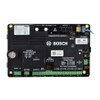
Bosch B4512 Intrusion Control Panel
Overview
The Bosch B4512 is a rack-mounted wired intrusion control panel designed for security integrators and IT architects deploying enterprise-scale access control and intrusion detection systems. This device serves as a centralized command hub for multi-zone intrusion monitoring, alarm management, and integration with door readers, keypads, and third-party security platforms. The B4512 operates on 18 VAC secondary power (110 VAC primary, 22 VA rated), drawing minimal current from standard facility power infrastructure—a critical consideration when centralizing control hardware across distributed facility networks.
Key Features
- Wired Connectivity Architecture: Hard-wired design eliminates wireless interference and network latency concerns, delivering deterministic intrusion detection response times—essential for high-security perimeter and access-control deployments where millisecond latency can matter.
- 18 VAC Secondary Power Supply (22 VA rated): Low-voltage secondary power keeps control electronics isolated from mains AC, reducing shock hazard during installation and maintenance. The 22 VA capacity accommodates typical door locks, readers, and relay outputs without requiring separate power conditioning—simplifies cabling and reduces bill of materials in smaller to mid-scale installations.
- Rack-Mount Form Factor: Fits standard 19" equipment racks, enabling centralized deployment in security operations centers, server rooms, or facility management closets. Consolidating control panels into a single rack reduces cable runs, improves serviceability, and allows one team to manage hardware for multiple building zones.
- Intrusion Control Panel Purpose: Engineered specifically for intrusion workflows—supports zone management, alarm event logging, reader relay control, and integration with ONVIF-compatible video management systems (VMS) common in enterprise surveillance deployments. Direct integration with IP cameras and NVRs accelerates incident response when an intrusion alarm triggers automatic video recording or PTZ lockdown.
- 110 VAC Primary / 18 VAC Secondary Topology: Dual-voltage design allows installation in facilities with either single-phase 110V supply or backup generator systems, providing flexibility across North American industrial and commercial sites.
- Integration Ready: Supports Bosch security ecosystems and open-standard protocols, reducing lock-in and enabling heterogeneous deployments where legacy Bosch hardware coexists with modern IP-based cameras and access systems.
Integration & Deployment Considerations
The B4512's rack-mount architecture is optimal for facility managers consolidating intrusion control hardware in centralized equipment rooms. Wired topology eliminates RF noise and provides deterministic operation—critical when door readers must respond within defined latency windows (e.g., turnstile integration, secure corridor access). When paired with IP cameras and network video recorders, the B4512 enables closed-loop automation: an intrusion alarm triggers the NVR to begin recording, notifies the VMS, and can lock down specific doors simultaneously—all without wireless dependency.
Low power consumption (18 VAC secondary, 22 VA max) means the B4512 won't strain facility electrical infrastructure. In sites with existing uninterruptible power supplies (UPS) or backup generators, this modest draw simplifies load balancing and extends backup runtime per available capacity.
The wired-only design does introduce cable management overhead compared to hybrid or IP-native panels, but eliminates the network security surface area of wireless intrusion sensors—a meaningful tradeoff in secure facilities where air-gapped or isolated intrusion networks are mandated. For warehouse automation environments or multi-building campuses, the B4512's centralized control model works best when supplemented with local relay cabinets or zone expanders to minimize backbone cabling runs.
Integrators should verify ONVIF compatibility with their chosen VMS platform during design phase. While Bosch hardware typically supports ONVIF Profile S and T (video streaming, event notification), confirm camera and recorder compatibility to avoid integration surprises during commissioning.
When to Choose a Different Model
If your deployment requires wireless intrusion sensors to reduce installation labor in retrofit projects, consider hybrid or IP-native alternatives within the Bosch panel family. If the site operates on 24VDC-only infrastructure (common in telecom or broadcast facilities), verify secondary voltage availability or plan for a DC supply module. For very large multi-site operations with 100+ zones, evaluate whether distributed IP-based control offers better scaling than a centralized wired panel.
Frequently Asked Questions
Q: Can the B4512 integrate with my existing IP video management system?
A: Yes, the B4512 supports ONVIF-compatible VMS platforms, allowing alarm events to trigger video recording and camera control. Confirm ONVIF Profile S or T support with your VMS vendor during design.
Q: What's the maximum number of zones the B4512 can monitor?
A: Zone capacity depends on the specific B4512 configuration and any zone expanders deployed. Consult the product datasheet or contact your system integrator for exact zone counts in your proposed topology.
Q: Does the B4512 require backup power (UPS)?
A: Not inherently—it operates on standard 110 VAC primary. However, for 24/7 intrusion monitoring in critical facilities, backup power is recommended to maintain alarm detection and door lock control during mains outages.
Q: Is the B4512 suitable for outdoor or harsh-environment installation?
A: The B4512 is a rack-mounted control panel designed for indoor installation in equipment rooms. For outdoor perimeter monitoring, pair it with outdoor-rated door readers, sensors, and IP cameras designed for temperature extremes and moisture exposure.
Q: What warranty does Bosch provide with the B4512?
A: Warranty terms vary by region and channel. Contact your authorized Bosch distributor for specific warranty coverage and support terms.
Q: Can I expand the B4512 to handle more zones or outputs in the future?
A: Many intrusion panels support expansion modules or zone expanders. Verify expansion options with Bosch technical documentation or your system integrator before finalizing the initial design.
Ted PerryPerspective based on aggregated and affiliated engineering team experience.
I've specified the Bosch B4512 in mixed indoor-outdoor warehouse and facility security deployments where wired intrusion detection must coexist with IP video infrastructure. The 18 VAC secondary and low power draw make it practical for tight electrical budgets, and the rack-mount form factor cuts installation labor when you're consolidating hardware in a central ops room.
Technical Highlights:
- 18 VAC, 22 VA Secondary Power: Minimal electrical load simplifies UPS sizing and reduces facility power infrastructure strain. A single standard backup supply can sustain multiple B4512 panels plus door locks and readers across an entire building zone—meaningful cost savings in retrofit projects.
- Wired Topology with ONVIF Integration: No wireless dependency eliminates RF interference and network latency that can plague wireless intrusion sensors. Direct ONVIF integration with IP video systems enables closed-loop automation—an alarm at the perimeter door can lock down camera views, trigger recording, and notify security operators simultaneously.
- 110 VAC Primary / 18 VAC Secondary Dual-Voltage Design: Flexibility across North American facility types—works with single-phase 110V supply or existing backup generator systems without additional transformers or conditioning hardware.
Deployment Considerations:
- Wired architecture trades wireless convenience for deterministic latency and isolation—essential in secure facilities but requires planning for cable runs and zone expander placement across large campuses.
- Zone capacity is firmware/configuration-dependent. Nail down exact zone count and any required expansion modules during design phase; post-installation adds are labor-intensive on wired systems.
- ONVIF compatibility is real but not universal across all VMS platforms. I always verify Profile S/T support with Milestone, Genetec, or your chosen VMS before submitting specs—avoids surprises at commissioning.
Best fit: warehouse automation facilities, multi-building campuses, and secure data centers where you need centralized control hardware, deterministic wired topology, and tight integration with IP camera systems—all without the complexity of wireless sensor networks or the cost of purpose-built access control VMS platforms.