HPE P26256-B21 Dual-Port 10GbE SFP+ OCP 3.0 Network Adapter
Overview
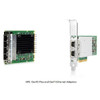
The HPE P26256-B21 is a dual-port 10GbE OCP 3.0 network adapter built around the Broadcom BCM 57412 chipset. It is designed for HPE ProLiant and compatible OCP 3.0-compliant server platforms where you need high-throughput network connectivity without consuming a standard PCIe slot. If your deployment runs storage-heavy workloads, virtualized network functions, or high-density surveillance recording infrastructure, the P26256-B21 keeps 10GbE throughput on the table while preserving expansion slots for other I/O — a real constraint in dense 1U rack configurations.
The OCP 3.0 form factor means the adapter mounts in the dedicated OCP mezzanine slot rather than a standard PCIe add-in card bay. That distinction matters at procurement time: confirm your target server has an OCP 3.0 slot (not OCP 2.0, which is mechanically and electrically incompatible) before ordering. On compatible platforms, the adapter draws power and management connectivity directly through the OCP connector, which simplifies cabling and reduces airflow obstruction inside the chassis.
Key Features
- Dual 10GbE SFP+ ports: Two independent 10GbE interfaces give you either active-active bonding for up to 20Gbps aggregate throughput, or active-passive failover for link redundancy — both configurations are achievable through standard OS-level teaming without additional licenses. For NVR deployments streaming from dozens of 4K cameras, 10GbE per port keeps the recording pipeline clear of network bottlenecks that 1GbE simply cannot avoid at scale.
- BCM 57412 chipset: Broadcom's 57412 is a proven silicon in enterprise networking — widely supported across Linux and Windows Server without proprietary driver packages in most distributions. Broad driver availability means fewer compatibility headaches during OS provisioning or hypervisor deployment.
- PCIe Gen3 x8 host interface: The Gen3 x8 bus provides roughly 64 Gbps of bidirectional bandwidth to the host — well in excess of the two 10GbE ports' combined ceiling of 20Gbps. The bus is not the bottleneck here; CPU and memory throughput will be the practical limits under heavy load, which is the correct design tradeoff for a 10GbE adapter.
- OCP 3.0 form factor: OCP (Open Compute Project) 3.0 standardizes the mezzanine card interface for server networking, enabling tool-less installation on compatible platforms and consistent management integration with the server's onboard BMC. This reduces deployment time in rack-scale environments where you're configuring multiple nodes identically.
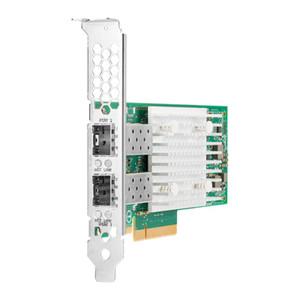
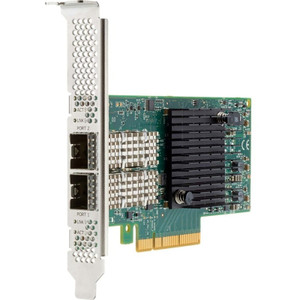
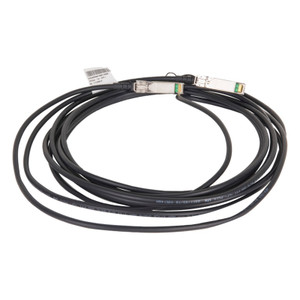
- SFP+ connectivity: SFP+ transceivers support both 10GBASE-SR (short-reach multimode fiber) and 10GBASE-LR (long-reach single-mode fiber) optics, as well as Direct Attach Copper (DAC) cables for short rack runs. That flexibility means you can match the physical layer to your existing infrastructure — DAC for in-rack switch connections, fiber where distance demands it — without swapping adapters.
Integration and Compatibility
The P26256-B21 (often searched as P26256 B21) is designed for HPE ProLiant Gen10 and Gen10 Plus servers with OCP 3.0 mezzanine slots, including the DL360, DL380, and related platforms. Verify OCP slot availability and firmware compatibility on your specific server model via HPE's online compatibility matrix before ordering — OCP 3.0 and OCP 2.0 slots are not interchangeable. On the switch side, any SFP+-capable 10GbE switch port will terminate this adapter; no proprietary switching infrastructure is required. The BCM 57412 chipset has native inbox driver support in RHEL, SLES, Ubuntu Server LTS, and Windows Server 2016/2019/2022, reducing driver management overhead in managed environments. For virtualization, the adapter supports SR-IOV on compatible hypervisors, allowing direct hardware queue assignment to individual VMs — relevant if you're running a VMS platform alongside other workloads on shared server infrastructure.
Frequently Asked Questions
Q: What is the OCP 3.0 form factor, and how does it differ from a standard PCIe card?
A: OCP 3.0 (Open Compute Project version 3) is a mezzanine card standard that plugs into a dedicated slot on compatible server motherboards. Unlike a standard PCIe add-in card, it does not occupy a PCIe slot in the riser, and it receives power and management signaling directly through the OCP connector. This preserves PCIe expansion slots for other adapters or storage controllers. The P26256-B21 is an OCP 3.0 card — it will not fit in an OCP 2.0 slot or a standard PCIe slot.
Q: Does the P26256-B21 support link aggregation or failover?
A: Yes. With two independent 10GbE ports, you can configure standard OS-level NIC teaming (LACP/802.3ad for active-active bonding or active-passive for failover) on both Linux and Windows Server. No proprietary HPE software is required for basic teaming, though HPE's management tools may offer additional options on ProLiant platforms.
Q: What SFP+ transceiver types are compatible with the P26256-B21?
A: The SFP+ ports accept standard 10GbE optics — 10GBASE-SR (multimode fiber, short reach), 10GBASE-LR (single-mode fiber, long reach), and 10G Direct Attach Copper (DAC) cables for in-rack connections. HPE-branded transceivers are recommended for assured compatibility on ProLiant platforms, though third-party SFP+ modules may function depending on firmware settings.
Q: Is the P26256-B21 compatible with non-HPE servers?
A: The OCP 3.0 standard is an open specification, so in principle any server with an OCP 3.0-compliant slot could accept this adapter. In practice, server vendors vary in how strictly they validate OCP cards from other vendors. This adapter is validated for HPE ProLiant platforms — compatibility with non-HPE OCP 3.0 servers should be confirmed with the target server vendor before purchase.
Q: What bus interface does the P26256-B21 use, and does it affect throughput?
A: The adapter uses a PCIe Gen3 x8 host interface, which provides approximately 64 Gbps of bidirectional bandwidth. The two 10GbE ports combined peak at 20 Gbps, so the bus interface is not a throughput constraint under any realistic workload — CPU and memory handling will be the practical bottleneck long before the bus saturates.
The P26256-B21 comes up frequently when architects are speccing out HPE ProLiant-based NVR or hyperconverged nodes where PCIe slot count is constrained. The PCIe Gen3 x8 host interface is the detail worth flagging: at 64 Gbps bidirectional, it gives the two 10GbE ports more than three times the headroom they'll ever need — which means you're not designing around bus saturation, you're designing around CPU interrupt handling and driver stack efficiency, which is where BCM 57412 platforms have a solid track record.
Technical Highlights:
- OCP 3.0 mezzanine form factor: Installs into the dedicated OCP slot, preserving all standard PCIe slots for additional storage HBAs or GPU-based analytics accelerators — a meaningful constraint relief in 1U ProLiant chassis with only 2–3 PCIe risers available.
- Dual SFP+ ports at 10GbE each: Bonded via LACP, these deliver up to 20Gbps aggregate to the upstream switch — enough headroom to handle 40–60 simultaneous 4K H.265 camera streams at typical compression bitrates without network-side queuing.
- BCM 57412 chipset: Inbox driver support across major enterprise Linux distributions and Windows Server means no driver management cycle during OS builds or hypervisor upgrades — one fewer variable in a controlled deployment.
Deployment Considerations:
- Verify the target ProLiant model has an OCP 3.0 slot (not OCP 2.0) before procurement — the two standards are mechanically incompatible and the distinction is not always obvious in abbreviated server spec sheets.
- If you intend to use third-party SFP+ transceivers, check whether HPE firmware on your specific server enforces HPE-branded optics; some ProLiant firmware versions will log warnings or disable ports on unrecognized transceivers.
This adapter is well-suited to HPE ProLiant-based surveillance recording servers — specifically nodes running a VMS platform where you want redundant 10GbE uplinks without sacrificing a PCIe slot to a standard NIC. It is less appropriate for non-HPE environments where OCP 3.0 interoperability has not been validated by the server vendor.