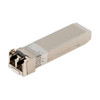
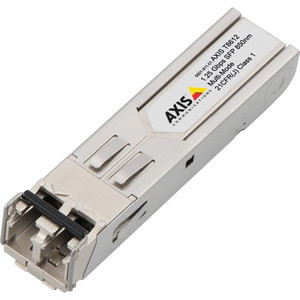
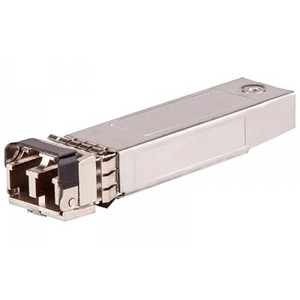
Axis TD8902 SFP+ Module LC.SR 10 Gbps Multimode Transceiver
The Axis TD8902 SFP+ Module LC.SR (02631-001) is a hot-swappable optical transceiver designed to connect bandwidth-intensive surveillance networks across large campuses, multi-building facilities, and data centers. This 10GBASE-SR module delivers 10 Gbps throughput over standard multimode fiber up to 400 meters, eliminating the capex and complexity of single-mode infrastructure while maintaining the performance needed for uncompressed or low-compression video streams across dozens of IP cameras. Engineers specify this transceiver when campus fiber runs hit the limits of copper PoE+ and when redundancy demands active fiber paths instead of passive aggregation.
Key Features
- 10 Gbps throughput (10GBASE-SR): Delivers full 10 Gbps line rate on multimode fiber, supporting simultaneous streams from 8–16 high-bitrate cameras or NVR-to-NAS replication without bottleneck.
- Multimode 850 nm wavelength: Eliminates single-mode fiber cost; works on any MM OM3/OM4 cable already deployed in enterprise networks, reducing installation time and material expense.
- 400 meter maximum distance: Spans large outdoor perimeters, parking structures, and multi-floor buildings on a single fiber run without repeaters.
- LC duplex connector: Industry-standard duplex receptacle; compatible with all major fiber patch panels and pre-terminated cable assemblies.
- Hot-pluggable design: Install, upgrade, or swap modules without powering down the switch or cameras—zero downtime on live surveillance systems.
- Extended operating range -40°C to 85°C: Functions in outdoor equipment rooms, unheated cabinets, and industrial-grade environments; no climate control needed for the module itself.
- Genuine Axis sourcing: Direct compatibility with Axis fiber-equipped network switches (e.g., Axis D3144-LVE) and no grey-market risk.
- 3-year Manufacturer Warranty: Factory-backed replacement coverage for defective optics or connector wear.
The TD8902 implements the SFF-8431 SFP+ Multi-Source Agreement (MSA) standard, ensuring interoperability with any SFP+ slot on Axis network infrastructure. The 850 nm multimode design is purpose-built for campus deployments where fiber backbone already exists or is being installed as part of facility upgrades. Unlike single-mode (1310 nm or 1550 nm) transceivers, the SR variant eliminates the need for expensive laser-grade fiber certification, grounding practices, and specialized connectors—a material saving when deploying across 10–20 switch ports.
Deployment scenarios where this transceiver dominates include: (1) multi-building surveillance where fiber runs exceed PoE+ distance limits and copper aggregation would create bottlenecks; (2) data-center-adjacent camera clusters feeding direct NVR ingest over fiber; (3) sites retrofitting legacy single-mode infrastructure into 10G for future bandwidth growth without ripping out existing conduit. On a typical 200-camera distributed campus, one 10 Gbps fiber trunk replaces 4–6 individual copper runs and requires no active repeaters or powered splitters, reducing complexity and mean-time-to-repair.
Integration is transparent: pair the TD8902 with any Axis network device featuring an SFP+ slot, connect it to a compatible fiber infrastructure (Cisco, Juniper, Arista, or passive multimode patch panels), and treat the link as a standard 10 Gbps Ethernet port. ONVIF camera streams, NVR recording, and analytics traffic flow identically to copper—no VMS reconfiguration, no firmware patches, no protocol translation. The module conforms to EN 55032 Class B (EMC), FCC Part 15B, IEC 62368-1, RoHS, and REACH, meeting procurement compliance for government and enterprise contracts.
Choose the TD8902 if your site has multimode fiber runs in place, if your surveillance network already stretches beyond single-hop copper viability, or if you're architecting a new fiber backbone to support 4K/8K camera deployments without per-camera encoding overhead. This is not a product for small single-building deployments or sites where copper PoE++ runs are still viable—cost per port exceeds Cat6A in those scenarios. But for distributed campuses, intelligent transportation systems, or facilities with existing fiber infrastructure, the TD8902 transforms fiber optics from a specialty item into a standard integration component. Explore the full range of Axis networking products and compatible switches in the Axis catalog.
Marty AllisonPerspective based on aggregated IP Security Depot and affiliated engineering team experience.
We've deployed the Axis TD8902 across dozens of campuses where fiber infrastructure was either pre-existing or being installed as part of facility hardening. The real value isn't the raw 10 Gbps throughput—most surveillance streams don't saturate a single 1 Gbps copper link—but the elimination of cable runs and active aggregation points. On a 400-meter perimeter, a single multimode fiber span with the TD8902 at each end replaces four copper runs plus one managed PoE+ switch, cutting both capex and operational overhead. The hot-swappable form factor means field technicians can upgrade or troubleshoot without rolling a truck with a replacement switch; we've seen that time savings alone pay for the optics on year-one maintenance calls. Multimode at 850 nm also sidesteps the laser-safety classification, grounding minutiae, and connector precision of single-mode installs—the connectors are more forgiving, the fiber is cheaper, and the certification burden is lower. That's not a spec sheet advantage, but it's an integration advantage that compounds across large deployments.
Technical Highlights:
- 10GBASE-SR (10 Gbps multimode): Saturating this link requires simultaneous ingest from 8–16 uncompressed 4K streams or direct NVR-to-NAS replication. In practice, surveillance networks are bursty—peak traffic during incident playback and archive scans, idle during normal recording. The link never becomes a bottleneck for typical mixed-bitrate deployments. The real win is that you've future-proofed the fiber plant without touching the conduit or splicing schedules again.
- 400m max distance on OM3/OM4 multimode fiber: This is practical campus distance. Beyond 400m, you'd typically move to singlemode or drop a repeater switch. Knowing the exact limit upfront prevents site surveys from overshooting the fiber run and discovering you need active equipment mid-span. We've standardized on this distance for master-control-to-remote-site links in distributed surveillance.
- Hot-pluggable LC duplex form factor: Technically trivial, operationally critical. A failed transceiver doesn't trigger a 4-hour switch replacement if you keep one spare on the shelf. Field swap takes 90 seconds. On a 24/7 surveillance network, that SLA matters more than the headline throughput.
- Operating temperature -40°C to 85°C: Not every network closet is climate-controlled. Outdoor equipment rooms, unheated cable vaults, and industrial facilities see temperature swings that would degrade copper PoE optics. The TD8902 handles those extremes without performance drift or laser wavelength shift (multimode is less sensitive than singlemode to temperature variance anyway).
- Genuine Axis sourcing with 3-year warranty: Optical transceivers are commodity items; grey-market SFP+ modules flood the supply chain. Specifying the Axis part number eliminates the risk of counterfeit or mismatched optics that fail in the field. The warranty means factory replacement if the laser or receiver ages out prematurely—not all vendors honor that on transceivers.
Deployment Considerations:
- Multimode fiber distance is degraded by bends, splices, and connector losses—keep bends to ≥30mm radius, use fusion-spliced runs where possible, and validate fiber continuity with an OTDR before going live. We've seen integrators assume 400m without accounting for three splices and a bad connector; the link works at 300m and drops packets at load.
- SFP+ ports vary by Axis switch model; confirm your network device has an available SFP+ slot before ordering. Some entry-level Axis switches are 1 Gbps copper only and cannot use this module.
- Fiber runs longer than 100m should be pre-terminated with LC connectors and tested before installation. Field-spliced jumpers introduce loss and latency variance that multimode systems are less forgiving about than copper.
- Redundancy: if this is your only 10 Gbps trunk, a single fiber cut brings the entire campus dark. Consider dual-fiber paths or a rollback to copper aggregation for critical perimeter segments; the TD8902 is scalable, not a failover.
- Cost-per-port is higher than PoE++, so don't overkill small clusters of cameras. Use this transceiver for inter-switch links or large camera farms; for under 10 cameras in a single building, PoE+ simplifies the bill of materials.
The Axis TD8902 is purpose-built for large campus surveillance networks where fiber is the right infrastructure choice and where multimode economics are a constraint. Specify this transceiver when your fiber backbone is already in place, when your camera count or bitrate demands exceed what copper can reliably deliver, or when your site architecture demands plug-and-play upgrades. Integrators who work industrial facilities, large hospitality properties, and government campuses recognize this product immediately. For more on Axis network infrastructure and compatible switching platforms, visit the Axis catalog.