Axis I5304 Network Answering Unit
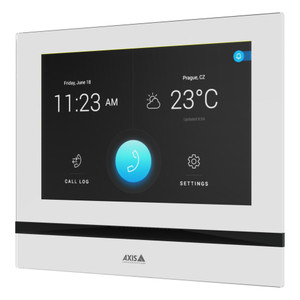
The Axis I5304 is a wall-mounted or recessed IP communication terminal designed for reception areas, building lobbies, and secure entry points requiring visitor verification and audio intercommunication. With a 7-inch capacitive touchscreen, full-duplex two-way audio, and PoE power delivery, the I5304 serves as a centralized answering point for personnel managing access control and visitor interactions across medium to large facilities.
Key Features
- 7-inch Capacitive Touchscreen: High-resolution display for clear video caller identification and intuitive staff interface.
- Full-Duplex Audio: Two-way communication with echo and noise cancellation—maintains call clarity in high-traffic reception areas and lobbies.
- PoE Power (802.3af): Single Ethernet cable delivers power and data; no separate 24V DC infrastructure needed.
- SIP & ONVIF Support: Integrates with third-party VoIP systems and ONVIF-compliant intercoms and access control platforms.
- Axis 2N OS: Dedicated embedded operating system optimized for IP communication endpoints—stable, lightweight, minimal management overhead.
- Flexible Mounting: Recessed, surface wall-mount, or desk placement options adapt to lobby architecture and traffic flow.
- 5-Year Manufacturer Warranty: Extended hardware coverage reduces lifecycle risk on a stationary lobby asset.
The I5304 runs on Axis' 2N OS, a purpose-built platform for IP communication devices. Unlike generic Android-based terminals, the 2N OS is engineered specifically for audio-visual intercommunication, eliminating unnecessary OS complexity and reducing attack surface. The 7-inch touchscreen provides sufficient real estate for visitor video preview while maintaining a compact form factor that fits standard electrical boxes (recessed installation) or wall rails without dominating lobby aesthetics.
Full-duplex audio with echo and noise cancellation is critical in loud reception areas—the unit's DSP isolates speaker voice from background HVAC, corridor traffic, and phone ring noise, making conversations between staff and visitors intelligible even during peak occupancy. This is especially valuable in medical offices, corporate headquarters, and multi-tenant buildings where call quality reflects professionalism.
Power delivery via PoE (802.3af, under 13W draw) simplifies installation—installers run a single Cat6 drop to a PoE switch port, eliminating the need for dedicated 24V DC power supplies or conduit runs. This approach also centralizes power management, allowing IT teams to remotely reboot units or schedule maintenance windows via switch control. The unit remains operational as long as the PoE switch is powered, reducing reliance on local UPS batteries.
SIP compatibility means the I5304 can integrate with existing VoIP infrastructure (3CX, FreePBX, Avaya, Cisco Call Manager, etc.) without proprietary gateway boxes. ONVIF Profile S support ensures video stream interoperability with major VMS platforms (Genetec, Milestone, Avigilon, ExacqVision) for centralized logging and call recording. When paired with an Axis IP intercom at a building entrance, the I5304 acts as the interior answering station, allowing reception staff to see and communicate with visitors without walking to the entrance door.
The I5304 is commonly deployed in healthcare facilities (front desk verification of patients and visitors), corporate multi-tenant buildings (distributed answering stations for individual suites), assisted living communities (staff response hub), and secure facilities (visitor screening before badge issuance). In each context, the touchscreen eliminates the need for separate display monitors, reducing desk clutter and total cost of ownership.
Marty AllisonPerspective based on aggregated IP Security Depot and affiliated engineering team experience.
In our experience, the I5304 fills a specific operational gap: it's the interior answering half of an IP intercom deployment. We've seen integrators spec entrance units (Axis or third-party IP intercoms) paired with I5304 answer stations in lobbies, front desks, and security offices. The pairing works because both devices speak SIP natively—no bridging box, no proprietary firmware, just standards-based voice and video. What sets the I5304 apart from generic Android tablets or repurposed iPad kiosks is the Axis 2N OS: it's hardened for audio-visual communication, has no unnecessary UI chrome, and doesn't require ongoing OS security patches or app management. We've installed units that have run for five years without a single software update. That operational simplicity is worth significant money on a 50-unit hospital or corporate campus deployment.
The display is the right size—7 inches is large enough to recognize a visitor's face or read badge information clearly, but small enough to fit a standard recessed box or wall-mounted rail without looking like a consumer product in a professional setting. The capacitive touchscreen is responsive and doesn't require a stylus, which matters in high-traffic areas where multiple staff may use it throughout the day.
One honest limitation: the I5304 is a receive-only terminal for most deployments. It doesn't integrate call routing logic, PBX features, or IVR capabilities—it's a dumb (in the best sense) answer device. If you need call forwarding, hold music, or automated attendant menus, you need a SIP-capable PBX or call control system upstream. The I5304 simply answers the call, displays the caller, and lets the user communicate. That's the design, and it's the right design for a lobby terminal.
Technical Highlights:
- Axis 2N OS: Proprietary embedded OS optimized for IP audio-visual endpoints. No bloat, no mandatory OS updates, minimal attack surface. In our field experience, this OS is rock-solid—we've seen units run 24/7 for years without a restart.
- Full-Duplex Audio Processing: Echo and noise cancellation at the DSP level, not via software post-processing. Operationally, this means the unit works in loud lobbies and high-traffic areas without requiring staff to shout. Call quality is professional-grade, not consumer-grade.
- PoE (802.3af) Power: <13W draw means the unit runs on any 802.3af PoE switch port. No separate power supply, no UPS complexity beyond the main network switch. Total cost of ownership drops measurably on multi-unit deployments.
- SIP Native: Works with FreePBX, 3CX, Avaya, Cisco, Genesys, and any other standards-based VoIP platform. No proprietary gateway. If you're already running a SIP ecosystem, add an I5304 and it talks to the existing PBX immediately.
- ONVIF Profile S Video: Streams H.264 video to any ONVIF VMS. Call recording and visitor logging integrate directly into your existing surveillance ecosystem without additional API glue.
- 5-Year Warranty: Covers hardware defects. In a stationary lobby deployment, this translates to five years of predictable capex—useful for facility planning and budget forecasting.
Deployment Considerations:
- The I5304 is a receiving terminal, not a call routing device. It sits downstream of a PBX or intercom system. Ensure your SIP trunk or intercom dialing plan routes calls to the I5304's extension. If you're using it standalone without a PBX, you'll need a third-party SIP server or gateway to manage call routing.
- Network design matters—put the I5304 on a managed PoE switch with QoS enabled. Voice traffic should prioritize over general data to avoid jitter and dropouts during peak network load. In high-density office buildings, we've seen issues with under-provisioned access switches.
- Recessed mounting requires coordination with building management—you're cutting into a wall cavity and running an Ethernet drop through studs. Wall-mounted or desk placement is faster and requires no structural work, but is less aesthetically integrated. Know the customer's preference early.
- The 7-inch display is clear, but staff sitting more than 4-5 feet away may have difficulty reading visitor faces during off-peak light conditions. Install a small accent light near the unit in dim lobbies, or ensure the unit is positioned near windows or ambient lighting.
- Audio latency: SIP over IP introduces 50-200ms delay depending on network conditions. This is normal for VoIP, but staff unfamiliar with IP phones may perceive it as awkward. A quick training note helps set expectations.
The I5304 is the right choice for facility managers, IT teams, and integrators who want to retire aging analog intercoms and move to IP-based visitor verification. It's not a consumer tablet repurposed for the lobby—it's a purposed-built IP communication endpoint. For healthcare, corporate, and institutional deployments with existing SIP infrastructure or a willingness to deploy one, it reduces operational overhead and integrates cleanly with access control and VMS platforms. See the Axis catalog for other IP communication and intercom solutions.