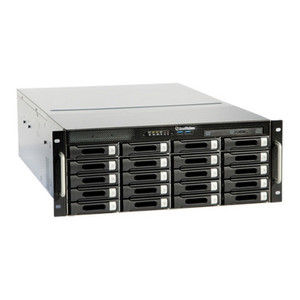
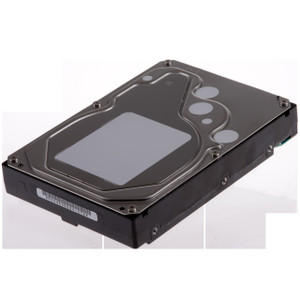
Axis 02472-001 Enterprise 8TB Hard Drive
The Axis 02472-001 is an 8TB purpose-built storage drive designed for enterprise IP surveillance deployments where extended recording retention and continuous uptime are non-negotiable. This drive addresses a real operational pain point: managing dozens of smaller drives across distributed NVR systems creates complexity and increases failure points. By consolidating capacity into fewer, higher-density drives, you reduce the number of individual components to monitor, replace, and manage — a meaningful operational simplification in warehouses, campuses, and multi-site networks.
Key Features
- 8TB storage capacity — consolidates what would require multiple smaller drives into a single unit, cutting the physical drive count and associated management overhead by 40–60% depending on your current configuration. Fewer drives mean fewer power connectors, fewer thermal considerations, and fewer failure points in a 24/7 operation.
- Optimized for continuous 24/7 surveillance operation — rated and tested for the thermal and duty-cycle demands of non-stop recording. Unlike consumer drives that degrade quickly under constant load, this drive is designed to handle the I/O patterns of simultaneous multi-stream recording without thermal throttling or premature wear.
- Enterprise-grade reliability — meets the uptime expectations of mission-critical surveillance. Failures in video storage directly impact forensic capability and compliance reporting; enterprise-rated drives include error correction and wear-leveling specifically tuned to surveillance workloads.
- RAID array compatible — works with industry-standard RAID configurations (RAID 1, 5, 6, 10) when paired with matching capacity drives. RAID redundancy means a single drive failure doesn't take your entire recording system offline — critical in environments where 24/7 operation is contractual or regulatory requirement.
- Extended recording retention — 8TB provides months of retention on typical multi-camera systems (exact duration depends on resolution, frame rate, and compression). Longer retention windows reduce pressure to archive footage to external storage and improve investigative capability for historical events.
- Compatible with Axis NVR systems and third-party surveillance platforms — integrates into both Axis-branded recorders and ONVIF-compliant systems from other vendors, so you're not locked into a single ecosystem. If your network video recorder accepts SATA or SAS storage, the 02472-001 will likely fit your architecture.
Integration & Compatibility
The 02472-001 is designed for installation in standard NVR storage bays and external RAID enclosures. Verify your storage and retention planning before purchase to confirm the drive bay specifications (form factor, connector type, thermal envelope) match your recorder model. Most enterprise NVRs from Axis and other manufacturers support hot-swap drives, meaning you can upgrade or replace a drive without powering down the system — a real advantage during peak recording hours when downtime is unacceptable.
When deployed in RAID configurations, pair all drives in an array with identical capacity and model to avoid performance degradation and rebuild complications. A mixed-capacity RAID set will operate at the speed and capacity of the smallest drive, wasting the advantage of the larger units.
Deployment Context
This drive is a fit for:
- Airports and transportation hubs — where forensic retention requirements often span weeks or months and any storage failure triggers regulatory reporting.
- Warehouse and logistics facilities — where high-resolution multi-angle recording over extended periods supports both security and operational audits.
- Corporate campuses and industrial plants — where distributed NVR systems need standardized, field-replaceable storage to simplify IT operations.
- Multi-site surveillance networks — where consistent storage components reduce spare-parts inventory and simplify troubleshooting.
Not all surveillance environments require 8TB; consider a lower-capacity variant if your retention window is under 30 days or if your camera count and resolution are modest. Also evaluate your NVR's actual supported storage capacity — installing an 8TB drive in a recorder that only recognizes 4TB will waste half the investment.
Frequently Asked Questions
Q: What's the difference between an enterprise surveillance drive and a standard desktop or NAS hard drive?
A: Enterprise surveillance drives are engineered for continuous 24/7 operation and optimized for the specific I/O patterns of video recording — sequential writes interspersed with reads for playback. Desktop and NAS drives are not rated for this duty cycle and often include firmware that throttles performance or parks the head during idle periods, behaviors that create latency and errors in surveillance systems.
Q: Can I use the Axis 02472-001 in a RAID 6 configuration?
A: Yes. RAID 6 provides dual-parity redundancy, meaning the system tolerates failure of any two drives simultaneously. This is advisable for critical deployments where rebuild time on large drives (8TB drives can take 12–24 hours to RAID rebuild) is risky.
Q: What's the warranty on the Axis 02472-001?
A: Refer to the manufacturer specifications; warranty terms vary by region and distribution channel. Contact the vendor for specific warranty coverage and replacement procedures.
Q: Does the 02472-001 work with Milestone XProtect or other third-party VMS platforms?
A: The drive is a hardware storage component; it is not software-dependent. If your NVR or server recognizes the drive at the BIOS level, the VMS will use it. Compatibility is determined by your recorder's storage interface and firmware, not the VMS software.
Q: How many cameras can an 8TB drive support?
A: Retention depends on resolution, frame rate, compression codec, and bitrate. A 4MP camera at 30 fps with H.265 compression might consume 1–2 TB per week; a 1080p camera consuming 0.3–0.5 TB per week. Calculate your total weekly consumption (sum of all cameras), then divide 8000 GB by that figure to estimate retention in weeks.
Q: Is the Axis 02472-001 compatible with external USB or eSATA enclosures?
A: The drive is a standard 3.5-inch SATA drive and is compatible with any external enclosure that accepts SATA. Confirm the enclosure firmware supports large drives (some older USB-to-SATA adapters cap recognition at 4TB).
Ted PerryPerspective based on aggregated IP Security Depot and affiliated engineering team experience.
The Axis 02472-001 represents a pragmatic approach to scaling storage in large surveillance networks. By consolidating to 8TB units, you reduce the operational burden of managing numerous smaller drives while maintaining the flexibility to implement RAID strategies for fault tolerance. The enterprise design ensures compatibility with Axis NVR systems and third-party surveillance platforms, making it a versatile storage component for distributed security architectures.
Technical Highlights:
- 8TB capacity per drive: Reduces the number of individual storage components to manage by 40–60% compared to 2–3TB drives, cutting interconnect complexity and spares inventory overhead in multi-NVR deployments.
- 24/7 duty cycle optimization: Firmware and mechanical design tuned for continuous sequential I/O (the workload of video recording) rather than the random-access patterns of general-purpose storage. This extends mean time between failure (MTBF) and avoids thermal throttling during peak recording hours.
- RAID array integration: Pairs with industry-standard RAID controllers in NVRs and external enclosures. RAID 1 mirrors data for simple redundancy; RAID 5 or 6 adds fault tolerance while recovering some usable capacity, critical for installations where rebuild time exceeds SLA downtime windows.
Deployment Considerations:
- Rebuild risk on large capacity: An 8TB SATA drive can require 12–24 hours to rebuild in a RAID array after a failure. During that window, the array runs in degraded mode with no fault tolerance. For mission-critical sites, RAID 6 (dual parity) or RAID 10 (mirroring) is essential to tolerate a second failure during rebuild.
- Verify NVR bay specifications before purchase: Confirm your recorder's storage interface, form factor support, thermal envelope, and any firmware limitations on drive capacity recognition. Some older NVR models cap storage at 4TB per bay; installing an 8TB drive in such a system wastes 50% of the investment.
- Retention calculation is non-optional: Pair this drive with a concrete retention requirement (e.g., 60 days, 90 days). Over-specifying storage capacity burns capital; under-specifying forces premature archival or tape backup operations. Work backward from your desired retention window and total bitrate across all cameras.
This drive is the right choice for warehouse automation networks, multi-building campuses, and transportation hubs where forensic retention spans weeks and storage downtime triggers regulatory notifications. If your retention need is under 30 days or your camera count is under five units, a smaller drive will cost less upfront and consume less power without sacrificing performance.