Overview
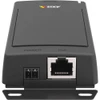
Axis 02370-001 Network Audio Bridge
Your recommended setup
Review items below — quantities update pricing automatically.
Bundle Summary
Overview
No Bots, Just Experts
Questions about this product? Free pre-sales support from a senior specialist — product questions, compatibility checks, BOM quotes, price confirmation — typically answered within one business day. Need camera placement or system design work? Engineering time is $175 per hour (qty 1 = 1 hour). Hardware buyers get up to one hour ($175) credited back on their order.
Axis 02370-001 Network Audio Bridge
The Axis 02370-001 is a compact IP audio integration device that connects analog audio infrastructure—microphones, line inputs, and speakers—to networked surveillance and communication systems. If you have existing analog audio equipment and need to layer in IP-based alerting, emergency announcements, or VoIP telephony without ripping out infrastructure, this bridges that gap cleanly.
Key Features
- Dual audio input/output ports: Mic-in and line-in inputs with line-out delivery mean you can ingest from a microphone or mixer and push audio to speakers, amplifiers, or other endpoints. No single-purpose device bottleneck.
- PoE power (802.3af compliant): Draws under 13W via standard Gigabit Ethernet, so no separate power supply or AC outlet required. Simplifies cabling in existing surveillance installations where PoE infrastructure already exists.
- Multiple audio codecs: Supports AAC LC, G.711 PCM, G.726 ADPCM, MP3, and WAV at sampling rates from 8 kHz to 48 kHz and bit rates from 64 kbps to 320 kbps (constant and variable bit rate modes). This codec flexibility lets you optimize for bandwidth on tight networks or quality on robust ones.
- Native SIP/VoIP integration: Native SIP support means the 02370-001 can integrate directly into existing VoIP phone systems and PBX platforms without third-party gateways, reducing deployment complexity.
- AXIS Audio Manager Edge built-in: Provides on-device content scheduling and message prioritization—urgent announcements interrupt routine audio playback without manual intervention. This matters in emergency scenarios where latency kills credibility.
- Event-triggered automation: Configurable GPIO inputs and outputs enable the device to respond to external triggers—door sensors, motion detectors, access control events—by playing specific audio clips or sending SNMP traps. Integrates cleanly into security and automation workflows.
- IP network security: Supports IEEE 802.1X network access control, HTTPS, TLS 1.2/1.3, digest authentication, OAuth 2.0 ADFS integration, AES-XTS-Plain64 256-bit microSD encryption, signed firmware, and centralized certificate management. Security posture matches modern enterprise surveillance requirements.
- Compact form factor: At 128 × 56 × 24 mm and 107 g, the 02370-001 fits into wall-mounted or DIN-rail enclosures without consuming rack space or requiring dedicated shelving.
- Open API and ACAP support: VAPIX API and ACAP compatibility enable custom software integration and third-party app deployment, reducing vendor lock-in if you need bespoke audio workflows.
Integration and Deployment Considerations
The 02370-001 integrates with network audio systems via RTSP/RTP streaming and SNMP traps for monitoring. It works in tandem with Axis IP cameras that have built-in audio inputs, allowing you to centralize audio management across a mixed surveillance estate. The device supports IPv4/IPv6, HTTP/HTTPS, DNS, DHCP, and SSH, so it integrates into standard enterprise IT provisioning and DNS-based discovery workflows.
Operating temperature range of –20°C to 50°C with storage tolerance to –40°C to 65°C handles most indoor and protected outdoor deployments. Humidity tolerance of 5–95% RH non-condensing means condensation on lens or connector isn't a concern, but active water immersion is not supported—mount it in covered or semi-protected locations.
For large multi-site audio deployments, AXIS Audio Manager Pro and Center are available separately to centralize scheduling and content control across dozens or hundreds of 02370-001 devices. On-device microSD support (optional expansion) provides local failover storage if network connectivity drops temporarily.
When to Choose a Different Approach
If your analog audio infrastructure is being decommissioned entirely and you're deploying new IP-based PA systems from the ground up, integrated network cameras with built-in audio or dedicated VoIP phone systems may eliminate the need for a separate bridge. If you require audio recording at broadcast quality with zero loss, consider dedicated audio recording appliances rather than the 02370-001, which prioritizes real-time streaming over archival fidelity. For extremely latency-sensitive live audio mixing, a purpose-built audio interface with lower-latency drivers may be more appropriate than an IP bridge.
Technical Specifications Summary
Processor & Memory: i.MX 6SoloX with 512 MB RAM and 512 MB Flash. Frequency response spans 20 Hz to 20 kHz with digital signal processing. Network: Gigabit Ethernet 10BASE-T/100BASE-TX (RJ45). Storage: microSD card support for local backup and content caching. Warranty: 5-year manufacturer warranty covering defects in materials and workmanship.
Frequently Asked Questions
Q: Does the Axis 02370-001 record audio locally?
A: The 02370-001 does not record audio to its internal flash storage. It streams audio in real time over IP using supported codecs. Optional microSD card expansion can be used for caching or local backup of scheduled announcements and content, but not for continuous audio recording. For persistent audio recording, pair it with an NVR or dedicated audio recording platform that supports RTSP input.
Q: What is the maximum cable length for the analog audio inputs?
A: The evidence does not specify maximum cable run length for the mic-in or line-in ports. Standard best practice is to keep balanced audio lines under 50 meters (164 feet) to avoid interference. Consult the detailed datasheet or contact the manufacturer for site-specific guidance on your exact cable type and environment.
Q: Can the 02370-001 be configured to send alerts via email if a GPIO trigger fires?
A: Yes. The 02370-001 supports file uploads via HTTP, network share, and email, so you can configure event-triggered actions to send email notifications when a GPIO input is triggered. Combined with scheduled audio announcements, this allows integrated alert workflows across audio and email channels.
Q: Is the 02370-001 compatible with Milestone XProtect or other third-party VMS platforms?
A: The 02370-001 supports ONVIF and standard IP protocols (HTTP, HTTPS, RTSP, SNMP), which makes it compatible with most modern VMS platforms that support audio input streams. However, specific integration details and whether audio streams appear as native objects in Milestone XProtect depend on your VMS version and configuration. Test in a lab environment or consult the VMS vendor for explicit audio-over-IP compatibility before full deployment.
Q: What does the IP20 rating mean for the 02370-001?
A: IP20 means protection against solid objects larger than 12 mm (fingers, small tools) but no protection against water ingress. The device is suitable for indoor use, protected wall-mounted enclosures, or DIN-rail cabinets. Do not expose it to rain, spray, or condensation without additional weatherproof housing. For outdoor or wet environments, you will need an IP66 or IP67-rated enclosure.
Q: What microSD card capacity does the 02370-001 support?
A: The evidence indicates microSD card support but does not specify maximum capacity. Most modern devices support microSD cards up to 1 TB, but manufacturer documentation should be consulted to confirm the maximum card size the 02370-001 firmware recognizes.
The Axis 02370-001 solves a real problem: you have working analog audio infrastructure and need to connect it to a modern IP surveillance or emergency notification system without replacing everything. The device is built for systems integrators who inherit mixed-vintage estates and need a clean bridge rather than a forklift upgrade.
Technical Highlights:
- Sub-13W PoE footprint: Draws well under 802.3af maximum (15.4W), so it won't trigger power budget errors on a fully-loaded switch. Matters when you're daisy-chaining dozens of small devices off a single PoE port allocation.
- Dual analog I/O with codec flexibility: The combination of mic-in, line-in, and line-out ports plus five codec options (AAC, G.711, G.726, MP3, WAV) gives you adaptation room. G.711 at 64 kbps is tight for HD-quality voice but runs on congested networks; AAC at 96–128 kbps and 48 kHz sampling delivers noticeably cleaner announcements without breaking bandwidth budgets on modern deployments.
- Message prioritization via AXIS Audio Manager Edge: Emergency announcements interrupt routine playlists without manual override. In a warehouse or healthcare facility, this prevents ad copy from talking over a fire alarm or critical alert.
- AES-XTS-Plain64 256-bit microSD encryption: If you're caching sensitive audio clips (e.g., employee announcements, medical alerts) on local storage, the encryption protects against physical theft. Not all audio devices encrypt local storage—this one does.
Deployment Considerations:
- IP20 rating means it's indoor/protected only—confirm your mounting location is dry and climate-controlled. If you're mounting on an exterior wall under an eave or inside a vented metal cabinet, test humidity conditions first.
- The 02370-001 does not record audio itself; it bridges and streams. If you need persistent audio logging, configure an NVR or dedicated audio recorder to ingest the RTSP stream. Most NVRs with audio-in cards support this natively, but verify before commissioning.
- SIP integration is native, but VoIP PBX interoperability depends on your phone system's SIP feature set. Test with your telecom vendor's lab or pilot deployment before rolling out across 50+ sites.
Best fit: Multi-location retail, hospitality, healthcare, or logistics environments where you need coordinated announcements and emergency messaging without replacing working amplification or speaker systems. Pair it with a network video recorder that supports RTSP audio input, and you have a unified IP alert platform that leverages your existing speakers and microphone infrastructure.
Videos Hide Videos Show Videos
Your recommended setup
Review items below — quantities update pricing automatically.
Bundle Summary
System Design, Deployment & Technical Support
Support services and planning resources for commercial surveillance, access control, and infrastructure deployments.
Fixed scope • Fixed price
System Design Assistance
- Get help validating product compatibility
- Coverage requirements
- Storage planning and deployment architecture before you buy.
Deployment & Configuration Support
- Access fixed-scope support for rollout planning
- User setup guidance
- Migration and system standardization across single-site or multi-site deployments
Guides, Tools & Calculators
- PoE requirements
- Storage retention
- Camera selection and deployment methodology