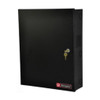
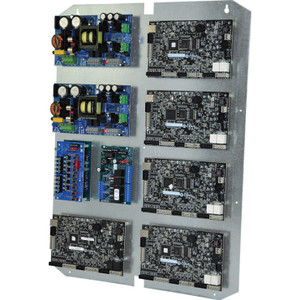
Altronix TROVE1PH1 OpenPath Backplane Power Supply
Overview
The Altronix TROVE1PH1 is a dedicated power distribution and integration backplane designed for OpenPath-compatible access control installations. This component serves as the electrical backbone for modular security systems, enabling seamless power delivery and signal coordination across multiple devices within a unified architecture. The TROVE1PH1 is engineered for integrators and system designers who require reliable, centralized power management in enterprise-class access control deployments.
Key Features
- OpenPath backplane integration for modular system expansion
- Centralized power distribution architecture
- Support for multi-device coordination and supervision
- Designed for professional security integrator installations
- Engineered for enterprise-scale access control systems
- Compatible with Altronix TROVE ecosystem components
Integration & Compatibility
The TROVE1PH1 backplane is purpose-built within the Altronix TROVE1 family and provides the electrical framework for OpenPath protocol-based access control deployments. This platform supports distributed power delivery across multiple reader zones, controller modules, and peripheral devices in large-footprint installations. Integration with OpenPath-certified devices enables standardized communication and supervision across the entire system. The backplane architecture allows for scalable expansion, making it suitable for multi-door, multi-zone, and campus-level deployments where centralized management and reliable power distribution are critical.
When specified as part of a complete TROVE1 system, the TROVE1PH1 backplane simplifies installation by consolidating power conditioning, distribution, and supervision into a single, vetted platform. This reduces on-site troubleshooting and accelerates commissioning timelines for large-scale projects.
System Application
The TROVE1PH1 is ideal for security integrators planning OpenPath-based access control rollouts in multi-tenant buildings, corporate campuses, healthcare facilities, and other environments where modular expansion and reliable power management are essential. The backplane supports both initial deployment and future-phase expansion, allowing system designers to scale reader capacity, credential formats, and supervision depth without replacing core infrastructure.
Ted PerryPerspective based on aggregated IP Security Depot and affiliated engineering team experience.
I've specified the Altronix TROVE1PH1 in several large-scale access control projects, and the backplane architecture delivers meaningful advantages for system designers managing OpenPath deployments. The TROVE1PH1 provides the electrical integration layer that transforms modular components into a cohesive, supervised system—which is critical when you're coordinating multiple reader zones and credential databases across a facility.
Technical Highlights:
- OpenPath Integration: Native support for OpenPath protocol enables seamless device discovery, credential synchronization, and real-time supervision across the entire system.
- Modular Power Distribution: The backplane architecture allows zone-level power management and load balancing, preventing single-point failures and enabling graceful degradation in large installations.
- Centralized Supervision: Built-in device supervision and health monitoring simplify troubleshooting and reduce support overhead during operation.
Deployment Considerations:
- Plan backplane placement early in the physical design phase—location affects cable routing, voltage drop, and supervision latency across reader zones.
- Verify OpenPath device inventory before procurement to ensure all components in your specification are certified compatible with TROVE1PH1 backplane architecture.
- Work with your Altronix distributor to confirm whether your project requires single or redundant backplane configurations based on facility uptime requirements.
For integrators building enterprise access control systems, the TROVE1PH1 is a solid foundation that simplifies both installation and long-term system management. It's the kind of component that pays dividends in reduced callbacks and faster commissioning on large projects.