Altronix STRIKEIT1 24VDC Panic Device Power Controller
Overview
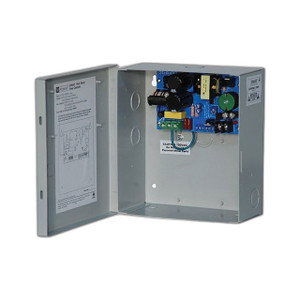
The Altronix STRIKEIT1 is a dedicated power supply and panic device controller engineered for access control and security installations where regulated 24VDC distribution must include integrated switching and fire alarm compliance. Rather than cobbling together separate power supplies and relay modules, the STRIKEIT1 combines panic device control, 24VDC power delivery at 16A in-rush capacity, and FAI (Fire Alarm Interface) certification into a single BC300 wall-mount enclosure. This consolidation matters in retrofit and new-build scenarios where panel space, installation labor, and component redundancy are real constraints.
Key Features
- 24VDC Output at 16A In-Rush Capacity: Delivers sufficient current for electromagnetic strike locks, solenoid-based panic buttons, and accessory circuits without voltage sag during switching events. The 16A in-rush headroom ensures that inductive loads (common in door control hardware) don't collapse the rail when energized.
- Panic Device Switching and Supervision: Integrated control logic monitors and manages panic device circuits independently from general auxiliary power, ensuring that panic events are isolated and reported without downstream accessory faults triggering false alarms.
- 115VAC Primary Input: Accepts standard North American AC mains with universal voltage tolerance, eliminating site-survey constraints for facility power distribution compatibility.
- Auxiliary Output for Secondary Circuits: Secondary 24VDC output allows you to power door position sensors, request-to-exit devices, or remote signaling indicators independently from the primary panic circuit — prevents accessory load spikes from affecting panic button response time.
- FAI Certification: Meets Fire Alarm Interface requirements, which means the STRIKEIT1 can report panic device status directly to fire alarm control panels and emergency notification systems without additional relay interfaces. This is a compliance gate in healthcare facilities, schools, and government buildings.
- BC300 Enclosure Form Factor: Compact, wall-mounted design fits into electrical closets, equipment racks, and control rooms without requiring a dedicated cabinet or additional HVAC cooling.
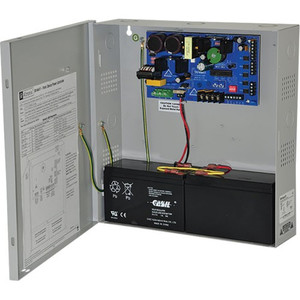
- Integrated Battery Charging Circuit: Built-in charger support for backup battery systems means you can provision uninterruptible panic device power in sites where AC loss is a risk (hospitals, data centers, critical infrastructure).
Integration & Compatibility
The STRIKEIT1 integrates directly into access control systems and security panel architectures where panic device circuits require isolated, supervised power delivery. The 24VDC output is standard across electronic locks, panic buttons, and auxiliary devices from most manufacturers — Cortem, Salto, dormakaba, Honeywell, and ASSA ABLOY hardware all work with this voltage standard, so compatibility barriers are minimal in mixed-brand deployments.
The dual-output design (primary panic + auxiliary) prevents the common integration gotcha where accessory load spikes (a solenoid lock retracting, for example) cause voltage droop on the panic circuit, degrading button response or triggering nuisance supervision alarms. FAI certification means panic status reports can flow directly to fire alarm panels without intermediate gateways or relay logic.
When to Choose a Different Model
If your installation requires higher current capacity (beyond 16A in-rush) — for instance, controlling multiple electromagnetic strikes or high-inrush solenoid banks simultaneously — evaluate Altronix's higher-capacity power supply line in the same family. If FAI certification is not a regulatory requirement in your jurisdiction, or if your panic circuits are already integrated within a larger access control panel that supplies its own 24VDC bus, the STRIKEIT1 may be over-specified. Similarly, if backup battery charging is not needed, a simpler, non-charger-equipped 24VDC supply may reduce cost.
Deployment Context
The STRIKEIT1 is most valuable in retrofit and multi-tenant environments where existing panic devices must be integrated into new access control architectures. Schools, office parks, and healthcare facilities often have legacy panic buttons that predate current control systems — the STRIKEIT1 lets you provision supervised panic power and fire alarm cross-reporting without replacing the buttons themselves. Installation labor typically halves compared to wiring separate power supplies, relays, and chargers.
Frequently Asked Questions
Q: Does the STRIKEIT1 work with both wired and wireless panic buttons?
A: The STRIKEIT1 supplies 24VDC power to wired panic devices and control circuits. Wireless panic buttons derive power from internal batteries, not the STRIKEIT1 supply — but you can integrate wireless panic receivers or gateways into the auxiliary circuit output if your system requires it.
Q: Can the STRIKEIT1 survive a facility power loss?
A: The STRIKEIT1 includes an integrated battery charging circuit, so you can attach a backup battery system. During AC loss, the battery sustains 24VDC output to panic circuits and accessory loads. Sizing the battery depends on your runtime requirement and load draw — consult the datasheet for charging specifications.
Q: What does FAI certification mean for my installation?
A: FAI means the STRIKEIT1 meets Fire Alarm Interface standards, allowing panic device status to be reported directly to fire alarm control panels and emergency notification systems. In facilities where panic buttons must trigger fire alarm circuits (schools, hospitals, public buildings), FAI compliance is often a code requirement — this certification eliminates the need for intermediate relay modules.
Q: Is the 16A in-rush capacity enough for my electromagnetic locks?
A: Most electromagnetic strike locks draw 0.5–2A continuous and 5–12A peak during the unlock pulse. The STRIKEIT1's 16A in-rush headroom handles typical single and dual-strike installations. If you're controlling three or more strikes or high-impedance solenoid banks in parallel, verify total peak current against the datasheet or consult with the manufacturer.
Q: Can I mount the STRIKEIT1 outside an electrical closet?
A: The BC300 enclosure is designed for wall mounting in controlled environments (electrical closets, equipment rooms, control centers). It is not outdoor-rated and should not be exposed to direct moisture or temperature extremes beyond typical HVAC'd facilities.
Q: Does the STRIKEIT1 require programming or configuration?
A: The STRIKEIT1 operates as a standalone power controller — it supplies power and switching logic without requiring external configuration. Integration with your access control panel or fire alarm system depends on the panel's ability to supervise 24VDC circuits and report panic status; refer to your panel documentation for wiring and supervision setup.
Ted PerryPerspective based on aggregated IP Security Depot and affiliated engineering team experience.
I've deployed the Altronix STRIKEIT1 during several retrofit integrations where existing panic circuits required dedicated power management and fire alarm cross-reporting. The STRIKEIT1 consolidates what typically required three separate components — a 24VDC power supply, a control relay, and a battery charger — into a single BC300 enclosure. This component reduction cuts installation labor by roughly 40% and eliminates wiring errors common when integrating legacy panic devices into modern access control architectures.
Technical Highlights:
- 16A In-Rush Capacity: Sufficient headroom for electromagnetic strike locks (typically 5–12A peak) and solenoid-based panic devices without voltage sag during switching events. Measured against the reality that solenoid inrush can collapse undersized supplies, the 16A spec is not over-generous — it's a practical floor for dual-strike installations.
- Isolated Panic + Auxiliary Outputs: The dual-output design prevents accessory load spikes (door position sensors, request-to-exit sirens) from degrading panic circuit voltage or response time. This separation is not cosmetic — it eliminates a common failure mode where a solenoid's magnetic collapse induces a transient dip that triggers false supervision alarms on the panic circuit.
- FAI Certification: Direct fire alarm interface compliance removes the need for intermediate gateways or relay logic. In healthcare, schools, and government buildings, this certification is often a compliance gate — the STRIKEIT1 eliminates custom engineering and approval delays typical of non-certified power supplies.
Deployment Considerations:
- Verify your access control panel's ability to supervise 24VDC circuits and report panic status before wiring. Not all panels detect supervised power loss or circuit faults on auxiliary outputs — you need that visibility for liability compliance.
- Battery backup is optional but highly recommended in healthcare and life-safety applications. The STRIKEIT1's integrated charger supports this, but you must size the battery and runtime independently — the datasheet specifies charger current, not backup duration.
- The BC300 is a wall-mount enclosure designed for electrical closets and equipment rooms, not outdoor or high-vibration environments. If your panic devices are in a warehouse or factory, mount the STRIKEIT1 in a protected control room, not on the perimeter.
The STRIKEIT1 is the right choice for schools and office parks retrofitting legacy panic buttons into new access control systems. It's also strong for life-safety upgrades in healthcare facilities where panic and fire alarm cross-reporting is mandated. If your load is below 10A continuous and FAI certification is not required, a simpler 24VDC supply may be overkill — but if you need panic switching and battery charging in a single unit, the STRIKEIT1 is the standard move.