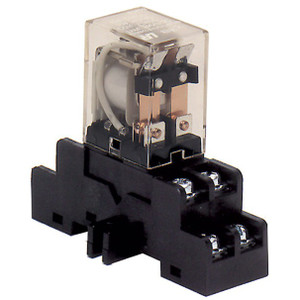
Altronix RAC120 115VAC DPDT Relay Base Module
The Altronix RAC120 is a DIN rail-mounted relay base module engineered for 115VAC input switching in access control and security infrastructure. Its DPDT (double-pole, double-throw) configuration provides two independent output circuits, each capable of switching 220VAC or 28VDC loads up to 10A — a useful detail when you need to control multiple circuits (e.g., two separate door strikes or gate operators) from a single command signal without adding bulky extra relays to your cabinet.
Key Features
- 115VAC Input Operation: Operates directly from standard AC mains voltage, eliminating the need for a separate step-down transformer in installations where AC is already present in the cabinet.
- Dual Independent DPDT Outputs: Two isolated relay circuits mean you can switch different loads (AC or DC) simultaneously without cross-talk — useful for coordinating lock release with auxiliary alarm or door sensor circuits.
- 220VAC / 28VDC Switching Capability: Handles both AC and DC loads on the same module. This flexibility reduces SKU count when integrating older AC-based access hardware with modern 28VDC door strikes or solenoids.
- 10A Maximum Current Per Output: Rated for 10A per circuit at full voltage, sufficient for most electromagnetic locks and solenoid coils. Note: if you need to switch larger industrial loads (motor-driven gates, high-power contactors), this module won't handle the inrush current — consider stepping up to a heavier industrial relay.
- DIN Rail Mounting: Snap-in DIN rail form factor fits standard 35mm rails, making it compatible with any cabinet or distribution panel already using DIN-mounted breakers, terminal blocks, or other modular components. No custom drilling or panel modification required.
- UL Listed for Code Compliance: UL listing means it meets North American electrical safety standards — a requirement for many security integrators and facilities looking to pass third-party inspections or maintain compliance with local codes.
- Lifetime Limited Warranty: Altronix backs the module with a lifetime limited warranty, covering manufacturer defects. Typical for passive relay components, this signals confidence in long-term reliability but does not extend to misuse or external damage.
Integration & Compatibility
The RAC120 integrates into any access control or security system architecture where 115VAC relay switching is required — fire alarm signal relays, gate operator control, dual-strike coordination, auxiliary alarm circuits, or interlock logic. Because it is a passive relay module (no microcontroller or network intelligence), it poses no software compatibility issues; it simply passes through 115VAC input to trigger the relay coil. Wire the 115VAC signal from your access control panel or security receiver, and the RAC120 switches the two independent output circuits on demand.
The module's 10A rating covers most standard electromagnetic locks and solenoid valves; verify your specific load current against the datasheet before finalizing the design. If you require relay logic (delay, pulse stretching, or AND/OR gate functions), the RAC120 is a straightforward switching relay only — no built-in timing or logic; reserve a second relay module or programmable controller for those functions.
Deployment Considerations
The RAC120 is a straightforward, passive component — no programming, no network configuration, no firmware updates. This simplicity is both a strength (fewer failure points, easier troubleshooting) and a limitation (no diagnostics, no remote status feedback). In cabinet space-constrained installations, the DIN rail footprint is compact, but confirm your cabinet has adequate 115VAC mains supply before installation. For deployments requiring diagnostics, remote relay status monitoring, or complex logic sequencing, a network relay controller or programmable logic device may be a better fit.
Frequently Asked Questions
Q: Can the RAC120 be used with 28VDC output circuits only?
A: Yes. The module switches 220VAC or 28VDC loads independently. You can use one output for 28VDC and the other for a different load, or both outputs for 28VDC circuits. The 115VAC input signal triggers both relays; the output voltage is determined by what you wire to each relay terminal.
Q: Does the RAC120 provide any electrical isolation between the control signal and the switched load?
A: Yes. The relay coil is isolated from the output contacts, meaning the control signal (115VAC input) is galvanically isolated from the switched load. This is standard relay behavior and protects low-voltage control circuits from high-voltage load faults.
Q: What is the maximum inrush current the RAC120 can handle?
A: The module is rated for 10A steady-state current per output. Inrush current (the initial surge when an inductive load such as a solenoid or motor is first energized) can exceed steady-state ratings by 3–5×. Consult the RAC120 datasheet or contact Altronix technical support to confirm inrush tolerance for your specific load; oversized inrush may damage the relay contacts.
Q: Is the RAC120 UL listed in Canada (CSA)?
A: The module is UL listed for North American compliance. Verify the product documentation for dual UL/CSA marking if Canadian installations require explicit CSA certification.
Q: Can I use the RAC120 in an outdoor or non-climate-controlled cabinet?
A: The RAC120 is a passive relay module with no active electronics and no specified operating temperature range in the standard documentation. Outdoor or extreme-temperature installations should confirm environmental ratings with Altronix or the distributor before deployment.
Q: How many RAC120 modules can I stack on a single DIN rail?
A: DIN rail is modular; each RAC120 occupies a discrete footprint. Space is limited only by cabinet width and the physical size of the rail. Confirm cable routing and thermal clearance if mounting multiple modules in close proximity.
Ted PerryPerspective based on aggregated IP Security Depot and affiliated engineering team experience.
The Altronix RAC120 is a no-nonsense relay module — exactly what you need if you're wiring dual-circuit switching into a legacy or hybrid access control setup. The DPDT configuration and 10A per-circuit rating are the real payoff here: you get two independent switching paths from a single 115VAC control signal, which cuts down on wiring complexity and cabinet clutter compared to daisy-chaining separate relays.
Technical Highlights:
- Dual Independent DPDT Outputs: Two isolated relay circuits mean simultaneous switching of different loads (door strike + alarm solenoid, for example) without crosstalk. This matters when coordinating access and security events in the same cabinet.
- 10A Steady-State Rating: Sufficient for standard electromagnetic locks and solenoid coils. Verify inrush current on your specific load — solenoids and motors can spike 3–5× above steady-state. If you're pushing close to 10A nominal, inrush may trip the relay or damage contacts.
- 220VAC and 28VDC Switching on the Same Module: Reduces SKU count in hybrid installations where old AC equipment coexists with modern DC hardware. Each output is isolated, so you can mix voltages without interference.
- DIN Rail Footprint and UL Listing: Compact and code-compliant. Integrates directly into any cabinet already using DIN-rail infrastructure (breakers, terminal blocks, contactors).
Deployment Considerations:
- The RAC120 is purely passive — no diagnostics, no remote status feedback. If you need to confirm relay state remotely or log switching events, add a networked relay controller or PLC downstream.
- Watch out for inrush current: if your load inrush approaches or exceeds 10A, the relay contacts may arc or weld. Request the detailed relay contact rating from the datasheet and cross-reference your load spec.
- Confirm 115VAC mains availability in your cabinet before installation. If AC mains is not already present, you'll need to run power separately or use a step-down transformer, adding cost and complexity.
Deploy the RAC120 when you need straightforward dual-circuit 115VAC switching with no software overhead — multi-door access coordination, gate-and-auxiliary-contact logic, or fire alarm relay expansion. Skip it if you require logic sequencing, timing delays, or remote diagnostics; a programmable relay or networked control module is the better choice.