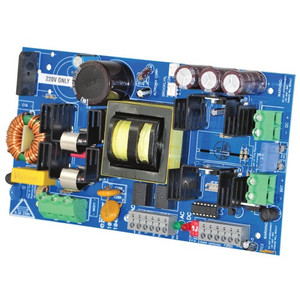
Altronix BCS4G Battery Shelf for BC400G Backup Power
The BCS4G is a dedicated battery shelf designed to expand the power storage capacity of the BC400G backup power system. When a single BC400G's internal battery cannot sustain your installation for the required runtime, the BCS4G provides a structural mounting solution for additional battery modules mounted externally. This is a common requirement in multi-door access control systems, distributed IP camera networks, and alarm monitoring installations where continuous operation during power loss is non-negotiable.
Overview
Backup power runtime is determined by two factors: the power draw of your devices and the energy capacity of the batteries. The BC400G handles moderate loads out of the box, but sprawling installations with multiple readers, locks, cameras, and network equipment can deplete internal reserves quickly. The BCS4G solves this without replacing your primary unit. It mounts externally, accepts additional battery modules, and integrates directly with the BC400G — meaning no separate power management, no complex wiring, just extended runtime.
This approach is cheaper and simpler than purchasing a second complete backup system. You keep your existing BC400G infrastructure and add capacity only where needed. The shelf design organizes batteries in a dedicated enclosure, reducing clutter in your equipment rack or wall-mount location.
Key Features
- BC400G Compatibility: Engineered specifically for the BC400G backup power system — no adapter modules or third-party power management required. Plug-and-play integration keeps configuration simple and support straightforward.
- External Battery Mounting: Accommodates multiple battery configurations, giving you flexibility to scale runtime based on actual load testing. Add one module for modest runtime extension, or stack multiple modules if your installation demands eight or more hours of backup operation.
- Organized Enclosure Design: Purpose-built form factor keeps batteries secure, labeled, and protected from physical damage. Cleaner than ad-hoc mounting solutions and easier to audit during compliance reviews.
- Expandable Runtime: Typical BC400G internal capacity supports 4–6 hours of moderate load (access control readers, door locks, small camera count). Adding external batteries via the BCS4G can extend total runtime to 12+ hours depending on load profile and module quantity — critical for sites where grid restoration may be delayed.
- Lifetime Limited Warranty: Covers defects in materials and workmanship for the life of the product. Reduces risk on a long-term infrastructure investment and simplifies replacement logistics if hardware fails.
- Integrates with backup power supply ecosystem: Works within the Altronix power ecosystem, so future upgrades or expansions don't require wholesale replacement of your primary system.
Integration & Compatibility
The BCS4G is a passive shelf — it provides structure and organization only. Power distribution, charging management, and load shedding logic remain under the BC400G's control. This means:
- No additional configuration or programming required.
- Monitoring and reporting (if configured in your BC400G) continue to reflect total available runtime without firmware updates.
- Battery charger current and float voltage are managed by the BC400G, ensuring proper charge profiles and cycle life.
- Compatible with standard UPS batteries approved for the BC400G — no proprietary modules or lock-in.
Typical deployments include multi-reader access control at warehouses, distribution centers, and manufacturing facilities; camera power backup in parking structures and perimeter surveillance; and emergency lighting circuits in alarm monitoring stations.
When to Evaluate Runtime More Carefully
Runtime calculations depend on total system load and battery capacity. A single BCS4G module may not be sufficient if your facility has heavy PoE camera loads, multiple electric strikes, or networked access points that consume significant power during outage. Before ordering, measure the actual draw of all backup-protected devices (multimeter on the BC400G output, sustained draw during normal operation), then work backward: 10 amps at 24VDC = 240W; each battery module stores roughly 7–10 amp-hours, yielding 2–3 hours per module at that load. If you need 12 hours, stack multiple BCS4G shelves or consider a larger primary backup system. backup power sizing guide can help you run the numbers.
Frequently Asked Questions
Q: Can I use the BCS4G with a backup power system other than the BC400G?
A: No. The BCS4G is designed specifically for the BC400G. Using it with incompatible systems may result in unsafe charging profiles or physical mounting failures. Confirm your primary unit is a BC400G before ordering.
Q: How many BCS4G shelves can I stack on a single BC400G?
A: The BC400G charger is sized for internal batteries plus one external shelf's worth of modules. Stacking multiple BCS4G units exceeds the charger's design capacity and may shorten battery life. Consult the BC400G technical data or contact the manufacturer for multi-shelf configurations.
Q: What is the warranty on the BCS4G?
A: Lifetime Limited Warranty. Covers manufacturing defects in materials and workmanship for the life of the product. Does not cover misuse, improper installation, or batteries that have reached end-of-life due to normal charge cycles.
Q: Does the BCS4G include batteries?
A: No. The BCS4G is the shelf enclosure only. Batteries compatible with the BC400G must be purchased separately and inserted into the shelf. Confirm compatibility with the BC400G datasheet or your integrator.
Q: Can I mount the BCS4G remotely from the BC400G?
A: Yes, the BCS4G can be installed in a separate cabinet or wall location. However, battery interconnect cable runs increase complexity and voltage drop. Keep runs under 25 feet if possible, and use appropriately sized conductors. Consult an installer for remote mounting layouts.
Q: Is the BCS4G suitable for outdoor installation?
A: The BCS4G is designed for controlled indoor environments (equipment rooms, cabinets, closets). It is not rated for direct weather exposure. If you require outdoor backup power, discuss NEMA-rated enclosure options with your supplier.
Ted PerryPerspective based on aggregated IP Security Depot and affiliated engineering team experience.
The BCS4G solves a real problem: you've installed a BC400G to handle modest access control or camera backup, but the site has grown or loads are higher than expected, and you're facing runtime shortfalls during outages. Instead of ripping out the BC400G and buying a larger system, the BCS4G lets you add battery capacity without touching your primary investment. That's pragmatic scaling.
Technical Highlights:
- Lifetime Limited Warranty: Long-term coverage reduces capital risk and simplifies replacement decisions if the shelf hardware fails — valuable for deployments where downtime affects revenue or safety compliance.
- BC400G Integration: No separate charge controller, no firmware updates, no protocol bridging. The BC400G manages all power logic for the external shelf, so integration complexity stays minimal and troubleshooting remains straightforward.
- Modular Battery Architecture: Ability to add one or multiple battery modules means you can right-size runtime for your actual load profile. Don't pay for 12 hours if 6 hours meets your SLA; don't skimp on runtime for cost and regret it at 2 a.m. when the grid is down.
Deployment Considerations:
- Runtime is load-dependent. A heavily loaded BC400G (multiple card readers, network equipment, PoE cameras) may see only 4–5 hours of runtime from internal batteries alone. Each BCS4G module typically adds 2–3 hours at average load. Do the math before ordering — measure actual draw with a clamp meter or inrush analyzer.
- The BCS4G is a passive shelf. Battery charger current is fixed by the BC400G design. If you stack multiple shelves, charging current may not be sufficient, leading to incomplete charges and reduced battery cycle life. One shelf per BC400G is the safe rule.
- Cable runs from BC400G to remote BCS4G shelves introduce voltage drop. Longer runs require heavier gauge conductors. Keep interconnect distances under 25 feet to avoid capacity loss; longer distances demand consultation with your manufacturer or an experienced integrator.
The BCS4G is most cost-effective for existing BC400G deployments where load growth or runtime gaps have emerged but the primary system is sound. If you're designing a new multi-door access control network or distributed camera infrastructure from scratch, calculate runtime upfront and choose your primary backup system size accordingly — it's often simpler than layering external shelves afterward. But if you're already live with a BC400G and need to extend runtime without swapping hardware, the BCS4G is the practical answer.