
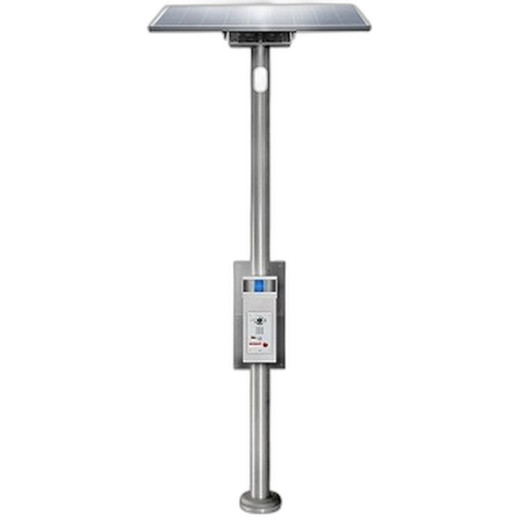




Product images are provided for reference and may not represent the exact model, configuration, or included
components.
Overview
SKU:
TWS-Z4
Condition:
New
Availability:
Backorder Available — Contact for ETA
Warranty
2-Year Warranty

Aiphone TWS-Z4 Solar Tower 4.0 Zone
Aiphone TWS-Z4 Solar Tower Emergency Intercom System Overview The Aiphone TWS-Z4 is a stand-alone solar tower intercom system engineered for applicat…

Aiphone TWS-Z4 Solar Tower 4.0 Zone
$17,079.99
Your recommended setup
Review items below — quantities update pricing automatically.
Item
Qty
Status
Price
Optional Add-Ons recommended
Services optional
Bundle Summary
Bundle Subtotal:
$0.00
Optional Add-Ons:
$0.00
Services:
$0.00
Total:
$0.00
Overview
SKU:
TWS-Z4
Condition:
New
Availability:
Backorder Available — Contact for ETA
Warranty
2-Year Warranty
Description

Aiphone TWS-Z4 Solar Tower Emergency Intercom System
Overview
The Aiphone TWS-Z4 is a stand-alone solar tower intercom system engineered for applications where running power or network cabling is challenging or impractical. Manufactured by Sun Surveillance and configured with Aiphone emergency station compatibility, the TWS-Z4 delivers 24V DC power from an integrated battery bank, operates across a wide temperature range (-40°F to 140°F), and provides wireless point-to-point network connectivity via Ubiquiti 5GHz access point. This system is rated for solar zone 4.0 and above, making it suitable for moderate-to-high solar resource areas. The tower can be mounted above ground or installed via direct burial, offering deployment flexibility for outdoor emergency communication in industrial, campus, transportation, and utility environments.
Key Features
- 160W 12V Solar Panel: Captures solar energy with dimensions of 58⅓" W × 26½" D × 1⅜" D, sized for efficient zone 4.0+ performance without requiring multiple panels
- 220AH 12V DC Battery Bank: Provides extended runtime for intercom and beacon/strobe operation during periods of low or no solar generation
- 24V DC Power Output: Supplies regulated power directly to compatible Aiphone IX and IXG Series emergency call stations
- Ubiquiti Loco5AC Wireless Access Point: Delivers 450+ Mbps point-to-point 5GHz connectivity; requires clear line of sight between tower and answering station
- Integrated Beacon and Strobe Light: Mounted atop the hooded emergency wall box for visual indication of active calls
- Hooded Emergency Wall Box (WB-HE): Red EMERGENCY lettering on both sides; compatible with IX-DVF-2RA, IX-DVF-RA, IX-SSA-2RA, and IX-SSA-RA emergency stations
- Robust Tower Construction: 11 feet tall, 6 inches wide; manufactured from aluminum with 5052 aircraft-grade aluminum electrical enclosure for corrosion resistance
- Extreme Temperature Rating: Operates reliably from -40°F to 140°F (-40°C to 60°C), supporting deployments in cold climates and high-heat regions
- Flexible Installation: Configurable for above-ground mounting or direct-burial installation, accommodating site-specific constraints
- Stand-Alone Operation: Requires no external power source or utility connection; ideal for remote or off-grid locations
Integration and Compatibility
The TWS-Z4 is purpose-built to work with Aiphone's IX and IXG Series emergency call stations. The included Aiphone WB-HE hooded wall box provides the mechanical and electrical interface, while the Ubiquiti wireless access point handles network connectivity. Integrators should verify line-of-sight clearance between the tower and the answering station location; obstructions or excessive distance will degrade wireless performance. Consult with Aiphone regional representatives to confirm zone 4.0+ solar resource adequacy for your specific geographic location.
Specifications Summary
Power: 24V DC from battery bank; 160W 12V solar panel charges 12V DC 220AH batteries. Network: Ubiquiti Loco5AC 5GHz, 450+ Mbps (point-to-point, line of sight required). Physical Dimensions: Tower 11' H × 6" W; Solar Panel 58⅓" W × 26½" D × 1⅜" D. Materials: Aluminum tower with 5052 aircraft-grade aluminum electrical enclosure. Operating Temperature: -40°F to 140°F. Rating: Zone 4.0+.
Ted Perry
The Aiphone TWS-Z4 fills a genuine gap in emergency communication infrastructure for sites where trenching, conduit, or utility connections are prohibitively expensive or physically impossible. I've evaluated this tower in planning phases for remote industrial facilities and utility access points, and the combination of solar autonomy with wireless backhaul addresses real deployment constraints that standard hardwired systems cannot solve.
Technical Highlights:
- Solar Independence: The 160W panel and 220AH battery deliver 24V DC power continuously, eliminating dependence on grid power or fuel-based generators. Battery capacity supports intercom and strobe operation through overnight and cloudy periods in zone 4.0+ locations.
- Wireless Backbone: The Ubiquiti Loco5AC radio provides sufficient bandwidth (450+ Mbps) for reliable SIP-based emergency calling and status signaling over point-to-point links. This is a professional-grade access point, not consumer WiFi.
- Rugged Environmental Tolerance: Operating across -40°F to 140°F ensures function in cold-climate regions (northern US, Canada, high-altitude sites) and in high-temperature industrial environments without active cooling.
Deployment Considerations:
- Line-of-sight wireless clearance between the tower and the answering station is mandatory. Survey the path carefully for trees, buildings, and terrain masking before committing to an installation location.
- Confirm that your geographic zone meets the 4.0+ solar resource requirement. Underestimating winter insolation or shading will reduce battery recharge rate and risk system downtime.
- The hooded wall box is designed to protect the emergency station from weather and vandalism. Position it for clear visibility and easy access during emergencies, but mount it to a sturdy structure to withstand environmental stress.
For integrators deploying emergency communication at remote sites, the TWS-Z4 represents a proven, manufacturer-backed solution that eliminates the operational and financial burden of running dedicated power and data infrastructure. Coordinate solar zone confirmation with Aiphone technical support early in your design phase.
Product Documentation
Specifications
Connectivity:
WirelessUbiquiti Loco5AC 5GHz, 450+Mbps(Requires line of sight for connectivity)
Mount Type:
Wall
Dimensions:
DimensionsTower: 11' H x 6" WSolar Panel: 58-⅓" W x 26-½" D x 1-⅜" D
Material:
MaterialAluminum tower with 5052 aircraft
Have Questions?
Ask an Expert.
RELATED PRODUCTS


System Design, Deployment & Technical Support
Support services and planning resources for commercial surveillance, access control, and infrastructure deployments.
Fixed scope • Fixed price
System Design Assistance
- Get help validating product compatibility
- Coverage requirements
- Storage planning and deployment architecture before you buy.
Deployment & Configuration Support
- Access fixed-scope support for rollout planning
- User setup guidance
- Migration and system standardization across single-site or multi-site deployments
Guides, Tools & Calculators
- PoE requirements
- Storage retention
- Camera selection and deployment methodology