

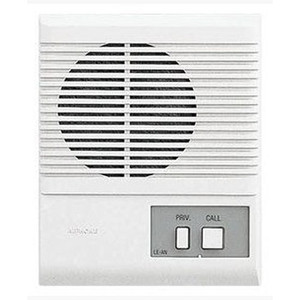
$51.99


Manufacturer-verified compatible cameras, recorders, mounts, accessories, and licenses for this product. Adjust quantities and add the entire bundle to your cart in one click.
Questions about this product? Free pre-sales support from a senior specialist — product questions, compatibility checks, BOM quotes, price confirmation — typically answered within one business day. Need camera placement or system design work? Engineering time is $175 per hour (qty 1 = 1 hour). Hardware buyers get up to one hour ($175) credited back on their order.
The Aiphone LE-A is a surface-mounted sub station engineered for distributed voice communication in multi-unit facilities. This wall-mount unit integrates into Aiphone LE series open voice intercom architectures where multiple stations need reliable talk-back capability without complex wiring infrastructure.
The LE-A (often searched as LE A) operates as a remote station on the LE series backbone, letting you extend voice communication to secondary locations without running dedicated trunk lines to each endpoint. Common deployments include office clusters, building entrance areas, maintenance zones, and service windows where one-way paging or simple two-way voice exchange is sufficient. The compact profile—6-5/16" high by 5-3/16" wide by 13/16" deep—fits standard wall boxes or surface-mount frames, reducing installation labor compared to recessed mounting.
Mount the LE-A to a standard single-gang wall box or surface-mount bracket using the provided fasteners. Route the 3-conductor cable back to the LE series master station or intermediate relay point. Cable runs should not exceed length limits specified in the master station documentation—typically 500–1000 feet depending on gauge and load. In electrically noisy facilities, run the shielded cable in separate conduit from power lines or use ferrite clamps at entry points to suppress high-frequency noise coupling.
The LE-A does not require individual power termination; power is delivered over the 3-conductor line from the master unit. This simplifies rough-in and reduces the number of electrical circuits needed. Confirm that the master station power supply is sized to handle the aggregate load of all connected sub stations.
The LE-A suits facilities with simple, broadcast-centric communication needs and limited IT infrastructure. Banks, small warehouses, manufacturing floors, and multi-tenant buildings often deploy LE series systems because they operate independently of network uptime and require minimal training. If your facility already has an Aiphone LE series master in place, adding a sub station is a low-cost way to extend voice coverage without running a new trunk or upgrading to IP phones.
If you need individual call routing, caller ID, or integration with a telephone exchange, evaluate a different station type within the LE series or consider stepping up to an IP-based Aiphone offering. If the environment is outdoors, subject to washdown, or requires vandal resistance, select a heavy-duty or outdoor variant instead. For facilities already running corporate VoIP, networked Aiphone IP stations integrate directly with standard PBX systems and offer more flexibility than the traditional open-line LE architecture.
Q: Can I use standard telephone cable (RJ-11) to connect the LE-A?
A: No. The LE-A requires a 3-conductor shielded cable as specified in the LE series documentation. Standard telephone cable lacks the shielding and wire gauge needed for reliable voice transmission over the open-line topology. Use Aiphone part #822203 or #821803.
Q: How many LE-A sub stations can I connect to one LE series master?
A: The number depends on the master station model and its power supply rating. Refer to the LE series master station documentation for the maximum sub-station load. Overloading the master will result in poor audio quality and potential station dropout.
Q: Is the LE-A weatherproof?
A: No. The LE-A is designed for indoor installation in typical office and light industrial environments. For outdoor or washdown applications, select an outdoor-rated station from the Aiphone intercom family.
Q: Can I retrofit the LE-A into an existing LE series installation?
A: Yes, as long as the LE series master station has sufficient available capacity and the wiring infrastructure supports an additional 3-conductor run. The LE-A connects in parallel with other sub stations on the same trunk, so no reconfiguration of the master is needed—integration is plug-and-play.
Q: What is the typical cable run length limitation for the LE-A?
A: Cable runs are typically limited to 500–1000 feet, depending on wire gauge (18 AWG vs. 22 AWG) and the master station's output impedance. Consult the LE series master documentation or contact Aiphone technical support for your specific configuration.

The Aiphone LE-A is a straightforward, passive sub station for facilities already committed to the LE series open-voice topology. It's not a feature-rich device—it's a relay point. What matters is whether your installation can absorb an additional 3-conductor run and whether the master station has available output capacity. The 6-5/16" × 5-3/16" × 13/16" form factor and surface-mount design make retrofit simple in most office and light industrial environments.
Technical Highlights:
Deployment Considerations:
Deploy the LE-A in facilities where broadcast-style communication is sufficient and network infrastructure is either absent or intentionally isolated. Small warehouses, bank branch offices, and multi-tenant buildings with simple shift-change or emergency-alert requirements often find the LE series cost-effective and reliable. Avoid this model if you need caller ID, call routing, or integration with a corporate PBX—those features require a different station type or technology platform.

Manufacturer-verified compatible cameras, recorders, mounts, accessories, and licenses for this product. Adjust quantities and add the entire bundle to your cart in one click.
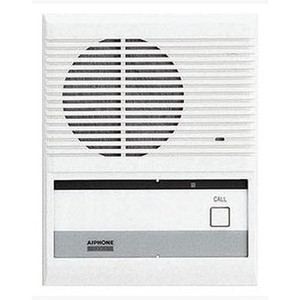
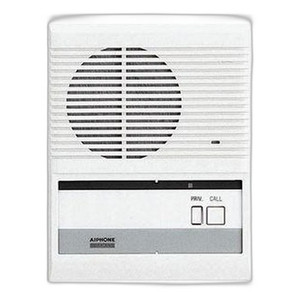

2MP semi flush sub station for Aiphone intercom networks
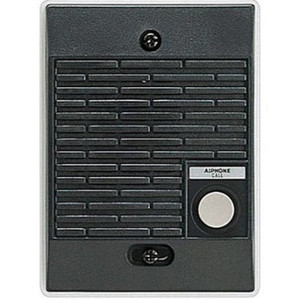
8MP surface-mount door station with IP43 weather seal and two-way audio
Looking for more Aiphone products? Shop the full Aiphone catalog →
Support services and planning resources for commercial surveillance, access control, and infrastructure deployments.
Fixed scope • Fixed price