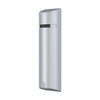
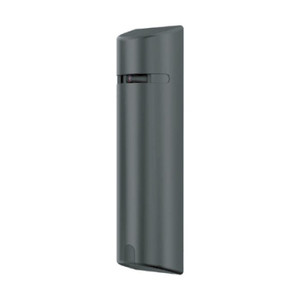
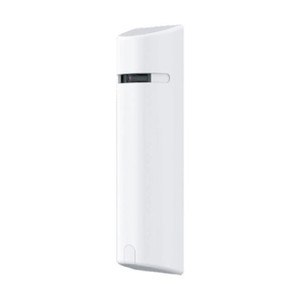
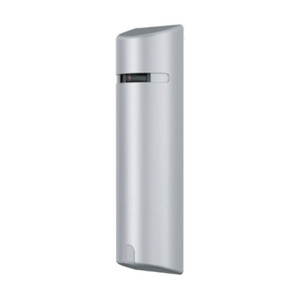
Hanwha SLA-T4680DS 2MP Door Jamb Lens Module
The Hanwha SLA-T4680DS is a specialized 2MP lens module designed for covert surveillance installations where traditional camera housings are impractical. This is a dedicated optical assembly with separated lens and cable—not a standalone camera—engineered to integrate with compatible Hanwha camera bodies in confined spaces like door frames, pillar edges, and tight architectural gaps. The module delivers 1920×1080 resolution (2MP) with the discretion required for access control verification, retail entrance monitoring, and building entry points where surveillance must remain visually unobtrusive.
Key Features
- 2MP Resolution (1920×1080): Captures sufficient detail for facial identification and documentation in covert mounting scenarios—sharp enough for access control audits and dispute resolution, but constrained to the inherent limits of pinhole optics in tight spaces.
- 4.6mm Pinhole Lens: Ultra-narrow focal length optimized for door jamb installations where clearance is measured in millimeters. Wide field of view suits entry monitoring but sacrifices the zoom capability of longer lenses.
- 0.06Lux Sensitivity @ F2.5: Operates reliably in dimly lit lobbies, stairwells, and corridors without infrared assist—a critical advantage where IR illumination would be visible or unacceptable. At this sensitivity level, you'll maintain usable video in low-ambient-light environments that would require supplemental lighting with less sensitive optics.
- 8-Meter Detachable Cable: Physical separation between lens and camera body allows the main housing to sit hidden in a wall cavity, electrical box, or remote enclosure while the lens protrudes only millimeters into the door frame. Reduces installation complexity in retrofit scenarios.
- ±30-Degree Adjustment Range: Fine-tune aiming without repositioning the entire assembly—essential when framing entry points or optimizing angle within minimal mounting clearance.
- Silver Metallic Housing: Blends into stainless steel and aluminum door frames; less conspicuous than black or white camera bodies in modern architectural finishes.
- Tamper-Resistant Design: Maintains clean aesthetic while resisting casual dislodgement—not a security feature, but reduces accidental displacement in high-traffic areas.
Integration & Compatibility
The SLA-T4680DS is engineered as an optical accessory for the Hanwha XNB-6001 camera body and related Hanwha surveillance platforms. Verify camera body compatibility before purchasing; this is a lens module only and requires a compatible camera housing and image processor. Integration with Hanwha NVR systems follows standard ONVIF workflows for organizations standardized on Hanwha infrastructure.
When to Choose a Different Approach
If your installation requires higher resolution (5MP or above), infrared illumination, or a wider range of focal lengths, consider a standard compact camera body with interchangeable or fixed lenses rather than a pinhole module. If the mounting space allows a traditional dome or turret camera, those options offer better serviceability and thermal dissipation. The SLA-T4680DS is purpose-built for door jamb and pillar-edge scenarios—it excels in that narrow use case but is not a general-purpose replacement for standard cameras.
Deployment Considerations
Door jamb installations demand careful cable management—8 meters of cable must route through walls or conduit without kinks or crushing. Test the cable path during pre-install survey. The pinhole lens is sensitive to optical axis alignment; even slight misalignment will degrade edge sharpness. The ±30-degree adjustment addresses minor corrections, but major repositioning requires removing the lens and remounting. In high-vibration environments (near HVAC or machinery), secure the lens mount firmly to prevent image drift.
Applications
- Access control point verification and badge-reader audits
- Covert lobby and corridor monitoring
- Retail entrance and checkout area surveillance
- Stairwell and emergency exit monitoring
- Building entry authentication and tailgating detection
- Institutional environments where visible cameras are undesirable
Frequently Asked Questions
Q: Is the SLA-T4680DS a standalone camera or does it require a separate camera body?
A: The SLA-T4680DS is a lens module only. It requires a compatible Hanwha camera body (such as the XNB-6001) to function. The 8-meter cable allows the camera body to be housed remotely while the lens protrudes into the door frame.
Q: Can I use the SLA-T4680DS with non-Hanwha camera bodies?
A: The module is engineered specifically for Hanwha platforms listed in the compatibility documentation. Using it with third-party cameras is not supported and may result in optical or mechanical incompatibility.
Q: What is the maximum cable run length for the 8-meter cable?
A: The standard cable is 8 meters. If your installation requires a longer run, contact Hanwha technical support to verify available extension options or custom cable lengths.
Q: Does the SLA-T4680DS include infrared illumination?
A: No. The module is a passive optical assembly without built-in IR. Its 0.06Lux sensitivity is designed for low-light environments with ambient illumination; it does not support night vision without external IR sources.
Q: What mounting hardware is included?
A: Specific mounting components are detailed in the product datasheet. Verify your installation requirements against the provided mounting template and hardware list before deployment.
Q: Is this lens module suitable for outdoor use?
A: The SLA-T4680DS is designed for protected indoor installations (lobbies, corridors, stairwells). Verify environmental ratings in the technical documentation if outdoor exposure is required; weatherproofing may require additional enclosure or housing.
Marty AllisonPerspective based on aggregated IP Security Depot and affiliated engineering team experience.
The SLA-T4680DS addresses a specific and often underestimated market need: professional surveillance in spaces where traditional camera housings are impractical or architecturally unacceptable. The door jamb form factor is engineered for integrators who must deliver covert monitoring without compromising image capture. The 0.06Lux sensitivity at F2.5 is particularly valuable in commercial facilities—lobbies, stairwells, corridors—where lighting cannot be modified and infrared would be visible or policy-restricted.
Technical Highlights:
- 4.6mm Pinhole Optics: Enables installation in millimeter-scale clearances (door frames, pillar edges) while maintaining 2MP resolution. This is not a trade-off; it is the design point. A standard camera body in the same space would be impossible.
- 8-Meter Cable Separation: Allows the camera processor and power connector to sit in a wall cavity, electrical box, or ceiling plenum while only the lens protrudes. Eliminates the need for remote camera enclosures or extended power runs to the mounting point itself.
- 0.06Lux Low-Light Performance: Operates without supplemental lighting in dimly lit environments where typical cameras (rated 1.0 Lux or higher) would require auxiliary IR or flood lights. In access control applications, this prevents guard stations and lobby areas from appearing over-lit or surveillance-obvious.
Deployment Considerations:
- This is a lens module, not a camera. Verify XNB-6001 or compatible body availability and lead time before committing to the SLA-T4680DS installation schedule.
- The 8-meter cable must be routed carefully—conduit, raceway, or wall cavity paths should be surveyed during pre-install. Kinked or crushed cables degrade signal integrity and may introduce intermittent video dropout.
- Pinhole lenses are sensitive to optical axis misalignment. Test the ±30-degree adjustment range in your exact mounting scenario during lab commissioning; edge sharpness and chromatic aberration will vary with angle.
Best positioned for access control auditing, building entry verification, and institutional environments where discretion is mandated alongside compliance documentation. Not a general replacement for standard cameras—a specialist tool for door jamb and pillar-edge deployments where form factor is the deciding factor.