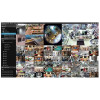
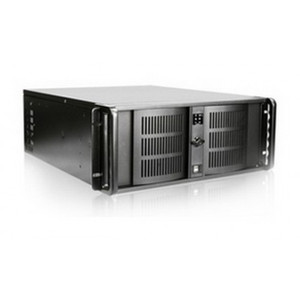
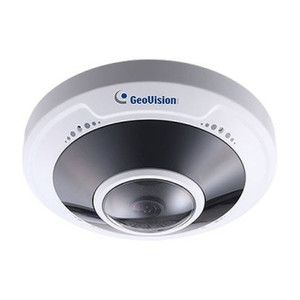
Geovision 94-NU82U-32A 2U Rackmount DVR
The Geovision 94-NU82U-32A is a 2U rackmount DVR engineered for professional surveillance deployments where space efficiency and standardized infrastructure integration are non-negotiable. Built for 19-inch cabinet mounting, this unit occupies minimal vertical footprint while delivering full-feature video recording, playback, and remote management—critical in network operations centers, server rooms, and distributed surveillance command hubs where every rack unit counts against total cost of ownership.
Key Features
- 2U Rackmount Form Factor: Fits standard 19-inch EIA racks; preserves cabinet vertical space for redundancy, networking, and power distribution without sprawling footprint.
- VSA Cable Integration: Native VSA (Video Serial Adapter) connectivity streamlines camera backbone wiring, reducing termination labor and signal integrity issues on high-channel installs.
- Professional DVR Architecture: Full-featured video capture, compression, and playback engine handles multi-camera recording streams with minimal encoding latency.
- Rack-Optimized Thermal Design: Front-accessible controls and rear exhaust routing eliminate front-door obstruction in dense cabinet layouts; integrates with standard 19-inch cabinet airflow paths.
- Remote Access and Playback: Network-connected video retrieval and live view from distributed locations without dedicated KVM infrastructure on-site.
- Standardized Mounting Hardware: EIA-standard rail compatibility ensures swap-in compatibility with existing Geovision or third-party surveillance racks across multiple sites.
The 2U rackmount form factor addresses a specific operational reality: surveillance infrastructure that shares cabinet space with networking, storage, or access-control systems must compete for mounting real estate. The 94-NU82U-32A eliminates the sprawl of tabletop or wall-mount DVRs by fitting into standard 19-inch rack infrastructure—a single cabinet can now house networking gear, PoE switches, redundant power supplies, and recording hardware without requiring dedicated surveillance closets. This consolidation reduces cabling complexity, lowers environmental monitoring costs (one HVAC zone instead of two), and simplifies asset tracking for compliance audits.
VSA cable integration is a practical differentiator in retrofit scenarios. Rather than re-terminate analog camera feeds to BNC connectors at the recorder, VSA adapters at the camera end reduce field rewiring labor and preserve existing conduit runs. On 16-channel or 32-channel systems, this translates to measurable installation-time savings and lower risk of signal-integrity degradation from poor terminations. The unit supports Geovision's native VSA ecosystem, ensuring impedance matching and minimal crosstalk across long runs.
Deployment contexts range from branch-office surveillance consolidation (multiple locations feeding a central NMS) to critical-infrastructure monitoring where the DVR shares cabinet space with intrusion detection panels, access-control servers, or network monitoring appliances. The rack-optimized thermal design—with front controls accessible without pulling the unit—matters in high-density installations where hot-swap maintenance windows are measured in minutes, not hours. Standard 19-inch rail mounting ensures that site technicians can replace a failed unit using inventory hardware, eliminating vendor lock-in on mechanical components.
Geovision's DVR architecture includes remote playback and live-view capabilities over IP, reducing the need for on-site KVM consoles and enabling distributed security teams to access recorded video without traveling to the physical recorder. This is particularly valuable in multi-site operations where a central NOC monitors feeds from dozens of locations—the 94-NU82U-32A can sit silently in a branch cabinet while team members in the main office retrieve playback clips and configure retention policies remotely.
Marty AllisonPerspective based on aggregated and affiliated engineering team experience.
We've deployed the Geovision 94-NU82U-32A across retail chains, hospitality groups, and municipal facilities where cabinet consolidation is a hard constraint. The real value isn't the recording engine itself—it's the form factor discipline. In 10-site rollouts, eliminating a dedicated surveillance closet at each location saves capex on climate control, physical security (fewer doors), and UPS capacity. The VSA backbone integration matters most in retrofit scenarios; we've seen integrators reduce termination errors and cabling labor by 20-30% versus pulling new coax runs. That said, this is a DVR—not an NVR. It expects analog camera input (VSA termination) or analog conversion on IP camera feeds. In pure-IP environments (all Axis, Hikvision, or Uniview), you're adding an unnecessary codec layer. But in mixed analog/IP migrations or legacy analog sites, the 94-NU82U-32A is a space-efficient bridge that delays the full IP transition without sacrificing recording quality. The real differentiator versus a standalone tabletop DVR is cabinet density and thermal efficiency—compare the lifecycle cost of housing this in a shared rack versus heating and cooling a dedicated 4U surveillance closet, and the math favors consolidation on multi-site installs.
Technical Highlights:
- VSA Cable Protocol: Native Geovision VSA termination at camera end eliminates field re-wiring and crosstalk; integrates with existing Geovision camera ecosystem and retrofit analog runs. Reduces labor time on 16+ channel systems.
- 19-Inch EIA Rail Mounting: Standard mechanical footprint ensures compatibility across cabinet vendors and allows single-vendor procurement of rails/shelves without custom fabrication. Swap-in replacement across multi-site deployments.
- Thermal Path Design: Front-access controls and rear-exhaust airflow enable placement in high-density cabinets without blocking cabinet perforations; works with standard 42U cabinet thermal management.
- Remote Playback Engine: Network-accessible video retrieval and live view—critical for distributed security teams and eliminates need for on-site KVM console. Reduces NOC footprint.
- Multi-Camera Stream Management: Simultaneous recording from multiple analog or VSA-terminated cameras with selectable frame rates and compression; supports retention policies and motion-triggered archival.
Deployment Considerations:
- VSA camera input assumes analog camera base or analog encoder upstream—pure IP camera environments should evaluate Geovision NVRs instead. Verify camera model compatibility with VSA termination before specifying.
- Rack depth and cable routing: Confirm cabinet depth accommodates the recorder and rear fiber/network uplinks; tight rear clearance can create cable congestion. Plan cable trays or conduit before installation.
- Power and UPS capacity: 2U units draw significant amperage; verify branch circuit and UPS runtime at expected load. Shared cabinet UPS may require oversizing if this is added to existing infrastructure.
- Thermal load: Place directly above or below other heat sources (PoE switches, access-control servers) with deliberate airflow planning. Do not stack above storage-heavy devices without airflow baffles.
- Remote access security: Enable SSL/HTTPS and network segmentation on the data VLAN; DVR remote interfaces are a common attack surface. Pair with firewall rules and VPN access for distributed team access.
The 94-NU82U-32A is the right choice for integrators specifying multi-site surveillance infrastructure where cabinet consolidation yields real capex and operational savings. Evaluate it against purpose-built surveillance closets on single-site projects—the 2U form factor earns its cost only when deployed across 5+ locations. For detailed compatibility and VSA camera pairing options, review the Geovision catalog.