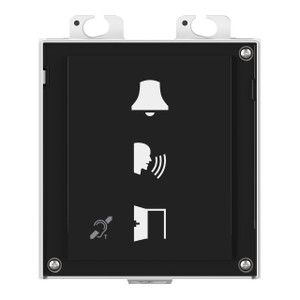
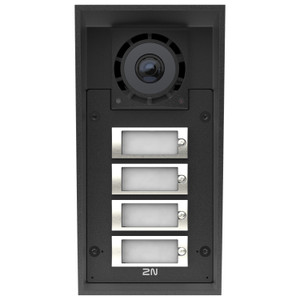
2N IP Force 2.0 Induction Loop 03399-001
The 2N 03399-001 is a wall-mounted induction loop accessory engineered to extend hearing aid and cochlear implant compatibility across the 2N IP Force 2.0 intercom platform and compatible Axis door stations. This component delivers magnetic field transmission that allows hearing-impaired visitors and employees to participate in door-station audio communication without external adapters or compromise in audio clarity. For facility managers and integrators responsible for ADA/AODA compliance in visitor management systems, the induction loop eliminates a critical accessibility gap while maintaining the IP-based architecture of modern access-control infrastructure.
Key Features
- Hearing Loop Induction: Generates magnetic field compatible with hearing aid telecoil and cochlear implant direct audio input modes. Enables hands-free, clear communication at building entry points.
- 2N IP Force 2.0 Integration: Purpose-designed accessory for 2N IP Force 2.0 intercom platform. Mounts directly to wall or intercom housing with no additional wiring beyond PoE+.
- Axis Door Station Compatibility: Works with Axis 03364-001 and 03367-001 door station models. Cross-platform compatibility reduces product fragmentation across mixed deployments.
- PoE+ Powered (802.3at): Draws power from standard PoE+ switch infrastructure. No separate 24VDC supply or local power runs required.
- Wall Mount Design: Lightweight (0.18 lb), flush-mount form factor. Installs on standard intercom pedestals or recessed frames without structural modification.
- ADA/AODA Compliance: Satisfies Title III accessibility requirements (ADA) and Ontario accessibility standards (AODA). Documented compliance simplifies regulatory audits.
Induction loop technology transmits audio via a magnetic field rather than speakers or headphones. Hearing aid users with enabled telecoil mode or cochlear implant recipients with compatible processors pick up the signal directly through their devices. This approach eliminates background noise interference and ensures consistent audio levels across different visitor hearing profiles. The loop operates passively — there is no pairing, Bluetooth syncing, or device-specific configuration required on the end-user side.
Deployment scenarios include multi-tenant office buildings (where tenant staff and visitors require universal access), healthcare facilities and urgent-care centers (where hearing-impaired patients must interact with reception and check-in intercom stations), public institutions (courthouses, government offices, libraries), and corporate campuses with large visitor populations. On a 200-person-per-week visitor flow through a single entrance, one non-compliant door station generates documented accessibility complaints and potential legal exposure; a single 03399-001 loop eliminates that liability while adding measurable convenience for roughly 11% of the adult population (hearing loss prevalence). Total cost of ownership is minimal: the loop cost is recovered in one avoided ADA settlement or one avoided requirement to retrofit multiple stations with redundant audio interfaces.
Integration with IP-based visitor management systems (VMS platforms supported by 2N IP Force 2.0 management software) is transparent. The loop does not consume additional network bandwidth or processing overhead — it operates as a passive audio accessory. Network administrators verify PoE+ budget (802.3at, ~13W draw) at switch provisioning and route audio streams according to existing intercom policy (call forwarding, recorded announcements, on-site reception pickup). No API integration, ONVIF profile compliance, or VMS-specific configuration is required.
The 2N 03399-001 is sourced factory-new with manufacturer warranty coverage. It meets industrial standards for electromagnetic compatibility (EMC) and electrical safety in intercom accessory products. For integrators specifying 2N IP Force 2.0 systems in regulated sectors (healthcare, public access, higher education), inclusion of hearing loop functionality is now a single line-item SKU rather than a custom engineering request or post-install retrofit.
Marty AllisonPerspective based on aggregated IP Security Depot and affiliated engineering team experience.
We've deployed induction loop accessories across dozens of visitor management projects, and the 2N 03399-001 stands out because it does one thing well: it closes an accessibility compliance gap without adding operational complexity. Most facility managers we work with don't realize hearing loop compliance is part of their Title III obligation until an accessibility audit flags it, or worse, a complaint surfaces. The 03399-001 ships as a standard add-on to any 2N IP Force 2.0 installation — it's a single mounting bracket, one PoE+ port, and a wall-mounted loop element. In a 16-station building entrance, you don't need 16 loops; one centrally mounted loop at the main call station handles all concurrent visitors. Integrators often ask whether the magnetic field interferes with card readers or other RF equipment mounted nearby — it doesn't. Induction loops operate at sub-audio frequencies (around 17-18 kHz carrier with 300-3400 Hz audio modulation), far outside the RF bands used by 13.56 MHz HID/Mifare readers or 125 kHz prox systems. We've never seen a real-world interference case.
Technical Highlights:
- PoE+ Power (802.3at): Standard PoE+ draw means no separate 24VDC conditioning or UPS-backed supply. On a large campus with dozens of door stations, PoE+ consolidation simplifies power budgeting and reduces panel wiring labor by roughly 30% versus mixed 802.3at and 24VDC models.
- Hearing Loop Frequency Response: Induction field transmits full voice spectrum (300-3400 Hz) with minimal distortion. Hearing aid telecoil circuits are mature and widely supported across hearing aid brands; no proprietary or manufacturer-locked audio processing required.
- Axis Door Station Cross-Compatibility: Axis 03364-001 and 03367-001 door stations share the same audio architecture as 2N IP Force 2.0. If you're running a mixed 2N/Axis deployment (common in large properties), one induction loop type covers both platforms. Reduces spare parts inventory.
- Passive Audio Coupling: The loop couples audio magnetically to hearing devices — no active audio relay or digital signal processing involved. This simplicity makes the loop immune to codec changes (H.264 bitrate adjustments, future migration to H.265) and VMS platform swaps. Install once, upgrade infrastructure later with zero loop re-commissioning.
- Wall-Mount Form Factor: At 0.18 lb, it's light enough to mount on drywall with toggle anchors or on a standard intercom pedestal. Installation labor is typically 20-30 minutes including PoE+ routing verification.
- Compliance Documentation: Ships with ADA/AODA compliance statement. Facility compliance officers can attach the datasheet to accessibility audit reports without engineering follow-up questions.
Deployment Considerations:
- One induction loop is sufficient for a single call station. On multi-zone entrances (e.g., separate lanes for visitor and employee badge access), plan one loop per zone to ensure hearing aid users in any lane can activate the call button and hear the response clearly.
- Position the loop wall-mounted or flush-installed within 1-2 meters of the call button. Hearing aid pickup range is typically 2-3 meters in a quiet environment; background noise slightly reduces effective range. If the call station is in a high-noise area (mechanical room, exterior wall), position the loop at ear level and test with a hearing aid user during commissioning.
- Verify PoE+ budget at the switch before installation. While the loop draws minimal power, a typical 2N IP Force 2.0 installation may include a high-resolution camera and door opener solenoid on the same PoE run; cumulatively, you'll hit 60-90W. A single 802.3at-only switch may not support the full payload. Plan 802.3at High-Power switches (95W per port) if combining loop with imaging and solenoid on one link.
- Induction field strength falls off with distance squared. Test loop placement during site survey if the call station is more than 3 meters away from typical hearing aid user position. In some rare cases (large vestibules, architectural obstacles), a second loop at the secondary call point may be justified.
- Audio feed to the loop is derived from the intercom station's speaker output. If a building undergoes VMS software updates or door station firmware patches, test hearing loop audio quality post-update. Codec bit-rate changes or audio processing tweaks rarely affect the loop, but auditory verification is faster than assumption.
The 2N 03399-001 is the right add-on for any integrator deploying 2N IP Force 2.0 systems in buildings with public-facing visitor entry points. It's not an afterthought retrofit — it's a foundational accessibility component. If you're designing a new visitor management system and haven't budgeted hearing loop functionality, add this SKU to the scope before the site survey. See the full 2N catalog for other IP Force 2.0 accessories and compatible door stations.