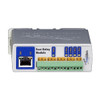
2N 01398-001 External 4 Output IP Relay
Overview
The 2N 01398-001 is a compact, network-connected relay controller designed to extend access control and intercom functionality across IP security infrastructure. It provides four independent relay outputs, each capable of controlling doors, gates, barrier systems, electronic locks, or other security peripherals remotely. This device sits between your 2N IP intercom platform and the electromechanical devices you need to operate — eliminating the need for proprietary control wiring while maintaining network security.
Unlike legacy relay modules that require dedicated low-voltage lines to a central panel, the 01398-001 uses standard IP networking. A single Ethernet cable delivers both power and control data, simplifying the physical deployment footprint. The compact form factor and web-based management interface reduce commissioning overhead, particularly valuable when retrofitting existing access control systems into IP architectures.
Key Features
- Four Independent Output Relays: Each of the four relay channels operates independently, so you can control separate doors or gate mechanisms simultaneously without interfering with one another. Useful in multi-tenant buildings or industrial sites where access requirements vary by location.
- IP Connectivity: Operates over standard Ethernet using HTTP/HTTPS protocols. Eliminates the sprawl of analog control wiring and integrates naturally into IT networks already running 2N intercom systems or third-party access control platforms. Network isolation and encryption prevent unauthorized relay actuation.
- Compact External Form Factor: Space-efficient housing simplifies mounting on a wall, DIN rail, or within an equipment enclosure. Reduced physical footprint means you can install this device in server closets, electrical rooms, or other confined spaces without rewiring an entire facility.
- Web-Based Configuration: Built-in web interface provides straightforward setup and ongoing management — no proprietary software or specialized tools needed. Change relay assignments, set trigger conditions, and view event logs from any browser on the network.
- Secure Communication Protocols: HTTPS, TLS, and credential-based authentication prevent man-in-the-middle attacks or rogue relay commands. Critical when controlling high-value access points such as server rooms, secure storage, or perimeter gates.
- Wide System Compatibility: Works directly with 2N IP intercom systems, third-party IP-based access control platforms, electronic locks, gate operators, and alarm systems. ONVIF-capable integrations reduce vendor lock-in.
Integration & Compatibility
The 01398-001 integrates seamlessly with 2N intercom endpoints and broader access control infrastructure. Because it uses HTTP/HTTPS and standard IP protocols, it can be provisioned within most modern access control management systems supporting ONVIF or REST APIs. If your existing VMS or access platform supports network-based relay control, the 01398-001 will integrate without additional middleware.
When deploying multiple units across a facility, each relay can be assigned independently via the web interface. This modularity is especially useful in distributed campuses or multi-building environments where local relay control reduces latency and network dependency.
When to Choose a Different Model
If you require more than four relay outputs or need integrated sensor inputs (door position verification, emergency alarms), consider exploring higher-channel relay controllers within the 2N product family. For applications demanding hardwired, non-networked relay control (e.g., legacy fire alarm integration), a traditional relay module may be more appropriate.
Deployment Context
The 01398-001 is most valuable in organizations standardizing on IP-based access control or integrating new IP intercom deployments into existing analog security infrastructure. Common use cases include corporate office access, apartment building entry systems, industrial facility perimeter gates, and hybrid environments combining intercoms with electronic locks. Its network-first design suits facilities with robust IT infrastructure and a preference for centralized management over distributed control panels.
Frequently Asked Questions
Q: Does the 2N 01398-001 require a separate power supply?
A: No. The device draws power over Ethernet (PoE). Confirm your network switch or PoE injector supplies sufficient power for all four relay channels under simultaneous load.
Q: Can I control the 01398-001 remotely from outside the local network?
A: Yes, via HTTPS over your WAN connection, provided your network infrastructure supports secure remote access and the 2N platform or access control system permits outbound relay commands. Always use strong authentication and VPN for production deployments.
Q: Is the 01398-001 compatible with non-2N intercom systems?
A: Yes. Because it operates over standard IP protocols (HTTP/HTTPS), it integrates with most ONVIF-capable or REST API-compatible access control platforms. Verify your platform supports third-party relay control before deployment.
Q: What's the maximum switching current or load per relay output?
A: Refer to the manufacturer's datasheet for exact relay specifications, including contact rating, maximum switching current, and inductive load handling. Undersizing the relay for your door strike or gate operator will result in premature failure.
Q: Does the 01398-001 require firmware updates?
A: Like most IP devices, periodic firmware updates address security vulnerabilities and add features. Plan for network access and brief downtime during updates.
Q: Can I use the 01398-001 outdoors?
A: Check the manufacturer's specifications for environmental ratings (IP rating, temperature range, humidity limits). Most relay controllers are rated for indoor or covered outdoor mounting; full outdoor exposure may require additional weatherproof enclosure.
Ted PerryPerspective based on aggregated IP Security Depot and affiliated engineering team experience.
The 2N 01398-001 addresses a real pain point in IP-based access control: how to control physical devices (doors, gates, locks) from a networked management platform without running separate low-voltage wiring. The four-relay design covers most small-to-mid-scale deployments without requiring multiple units or daisy-chaining complexity.
Technical Highlights:
- Four Independent Relay Channels: Each operates independently, so you can control separate access points or building zones in parallel. No relay crosstalk or shared switching logic — one failure doesn't cascade to the others.
- IP-Based Control: Standard HTTP/HTTPS protocols mean the 01398-001 fits naturally into networks already running 2N intercom systems. No proprietary control modules or serial cabling — just plug in an Ethernet cable.
- Web Management Interface: Reduces commissioning time compared to legacy relay controllers with dip-switch configuration or proprietary management software. Engineers can provision and test channels from any browser in minutes.
Deployment Considerations:
- Confirm your network switch or PoE injector can supply sufficient wattage when all four relays are energized simultaneously. A 30W relay strike and three solenoid locks running at the same time will exceed some standard PoE budgets.
- Test relay response time under production load — network latency between the access control server and the 01398-001 can add 50–200ms to door unlock commands. For high-security zones where every millisecond counts, validate this during pilot deployments.
For organizations standardizing on 2N platforms, the 01398-001 represents a cost-effective, network-native expansion path. It avoids wholesale system replacement and reduces the physical footprint of access control infrastructure — a significant advantage in retrofit projects or facilities with limited rack space.