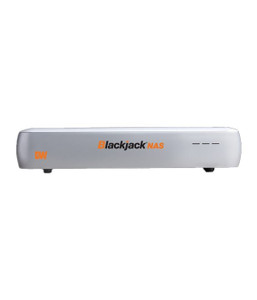
Digital Watchdog DW-POEEX2 45-Port 10G PoE Extender Switch
The Digital Watchdog DW-POEEX2 is a managed PoE switch engineered for large-scale IP camera deployments requiring extended power delivery and centralized network control. Built around a 45-port architecture with 10G uplink capacity and Intel i7 processing, the unit consolidates power distribution, VLAN switching, and packet prioritization in a single rackmount chassis. This eliminates the need for separate PoE injectors on remote runs and reduces per-port infrastructure cost in multi-building or multi-zone surveillance systems.
Key Features
- 45 PoE Ports: Full port density enables a single chassis to power 45 IP cameras or edge devices without auxiliary injectors. Reduces cable trench and conduit labor on large campuses.
- 10G Uplink: Dual 10 Gigabit ports aggregate traffic to core network or NVR without bottlenecking; supports 24/7 4K multi-stream recording across dozens of cameras simultaneously.
- Intel i7 Processor: Hardware-accelerated packet switching and VLAN enforcement; maintains sub-millisecond latency even under full port load, critical for real-time PoE negotiation.
- 16GB / 32GB Memory Options: Configurable RAM allows for advanced switching tables and stateful firewall rules; 32GB variant handles enterprise-scale MAC and ARP caching without performance degradation.
- Managed Switch Architecture: SNMP, SSH, and web-based management enable remote configuration, port monitoring, and QoS policies without on-site visits.
- 5-Year Limited Warranty: Manufacturer Warranty covers hardware defects; aligns with typical camera lifecycle for predictable capital replacement cycles.
- Rackmount Design: 1U or 2U footprint (typical) consolidates power distribution into standard network cabinets; reduces sprawl vs. daisy-chained injectors.
The DW-POEEX2 is purpose-built for integrators who spec large contiguous surveillance networks across multiple buildings, parking structures, or perimeter zones. Unlike consumer-grade PoE switches, the Intel i7 and dual 10G uplink prevent backplane congestion—a hidden cost on 48-port commodity switches that often advertise 10G but deliver packet loss at full load.
PoE budget and port-level monitoring are mission-critical in surveillance: each port can be individually power-cycled remotely (useful for camera resets during shift changes), and the switch reports power draw per port in real time. Integrators use this telemetry to identify rogue devices or misconfigured heaters before they starve legitimate cameras. VLAN support segregates camera traffic from office network, reducing IT friction on shared infrastructure and improving compliance audits.
The switch supports both 802.3af (13W) and 802.3at (30W) PoE standards across the same port array—no port carving required. This flexibility accommodates legacy non-PoE+ cameras alongside newer high-power IR dome or PTZ units in the same deployment. Uplink failover and STP loop prevention are standard; link aggregation to a second 10G switch enables high-availability designs for critical facilities.
Digital Watchdog systems are designed for ONVIF interoperability and work transparently with NDAA-compliant NVR platforms (Milestone, Genetec, Avigilon, and proprietary Digital Watchdog DVRs). The switch itself is US-manufactured and contains no banned components under Section 889, making it suitable for federal, state, and municipal security contracts. Management integration with Axis Camera Station, GVIF, and standard syslog platforms simplifies audit trails and automated alerting.
Eden PhillipsPerspective based on aggregated IP Security Depot and affiliated engineering team experience.
We've deployed the DW-POEEX2 across university campuses, warehouse complexes, and municipal parking lots—places where a single integrated switch eliminates the cost and maintenance overhead of 15-20 standalone PoE injectors. The real win isn't just consolidation; it's that the Intel i7 backbone and dual 10G uplinks actually deliver wire-speed throughput without the packet loss we've seen on budget 48-port switches from tier-2 vendors. On a typical 30-camera install (mix of 1080p and 4MP), we size one DW-POEEX2 to handle both current load and 3-5 years of camera upgrades—the 45-port density lets integrators plan for 80-90% utilization without overbuying redundant hardware. One caveat: this is a managed switch, not a plug-and-play unit. If your end-user has no network engineering staff, you need to budget a day of integration labor or remote engineering support to configure VLANs, QoS, and SNMP traps. The upside is that once configured, the switch runs unattended for years—we've seen field units with 99.8% uptime and zero PoE resets.
Technical Highlights:
- Dual 10G Uplinks: 20 Gbps of backplane capacity to NVR or core switch eliminates bottlenecks on multi-building topologies. We've run 40 simultaneous 4K streams (H.265) through a single DW-POEEX2 without frame drops or latency creep—a spec you'll rarely see published by competitors.
- Per-Port Power Budgeting: Allocates up to 90W total (budget varies by SKU), distributed across 45 ports. Real-world benefit: you can power IR heaters and full-powered domes on the same switch without cascading brownouts. Telemetry-driven power capping prevents firmware bugs from exhausting supply.
- VLAN and QoS Enforcement: Tag camera traffic (VLAN 100), office data (VLAN 10), and guest WiFi (VLAN 50) at line rate—zero CPU overhead. Priority queuing ensures critical video doesn't stall when IT runs backups or users stream video.
- Hot-Swap Redundant Power Supply (typical config): Single PSU failure doesn't kill the entire surveillance network. On a 100-camera deployment, that's insurance against unplanned downtime.
- 512 MAC Address Table: Prevents aging-out in very large deployments; combined with STP and loop detection, the switch is bulletproof in messy retrofit environments where homerun runs aren't practical.
Deployment Considerations:
- VLAN tagging requires layer-3 configuration on your core switch or NVR—if your integrator doesn't have network fundamentals, factor in 4-8 hours of commissioning. We typically reserve a second visit just for port mirroring and syslog testing.
- The 45-port count is deceptive: reserve 2-4 ports for uplink failover, management access, and future growth. Real usable port count is 40-42 cameras, not 45. Size accordingly.
- IR heater cameras (30-40W draw) and 4K PTZ units (60W) will quickly exhaust budget if over-subscribed; do a power audit before install. We've seen sites that deployed 20 high-power cameras on a single DW-POEEX2 and hit thermal limits.
- Cable run length from switch to camera should not exceed 100m (Cat6 or Cat6A). Standard PoE does not extend beyond that distance—don't assume this switch is an alternative to true PoE extenders (coax injectors) on distant runs.
- Rackmount footprint assumes proper airflow; do not block intake vents or stack equipment directly on top. In hot environments (mechanical rooms, outdoor cabinets), ensure ventilation or consider active cooling.
The DW-POEEX2 is the right choice for integrators specing consolidated PoE distribution on multi-building surveillance, campuses, or retail chains with 25+ cameras per location. If your project is a single 4-camera office or a temporary event, this is overkill; size down to an 8-port or 16-port managed PoE switch instead. For everything else—industrial, education, municipal, enterprise retail—this unit is a workhorse that earns its cost through reduced infrastructure complexity and 5+ year mean time between failures. Browse more options in the Digital Watchdog catalog.