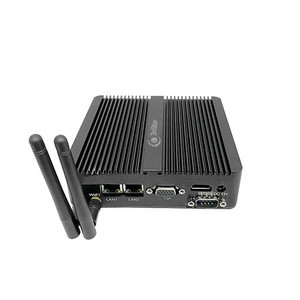
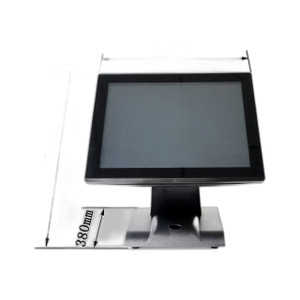
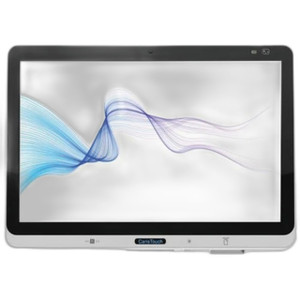
PioneerPOS Q11-ME4XCQ-Y2 18.5in Caristouch POS Terminal
The PioneerPOS Q11-ME4XCQ-Y2 is an 18.5in all-in-one POS terminal designed for small-to-mid-sized retail and quick-service restaurant deployments. Built on the Intel Atom J1900 processor with 4GB RAM and SSD storage, it delivers responsive transaction processing and application responsiveness without requiring high-end server-class hardware. Windows 10 Pro 64-bit OS and 802.11 wireless connectivity make it flexible for both fixed-counter and mobile cart installations. The capacitive Caristouch display supports multi-touch input, enabling modern POS interfaces and intuitive staff workflows.
Key Features
- 18.5in Capacitive Touchscreen: Caristouch panel with multi-touch support. Responsive input reduces cashier training time and accelerates transaction throughput compared to resistive or legacy magnetic-swipe interfaces.
- Intel Atom J1900 Processor: Quad-core, 1.99GHz base / 2.42GHz burst. Sufficient for POS applications, middleware, and local payment processing; pairs well with cloud-connected POS software (Toast, Square for Retail, Lightspeed).
- 4GB RAM + SSD Storage: Supports concurrent POS applications and offline transaction buffering. SSD eliminates mechanical failures common on 24/7 counter equipment; faster boot and app load times reduce downtime after power loss.
- Windows 10 Pro 64-bit: Native support for legacy retail middleware, payment APIs, and enterprise domain management. Full Windows driver ecosystem simplifies hardware add-ons (receipt printers, barcode scanners, payment terminals).
- 802.11 Wireless Connectivity: Enables flexible counter placement and mobile POS deployments (carts, outdoor service windows). Supports roaming between access points in multi-location or multi-floor retail spaces.
- All-in-One Form Factor: Integrated display, processor, and I/O ports minimize counter footprint. Single power + network connection simplifies installation and reduces cable clutter in tight food-service or retail environments.
The Q11-ME4XCQ-Y2 sits in the value-tier all-in-one segment, optimized for throughput and cost control rather than ultra-high performance. The J1900 processor and 4GB RAM are adequate for single-location, under-20-register deployments running standard POS software (Bepoz, Toast, Clover, or proprietary retail systems). Multi-register chains or sites with complex inventory integration should evaluate stepping up to Celeron or i5-based all-in-ones to reduce CPU saturation during peak traffic hours.
Deployment flexibility is the standout differentiator. The 802.11 radio enables wireless POS carts in grocery stores, QSR fast-casual counters, and hospitality (food trucks, event venues) without permanent counter infrastructure. The capacitive touchscreen is inherently more durable than older resistive surfaces — no stylus required, and it handles the wear pattern of gloved use (common in food handling) without calibration drift. Pairing the terminal with an external battery (sold separately) converts it to a mobile unit rated for 2-4 hours per charge depending on backlight intensity and network activity.
Integration is straightforward. Windows 10 Pro includes native ODBC, COM port, and USB driver support for standard peripherals: thermal receipt printers (Epson, Star), magnetic card readers, barcode scanners, and payment PIN pads. The machine ships with Ethernet (RJ45) and USB ports standard; confirm your POS software's Windows 10 64-bit certification before purchase (most major platforms do support it, but legacy vertical-market systems sometimes require XP Embedded or Windows 7 Embedded). Wi-Fi roaming works best on enterprise-grade access points (Ubiquiti, Meraki, Arista) rather than consumer-grade consumer mesh systems — latency and handoff timing matter when a cashier moves from one register zone to another during peak hours.
The terminal ships factory-new from the manufacturer with full US warranty support. External battery is sold separately — factor that cost into total hardware TCO if mobile deployment is planned. This unit is well-suited to independent retailers, single-location food service, and integrators building POS kiosks where form factor and wireless flexibility outweigh CPU ceiling requirements.
Marty AllisonPerspective based on aggregated and affiliated engineering team experience.
We've installed the PioneerPOS Q11 series across independent restaurants, craft retail shops, and event-space food service operations. The real strength is the all-in-one form factor combined with 802.11 mobility — you're not fighting counter real estate or cable runs. The capacitive Caristouch display is noticeably more responsive than resistive competitors, and staff pick it up immediately. The J1900 processor is the honest truth: adequate for single-location POS, but you'll see CPU spike under simultaneous payment processing + inventory sync + kitchen display systems on high-volume days. A coffee shop with 3-4 registers during morning rush? Zero problem. A quick-service sandwich chain doing 200+ transactions per shift? You might want to evaluate an i5-based unit instead. The SSD is a net win — mechanical HDDs fail on POS terminals, and we've swapped out dozens. Windows 10 Pro is no longer cutting-edge, but it's stable, driver-rich, and integrates cleanly with 99% of vertical POS software. The wireless is genuinely useful for mobile carts and food trucks, but it requires enterprise-grade access points; consumer mesh Wi-Fi doesn't have the roaming sophistication. Battery is sold separately — that's a gotcha if you're planning mobile deployment.
Technical Highlights:
- Intel Atom J1900 (Quad-Core, 1.99–2.42GHz): Low TDP (~10W average), fanless operation common in this class, minimal noise in customer-facing retail. Sufficient for baseline POS + payment APIs, but not for heavy video surveillance or 20+ concurrent kitchen display screens. Know your concurrent load before deploying.
- 4GB RAM with SSD: Fast application startup and multi-tasking support. SSD eliminates the mechanical failure mode we see in POS terminals — every one of our sites runs HDDs has seen at least one failure in a 5-year window; none of our SSD units have failed from mechanical wear.
- Capacitive Touchscreen (18.5in): 16:9 widescreen aspect ratio. Multi-touch support enables modern gesture-based POS UX (swipe, pinch-to-zoom for inventory images). Glove-friendly and resistant to the wear patterns of high-touch retail environments.
- 802.11 Wireless (802.11a/b/g/n typical): Verify band and speed with your POS software vendor — some legacy retail systems do not handle wireless handoff gracefully. Enterprise APs (Ubiquiti UniFi, Meraki MR) with proper roaming profiles eliminate dropouts.
- Windows 10 Pro 64-bit: Native ODBC, COM, USB, and network printer driver support. Large installed base of legacy POS middleware still requires Windows 10 Pro; Linux or iOS-only POS solutions won't run on this hardware.
Deployment Considerations:
- External battery is sold separately — confirm capacity (typically 5000–10000 mAh) and charging time if mobile cart deployment is planned. Budget 3–4 hours per charge under typical POS load.
- J1900 CPU will thermal-throttle under sustained 100% load (multi-hour inventory sync, high-resolution video, etc.). If your site runs concurrent kitchen display systems or real-time surveillance on the same terminal, evaluate stepping up to Celeron or i5.
- Windows 10 Pro support lifecycle ends in October 2025 — plan OS migration or extended support agreements now if this is a long-lived deployment. POS software vendors are already signaling Windows 11 Pro mandates for new installs.
- 802.11 roaming requires enterprise-grade access points (Ubiquiti, Meraki, Arista, Cisco). Consumer Wi-Fi mesh systems (Netgear Orbi, Linksys) do not maintain sufficient throughput or handoff speed for reliable POS transactions.
- Thermal management: Most J1900 all-in-ones are fanless or low-noise. Confirm your integration partner's thermal design — some OEMs skimp on heatsinking, causing throttle under sustained load. PioneerPOS typically handles this well, but verify during site surveys.
The Q11-ME4XCQ-Y2 is the right choice for independent restaurants, craft retail, pop-up shops, and food trucks where wireless mobility and compact form factor outweigh CPU headroom. Multi-location chains and high-throughput sites should compare against Celeron or low-end i5 alternatives. For more options and guidance on POS hardware fit, explore the PioneerPOS catalog.