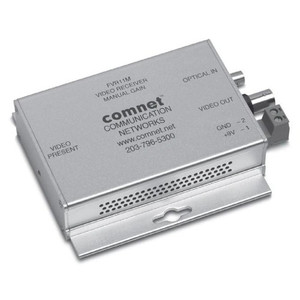
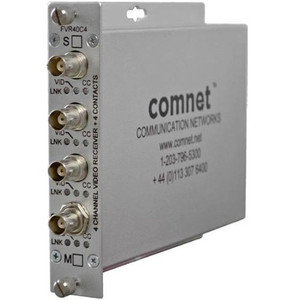
Comnet FVR160M1 16-Channel Multimode Fiber Video Receiver
Overview
The Comnet FVR160M1 is a 16-channel digital video receiver designed for long-distance fiber-optic transmission in surveillance and industrial applications. This unit accepts multimode fiber input via ST connectors and is available in both rack-mount and surface-mount configurations. It serves as the receiving end of fiber-based video distribution systems, converting optical signals back to electrical format for display or recording.
Fiber-optic transmission eliminates ground loops, reduces EMI susceptibility, and extends video range far beyond copper-based solutions—critical for large campuses, industrial facilities, and environments with heavy electrical noise. The FVR160M1 is the natural complement to fiber transmitters in hybrid analog/digital surveillance architectures where distance, isolation, or signal integrity is non-negotiable.
Key Features
- 16 Channels: Consolidates video from 16 camera lines into a single multimode fiber run, reducing the cable plant footprint versus individual copper feeds.
- Multimode Fiber (ST Connectors): Uses standard multimode fiber with ST connectors—cost-effective for campus and building-to-building runs under 2 km, with lower equipment cost than single-mode alternatives.
- Rack-Mount and Surface-Mount Options: Deploy the FVR160M1 in equipment racks, equipment closets, or wall-mounted positions near control rooms or edge recording systems—flexibility to fit your physical infrastructure.
- Digital Video Receiver Architecture: Converts incoming optical signals to standard video outputs, making it compatible with legacy DVR inputs, analog monitors, and hybrid NVR systems that accept composite or baseband video.
- Long-Distance Capability: Multimode fiber supports distances up to 2 km, eliminating voltage potential differences and ground-loop hum that plague long copper runs—essential for sprawling warehouses, manufacturing plants, and multi-building campuses.
- Signal Isolation and Noise Immunity: Fiber's dielectric nature isolates camera grounds from control-room grounds, blocking ground-loop current and reducing susceptibility to radiated EMI from motors, welders, and RF equipment.
Integration and Compatibility
The FVR160M1 is paired with a matching Comnet fiber transmitter (such as a 16-channel multimode fiber transmitter with the same ST connector format). Together, they form a point-to-point fiber link that preserves video signal integrity across distances where repeaters or signal conditioning would otherwise be required.
Output from the FVR160M1 connects to analog video inputs on DVRs, hybrid recorders, or legacy analog monitors. If your system uses modern IP-based NVRs exclusively, a separate encoder step is required to convert analog outputs to network video streams. The receiver itself does not introduce compression or streaming capability—it is a passive converter from optical to electrical domain.
Verify compatibility with your transmitter model before ordering; multimode and single-mode fiber systems are not interchangeable, and connector types (ST vs. SC vs. LC) must match on both ends.
What's in the Box
The evidence provided does not include a complete package contents list. Contact the vendor or manufacturer for exact accessories, cables, and mounting hardware included with the FVR160M1.
Frequently Asked Questions
Q: What is the difference between multimode and single-mode fiber for the FVR160M1?
A: Multimode fiber (used by the FVR160M1) is less expensive and easier to terminate, supporting distances up to ~2 km for video signals. Single-mode fiber costs more but extends range to 10+ km. Choose multimode for campus or building-to-building runs under 2 km; single-mode for longer distances or when equipment budgets allow.
Q: Can I use the FVR160M1 with single-mode fiber?
A: No. The FVR160M1 is designed for multimode fiber. Attempting to connect single-mode fiber will result in signal loss and no video output. Confirm your transmitter is also multimode before deploying.
Q: Does the FVR160M1 require external power?
A: The evidence does not specify power requirements for this model. Contact the manufacturer or vendor for input voltage, power consumption, and any wall-mount or DIN-rail power supply specifications.
Q: How do I mount the FVR160M1?
A: The FVR160M1 is available in both rack-mount and surface-mount configurations. Rack-mount units fit standard 19-inch equipment racks; surface-mount units can be attached to walls or enclosure panels using provided or field-sourced hardware.
Q: What video format does the FVR160M1 output?
A: The FVR160M1 converts multimode fiber signals to standard analog video outputs compatible with DVR inputs, analog monitors, and hybrid recorders. The exact output format (composite, S-Video, or BNC) is not detailed in the available evidence—consult the datasheet or contact support for output connector specifications.
Q: Is the FVR160M1 NDAA Section 889 compliant?
A: Compliance information is not provided in the available evidence. Contact the manufacturer or your vendor to verify NDAA or other regulatory certifications for this model.
The Comnet FVR160M1 addresses a specific problem: transmitting video across distances or electrically hostile environments where copper fails. If you're consolidating 16 camera lines from a building wing or across a campus, multimode fiber with ST connectors keeps costs lower than single-mode while eliminating ground-loop hum and EMI that wreck analog baseband video. The 16-channel configuration means one fiber pair replaces 16 individual copper runs—a real wiring and conduit savings.
Technical Highlights:
- 16-Channel Multimode Fiber Input (ST Connectors): Consolidates 16 video streams into a single, rugged multimode fiber link rated for ~2 km—no repeaters, no equalization needed for distances under 2 km. A single fiber pair versus 16 copper cables is the ROI on fiber hardware.
- Dual Mounting (Rack/Surface): Fit the FVR160M1 into an existing 19-inch rack or surface-mount it in a wall enclosure near your recording node. Flexibility matters when retrofitting older facilities with legacy rack space or cramped equipment closets.
- Analog Video Output Compatibility: Outputs standard analog video that plugs directly into DVR, hybrid NVR, or analog monitor inputs. No additional encoders or VMS re-architecture needed if you're upgrading only the transmission backbone.
Deployment Considerations:
- The FVR160M1 must be paired with a matching 16-channel multimode fiber transmitter on the camera end; mismatched fiber types (multimode vs. single-mode) or connector styles (ST vs. SC) will cause total signal loss.
- Analog outputs from the receiver are not streamed or encoded; if you need IP video, insert a separate analog-to-IP encoder downstream. Hybrid systems work, but architecture planning is required upfront.
Deploy the FVR160M1 in multi-building manufacturing plants, large retail campuses, or any installation where ground potential differences between camera sites and the control room are causing hum or video degradation. The fiber link isolates grounds and eliminates the need for expensive differential video baluns or long equalizer runs.