
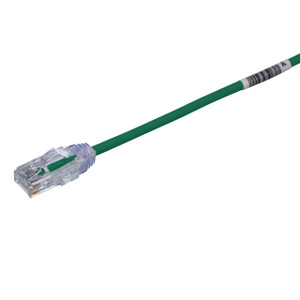


Product images are provided for reference and may not represent the exact model, configuration, or included
components.
Build Your Complete System
Manufacturer-verified compatible cameras, recorders, mounts, accessories, and licenses for this product. Adjust quantities and add the entire bundle to your cart in one click.
Item
Qty
Status
Price
Mounts & Accessories recommended
Recorders, NVRs & Storage recommended
Licenses & Software where applicable
Services & Training optional
No Bots, Just Experts
Questions about this product? Free pre-sales support from a senior specialist — product questions, compatibility checks, BOM quotes, price confirmation — typically answered within one business day. Need camera placement or system design work? Engineering time is $175 per hour (qty 1 = 1 hour). Hardware buyers get up to one hour ($175) credited back on their order.
Description
Panduit UTP28SP15BL Cat 6 28 AWG UTP Copper Patch Cord, 15 ft, Black
High-density datacenter and IDF deployments demand patch cords that deliver full Cat 6 performance in a smaller footprint without sacrificing signal integrity or installation efficiency. The Panduit TX6-28™ UTP28SP15BL addresses congested rack environments with a 0.150-inch (3.8 mm) diameter—roughly 30% thinner than standard 24 AWG patch cords—while exceeding ANSI/TIA-568.2-D Category 6 and ISO 11801 Class E specifications across the full 1-250 MHz frequency range. This 15-foot, 28 AWG stranded copper patch cord combines a patented tangle-free latch, 100% factory performance testing, centered de-embedded plug design, and RapidID pre-installed barcodes to streamline moves, adds, and changes in enterprise network, IP surveillance, PoE-powered access control, and converged infrastructure installations where rack density and cable management directly impact uptime.
Key Features
- 28 AWG stranded copper construction delivers 0.150-inch (3.8 mm) diameter for approximately 30% better rack density and reduced bundle fill compared to 24 AWG cords
- Exceeds ANSI/TIA-568.2-D Category 6 and ISO 11801 Class E performance specs across 1-250 MHz frequency range; supports 10GBASE-T Ethernet up to 55 meters per TIA guidelines
- Patented tangle-free latch with tapered low-profile design prevents snags on adjacent cables during installation and reduces disconnect force/time in dense patch fields
- RapidID pre-installed barcodes on both ends enable rapid port mapping, physical layer documentation, and MAC workflow integration with Panduit RapidID software
- 100% factory performance tested for wire map, NEXT, and return loss—every cord ships with verified signal integrity, not statistical sampling
- Centered de-embedded modular plug with integral pair manager maintains 100-ohm impedance and pair geometry for consistent insertion loss and NEXT margins at 250 MHz
- CM/LSZH dual flammability rating meets NEC Article 800 (North America) and IEC 61034/60754 low-smoke, low-toxicity requirements (international) in a single SKU
- Supports IEEE 802.3af PoE (15.4W), 802.3at PoE+ (25.5W), and 802.3bt Type 3 (60W) / Type 4 (90W) PoE++ for IP cameras, wireless APs, VoIP phones, and powered lighting
- Compatible with both T568A and T568B wiring schemes; tested to IEC 60603-7 and UL 1863 (UL File E129886) modular plug interface standards
- 15-foot (4.57 m) length in black jacket; packaged individually with protective caps, 10 cords per carton for volume installations
The TX6-28™ series was engineered specifically for high-density switch environments where 48-port 1U switches, blade server fabrics, and SAN interconnects create cable management bottlenecks that compromise both airflow and serviceability. Standard 24 AWG patch cords measure approximately 0.215-0.230 inches in diameter; when you bundle sixteen of them through a 2-inch horizontal cable manager, you're at 85-90% fill before accounting for the bundle's natural round cross-section, leaving minimal working room for adds or changes. The UTP28SP15BL's 0.150-inch diameter reduces the individual cable's cross-sectional area by approximately 52%, which translates to 24-28 cables in the same 2-inch duct with equivalent fill ratios. This density improvement directly impacts IDF and MDF rack design: a fully populated 288-port distribution frame (six 48-port switches) can route patch cords to vertical managers without the cable bulk forcing you to skip RUs or split the frame across multiple racks. The 28 AWG stranded conductors maintain the flexibility required for 90-degree bends in tight spaces behind patch panels while meeting the 15-meter minimum bend radius for permanent link specifications—you won't kink the cable during installation, and the jacket memory won't pull the plug out of the port over time.
Panduit's centered de-embedded plug design addresses the primary failure mode of thin-gauge patch cords: pair skew and impedance mismatch at the plug-cable interface. In a standard modular plug, the eight conductors fan out from their twisted-pair geometry to reach the individual contact pins, creating a 10-15 mm unterminated section where crosstalk and impedance discontinuities degrade NEXT and return loss. The TX6-28 plug uses an integral pair manager—a molded plastic structure inside the plug body—that maintains the twist rate and 100-ohm impedance up to within 3 mm of the contact pins. This design, combined with centered de-embedding (the plug's internal PCB traces are length-matched to compensate for the pair separation), is why the UTP28SP15BL consistently delivers 3-5 dB better worst-pair NEXT margins than generic 28 AWG cords at 250 MHz. Panduit validates this with 100% factory testing: every cord passes wire map (pin-to-pin continuity and correct pairing), NEXT (crosstalk isolation between pairs), and return loss (impedance consistency across the channel) before it ships. The test results are encoded in the RapidID barcode, so you can scan the cord and retrieve the factory performance data if you need to troubleshoot a marginal link or document compliance for a customer audit.
The RapidID barcode system transforms MAC workflow efficiency in large-scale deployments. Each UTP28SP15BL ships with two permanent adhesive barcodes—one near each plug—that encode the cord's serial number, manufacturing date, and factory test results. During installation, you scan the barcode at the patch panel port, then scan the barcode at the switch port, and the Panduit RapidID mobile app or desktop software auto-populates your network documentation with the physical layer connection, cable type, length, and test data. For IP surveillance integrations, this is particularly valuable: a 96-camera system across four PoE switches means 96 patch cords from the cameras' home runs to the patch panel, then 96 more from the panel to the switches. Manual documentation (typing MAC addresses, port numbers, and cable IDs into a spreadsheet) takes 2-3 minutes per link; barcode scanning reduces that to 10-15 seconds. Over 192 connections, you save roughly 5-6 hours of labor and eliminate the transcription errors that create "phantom" mismatches between your DCIM database and the actual installed infrastructure. When you return six months later for a service call and need to trace camera "Parking-Lot-NE-07" to its physical switch port, you scan the patch panel barcode and the software instantly highlights the switch port and VLAN assignment instead of forcing you to LLDP-walk the network or pull cables until you find the right one.
The patented tangle-free latch solves a specific ergonomic problem in dense patch fields: standard snagless boots extend 12-15 mm past the modular plug body to protect the latch, but that extended profile catches on neighboring cables when you're trying to insert or remove a plug in a fully populated panel. The tangle-free design reduces the latch-guard overhang to under 8 mm and tapers the release tab so it slides past adjacent cords without hooking. The practical impact becomes obvious during after-hours maintenance: to replace a single failed link in row 6, column 18 of a 288-port panel, you need to depress the latch, apply straight-line withdrawal force, and extract the plug without disturbing the fifteen surrounding cables. With standard snagless boots, you inevitably pull two or three adjacent cables partway out of their jacks, forcing you to re-seat them and verify link status before you can close the trouble ticket. The tangle-free latch's low-profile geometry and reduced pull force (approximately 30% less than a standard boot due to the shorter lever arm) let you extract the target cable cleanly in a single motion, which cuts the physical layer work from 8-10 minutes down to 2-3 minutes and reduces the risk of accidental service interruptions to adjacent circuits.
The UTP28SP15BL supports the full range of Ethernet standards from 10BASE-T (10 Mbps) through 100BASE-TX Fast Ethernet (100 Mbps), 1000BASE-T Gigabit Ethernet (1 Gbps), and 10GBASE-T 10 Gigabit Ethernet up to 55 meters per ANSI/TIA-568.2-D Category 6 channel specifications. While Cat 6 is not rated for the full 100-meter 10GBASE-T distance (that requires Cat 6A), the 55-meter reach covers the vast majority of IDF-to-equipment and patch-panel-to-switch links in commercial installations. For IP surveillance deployments, this means you can run 10GBASE-T uplinks from your NVR to the distribution switch or aggregate multiple Gigabit camera VLANs onto a 10G backbone without upgrading to Cat 6A infrastructure—assuming your horizontal cable runs stay under 40 meters, the 15-foot patch cords fit well within the aggregate channel budget. The cable also supports 155 Mbps ATM, 622 Mbps ATM, and 1.2 Gbps ATM for legacy telecom and broadband video systems, plus analog and digital video for CCTV matrix switching, and VoIP (Voice over IP) telephony where you're using Ethernet-attached IP phones instead of traditional PBX circuits.
PoE (Power over Ethernet) support is critical for modern converged infrastructure, and the UTP28SP15BL is tested and certified for IEEE 802.3af (PoE, 15.4W), 802.3at (PoE+, 25.5W), and 802.3bt Type 3 (PoE++, 60W) and Type 4 (PoE++, 90W) applications. This covers the power budget for IP cameras (5-30W depending on resolution, frame rate, heater/blower, and IR illuminator load), 802.11ax Wi-Fi 6/6E access points (20-30W for 4×4 or 8×8 MIMO radios), VoIP desk phones (4-7W), IP door controllers with mag locks and card readers (up to 90W when feeding the lock, strike, REX, and controller from a single cable), and PoE-powered LED lighting fixtures (up to 60W per fixture for architectural or safety lighting). The 28 AWG conductors have slightly higher DC resistance than 24 AWG (approximately 28 ohms per 100 meters versus 20 ohms per 100 meters), which impacts voltage drop on long cable runs; however, at the UTP28SP15BL's 15-foot (4.57 m) length, the voltage drop is negligible—under 0.6V at 60W Type 3 load—so you retain full PoE power budget at the powered device. For a real-world example: a 4MP IP camera drawing 18W at the camera (PoE+ class 4) over a 45-meter horizontal cable plus two 15-foot patch cords will see approximately 3.8V drop in the 24 AWG horizontal and 1.2V combined drop in the two 28 AWG patch cords, leaving 45V at the camera—well above the 37V 802.3at minimum. If you're deploying high-power PTZ cameras or 90W devices, verify your total channel DC resistance stays within 802.3bt specifications; for typical IDF patch cord applications at 15 feet, the UTP28SP15BL delivers full PoE++ compatibility.
The CM/LSZH dual flammability rating simplifies SKU management and compliance documentation for integrators working across North American and international projects. In the United States and Canada, the CM (Communications Cable, Riser) rating satisfies NEC Article 800 requirements for general-use and vertical riser spaces (you'll still need CMP plenum-rated cable for air-handling spaces unless the local AHJ accepts the LSZH performance as equivalent). The LSZH (Low Smoke Zero Halogen) designation meets IEC 61034 (smoke density) and IEC 60754 (halogen acid gas content) specifications, which are mandatory in the European Union, Middle East, and many Asia-Pacific jurisdictions for any cable installed in occupied or escape-route spaces. The LSZH jacket uses a halogen-free polymer compound that produces significantly less smoke and no corrosive hydrogen chloride or hydrogen fluoride gas during combustion, reducing life-safety risk and equipment damage in a fire event. By combining both ratings in a single part number, Panduit lets you stock one SKU for mixed-use projects—data centers with EU-based remote hands, multinational enterprise campuses, or US-based installations for international clients who specify LSZH as a corporate standard. The cable is also RoHS compliant (Restriction of Hazardous Substances) per EU Directive 2011/65/EU as amended, meaning it contains no lead, mercury, cadmium, hexavalent chromium, or restricted flame retardants above the maximum concentration thresholds, which is required for disposal and recycling documentation in RoHS-regulated markets.
The modular plugs are tested to IEC 60603-7 (the international standard for 8-position modular connectors) and UL 1863 (Communications Circuit Accessories) with UL File E129886, meeting the mechanical, electrical, and safety requirements for commercial telecommunications use. The plugs are wired straight-through and tested compatible with both T568A and T568B termination schemes—the pin-to-pair assignment matches either standard, so the UTP28SP15BL integrates into any existing structured cabling installation regardless of whether the original contractor used T568A (more common in government and large enterprise) or T568B (more common in commercial and small-medium business). The 15-foot length provides enough reach for typical patch panel-to-switch connections in a standard 19-inch or 23-inch rack with vertical cable managers, or equipment-to-patch-panel connections where the device is mounted in the rack next to the panel. The black jacket color is neutral for high-visibility color-coded installations (you might use blue for cameras, yellow for access control, green for access points, and black for general data) or provides a professional monochrome appearance in racks where you're not using color coding. Each cord ships with protective dust caps on both plugs to prevent contact contamination during storage and handling, and the 10-pack carton quantity supports volume installations without excessive per-unit packaging waste.
The Panduit TX6-28™ UTP28SP15BL patch cord delivers verifiable Category 6 performance in a high-density form factor with integrated MAC workflow tools and field-tested ergonomic improvements for congested rack environments. The combination of 100% factory testing, centered de-embedded plug design, RapidID documentation integration, and patented tangle-free latch makes it a defensible specification for integrators managing SLA-driven network uptime, IP surveillance systems where a single failed link can create a coverage gap, or datacenter builds where rack space, cable management capacity, and mean-time-to-repair directly impact total cost of ownership. The CM/LSZH dual rating, PoE++ compatibility, and 10GBASE-T support ensure the UTP28SP15BL meets both current deployment requirements and provides headroom for Gigabit-to-10G upgrades or PoE-to-PoE++ migrations without requiring a forklift replacement of the entire patch cord infrastructure.
Specifications
Product Type:
Patch Cord
Category:
Cat 6
Cable Construction:
U/UTP (Unshielded Twisted Pair)
Conductor Gauge:
28 AWG
Conductor Type:
Stranded Copper
Cable Diameter:
0.150 in (3.8 mm)
Length:
15 ft (4.57 m)
Color:
Black
Connector 1:
RJ45 Modular Plug
Connector 2:
RJ45 Modular Plug
Wiring Scheme:
T568A/T568B Compatible
Flammability Rating:
CM/LSZH
Performance Standard:
Exceeds ANSI/TIA-568.2-D Category 6, ISO 11801 Class E
Frequency Range:
1-250 MHz
Ethernet Support:
10BASE-T, 100BASE-TX, 1000BASE-T, 10GBASE-T (up to 55 m)
PoE Support:
IEEE 802.3af/at/bt Type 3 & 4 (up to 90W)
Testing:
100% Factory Tested (Wire Map, NEXT, Return Loss)
Special Features:
Tangle-Free Latch, RapidID Barcodes, Centered De-Embedded Plug, Integral Pair Manager
Standards Compliance:
UL 1863 (File E129886), IEC 60603-7, RoHS Compliant
Package Quantity:
1
Carton Quantity:
10
UPC:
074983653120
Type:
Patch Cord
Connectivity:
Cat 6 UTP
Power:
PoE++ (90W)
Poe Power:
PoE++ (802.3bt)
Sub Brand:
Pan-Net®
Length Ft:
15
Length M:
4.57
Carton Qty:
10
Package Qty:
1
Upc:
07498365312
Cable Category:
copper-systems
Have Questions?

Panduit UTP28SP15BL 28AWG Cat6 UTP 15ft Patch Cord
$29.62
$28.99

Send Laura a Message
Senior Specialist · Typically replies within 1 business dayBuild Your Complete System
Manufacturer-verified compatible cameras, recorders, mounts, accessories, and licenses for this product. Adjust quantities and add the entire bundle to your cart in one click.
Item
Qty
Status
Price
Mounts & Accessories recommended
Recorders, NVRs & Storage recommended
Licenses & Software where applicable
Services & Training optional
RELATED PRODUCTS

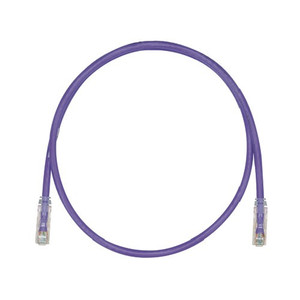
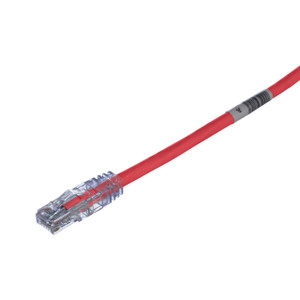
Panduit 15FT CAT6 GREEN P 28AWG UTP CU PATCH CORD CM/LSZH CABLE NC/NR - UTP28SP15GY
In stock · Ships same business day
Free shipping over $499
$29.62
$28.99
Save $0.63

Looking for more Panduit products? Shop the full Panduit catalog →
System Design, Deployment & Technical Support
Support services and planning resources for commercial surveillance, access control, and infrastructure deployments.
Fixed scope • Fixed price
System Design Assistance
- Get help validating product compatibility
- Coverage requirements
- Storage planning and deployment architecture before you buy.
Deployment & Configuration Support
- Access fixed-scope support for rollout planning
- User setup guidance
- Migration and system standardization across single-site or multi-site deployments
Guides, Tools & Calculators
- PoE requirements
- Storage retention
- Camera selection and deployment methodology