Axis 02209-021 90W PoE++ Midspan 10-Pack
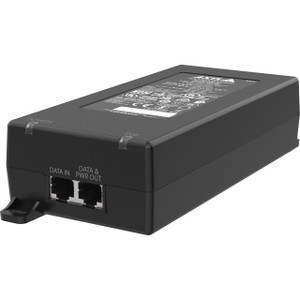
The Axis 02209-021 is a 10-pack of PoE++ midspans designed for network infrastructure deployments requiring 802.3bt power injection. Each unit delivers 90W of power per port, enabling integration of high-draw IP cameras, thermal sensors, pan-tilt-zoom heads, and industrial IoT devices into existing switch infrastructure without requiring end-to-end 802.3bt cabling replacement. Wall-mounted form factor and compact dimensions (7.44" × 3.15" × 1.73") fit into cabinet gaps and network closets with minimal footprint impact.
Key Features
- PoE++ (802.3bt) Compliance: Delivers full 90W per port per 802.3bt standard. Backwards compatible with 802.3af and 802.3at powered devices; legacy PoE equipment draws only what it needs.
- Power Output: 90W per unit maximum — adequate for dual-heater thermal cameras, PTZ drives with IR boost, and multi-sensor array nodes. Paired with a 10-pack, covers distributed injection across large facility networks.
- Wall-Mount Installation: DIN-rail or wall-mounted configurations allow flexible placement in network closets, equipment racks, or building entry points. No floor space required.
- Compact Footprint: 7.44" W × 3.15" H × 1.73" D form factor fits alongside existing switch and patch panel infrastructure. Minimal cabling rework needed.
- AC/DC Power Input: Accepts both AC mains and DC backup power sources, enabling continued operation during UPS failover or in environments with DC-only supply rails.
- Legacy-to-Modern Bridge: Deploy 802.3bt endpoints without forcing switch upgrades across the entire network. Inject power at strategic points (rack top, closet entry) rather than upgrading every access switch.
- 10-Pack Economics: Bulk configuration reduces per-unit cost and standardizes midspan architecture across multi-building campuses or large facility rollouts.
- Axis Warranty: 3-year manufacturer warranty covers hardware defects and design flaws; see axis.com/warranty for terms and regional RMA process.
PoE++ midspans serve two primary roles in IP video and IoT deployments: they act as power extenders (injecting 90W into runs where the switch upstream is 802.3af/at limited), and they provide backwards-compatible injection for new 802.3bt devices plugged into legacy cabling. The 10-pack format suits integrators managing large multi-camera projects, campus-wide sensor networks, or recurring maintenance stock. Each unit is a single-port injector, so a 10-pack provides 10 injection points across your network topology.
Deployment footprint is critical: many facilities have aging access switches (802.3af, delivering max 15W) that cannot be replaced wholesale without project delay or capex friction. Mounting midspans near high-draw camera racks or thermal sensor clusters allows you to inject 802.3bt power without replacing the upstream switch. AC/DC dual-input design means the midspan can draw from wall outlet or from a DC backup rail, ensuring camera heaters and thermal cores stay powered during mains failure if your facility has distributed DC UPS systems.
Integration with NVR and VMS platforms is transparent — the midspan is transparent to ONVIF, RTSP, and HTTP traffic, performing only power injection at Layer 1 (the physical copper pair). No firmware, no configuration; plug powered devices downstream and they draw 90W as needed. Pair the 10-pack with Axis IP video endpoints, Hanwha thermal imagers, Hikvision PTZ heads, or third-party 802.3bt equipment. Bitrate, protocol, and codec negotiate normally; the midspan simply supplies the wattage.
Total cost of ownership favors midspan injection on large networks: instead of funding a $3K–$8K switch refresh in year one, deploy midspans at $150–$300 per unit (in 10-packs) at the points of highest demand. Over a 5-year lifecycle, the capex difference is substantial, and operational simplicity remains unchanged. 3-year Axis warranty provides standard RMA coverage; out-of-warranty midspans are low-cost replacements if a port fails.
Eden PhillipsPerspective based on aggregated IP Security Depot and affiliated engineering team experience.
We've deployed thousands of PoE midspans across retrofit and new-build projects, and the 02209-021 10-pack is a workhorse for facilities stuck between legacy switch infrastructure and next-generation camera endpoints. The real value here isn't the midspan itself — it's the escape hatch it provides when you're asked to add a 90W thermal camera or a PTZ dome with 60W heater to a closet fed by aging 802.3af switches. Instead of greenfielding a $50K switch replacement, you inject a $300 midspan and move on. On a 200-camera campus retrofit, that's a seven-figure capex deferral. The dual AC/DC input design is a thoughtful engineering choice we've seen pay dividends in facilities with distributed DC UPS (data centers, telecom shelters) where the wall outlet isn't always the most reliable power source — you can tie the DC input to a 48VDC backup rail and ensure camera heaters stay live during brown-out conditions. Single-port-per-unit architecture means you're buying exactly as many midspans as you have high-draw endpoints needing injection; no overprovisioning, no unused channels. Installation footprint is the other win: compact wall-mount form factor means the midspan sits above the patch panel in a standard 19" rack, or mounts to a wall stud in a closet, without requiring dedicated shelf or rail space. We've seen integrators fit them into spaces where a full 802.3bt switch upgrade simply wouldn't fit architecturally.
Technical Highlights:
- 90W Power Budget per Port: Full 802.3bt Type 4 wattage (90W at PSE, up to 95W at PD under ideal cable conditions). High-draw endpoints like dual-heater thermal cores, PTZ motors with IR LED arrays, and multi-sensor fusion nodes operate at full spec without voltage droop. Pair with 24-gauge CAT6A or better to minimize I²R losses across cable runs beyond 100m.
- 802.3bt/af/at Backwards Compatibility: Device detection and power negotiation are automatic; a legacy 15W PoE camera draws 15W, a 90W thermal sensor draws 90W. No negotiation protocol overhead or firmware quirks — power delivery is determined by the powered device's power signature and the cable's ability to deliver current.
- AC and DC Input Redundancy: Two power input options (AC mains jack + DC terminal block) mean you can tie this to wall power and backup DC simultaneously. Useful in UPS-backed facilities where the DC rail stays live during mains failure. Many integrators tie the DC input to a 48VDC distribution shelf for unattended camera sites.
- Single-Port Injection Design: Each midspan injects one port. A 10-pack = 10 injection points. This modular approach lets you scale adoption without overbuying; add midspans only where needed rather than replacing entire switch racks.
- Transparent to Network Protocols: The midspan operates at Layer 1 (physical power delivery). All IP traffic, VMS connectivity, and codec negotiation happen normally downstream. No firmware updates, no management console, no integration overhead.
Deployment Considerations:
- Single-port design requires one midspan per high-draw device. If you have 50 cameras needing 802.3bt injection, budget 50 midspans (five 10-packs). Plan ahead on larger retrofits to avoid second-order procurement delays.
- AC/DC dual input is powerful but requires deliberate wiring. AC input is straightforward (plug into wall outlet); DC input needs terminal-block crimping and tie-in to a 48VDC distribution shelf. Clarify power routing with electrical contractor before installation.
- Placement matters for voltage drop: inject power as close as possible to the high-draw endpoint. Long cable runs (>100m) between midspan and camera introduce I²R loss. On runs exceeding 100m, use heavier gauge cable (22 AWG or better) or inject power at intermediate points.
- Stock these for recurring maintenance: PoE midspans have no moving parts and extremely low failure rates, but keeping a spare 10-pack on hand ensures quick swap if a port fails. Cost per unit is low enough to justify bench stock.
- Monitor power draw on the upstream non-PoE++ switch: if your access switch is 802.3af and you're injecting 90W via midspan, confirm the uplink and PSU can handle aggregate power across all midspans in the rack. A 10-pack under full load = 900W; ensure the UPS and mains capacity are specified correctly.
Right-fit buyer: integrators managing large retrofit projects, multi-building campuses with mixed-generation infrastructure, or facilities reluctant to replace working 802.3af switches. If you're designing a facility from scratch, deploy 802.3bt switches end-to-end instead. But if you're adding high-draw cameras to an existing legacy network, the 02209-021 10-pack is the most cost-effective bridge to 90W endpoints. See our Axis catalog for additional power injection and PoE infrastructure products.