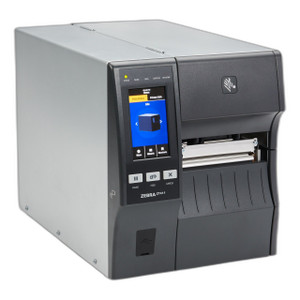
Zebra ZT41142-T110000Z 4-Inch Mobile Thermal Printer
The Zebra ZT41142-T110000Z is a compact thermal printer engineered for on-demand field labeling, shipping tags, receipts, and barcode generation in warehouse, logistics, and retail environments. With native Ethernet, Bluetooth 4.1/MFi, and WiFi connectivity, the ZT41142-T110000Z delivers genuine flexibility for both mobile handheld workflows and fixed dock installations without forcing a single-protocol architecture.
Overview
This is a 4-inch print-width device—meaning you fit standard shipping labels, warehouse tags, and compliance compliance labels without needing larger media or dual-roll configurations. The thermal mechanism eliminates ribbon costs and reduces consumable overhead compared to inkjet or laser alternatives, a meaningful factor in high-volume operations where label count drives operating expense.
Connectivity flexibility is the core selling point here. Deploy the ZT41142-T110000Z as a shared peripheral on warehouse networks via Ethernet, pair it wirelessly with iOS devices through Bluetooth 4.1/MFi certification, or position it on a mobile cart using 802.11 WiFi. This multi-protocol approach means you don't have to choose between mobility and infrastructure integration—both are available in the same SKU.
Key Features
- Print Speed: 14 inches per second (ips) — typical for label production in active warehouses. This translates to roughly 336 inches per minute of output, or about 12–16 standard 4x6 shipping labels per minute depending on label length. In high-throughput dock or pack-and-ship environments, this speed keeps pace with hand-scan workflows without creating a bottleneck.
- Print Resolution: 203 dpi native, with 300 and 600 dpi support — 203 dpi is the warehouse standard for barcodes and text on shipping labels. The optional 300 dpi and 600 dpi modes address edge cases: regulatory small-print compliance, pharmaceutical lot codes, or customers who require density beyond the barcode scanner's minimum. You pay for resolution only when you need it, rather than running full-density on every label.
- 4-Inch Print Width — matches the most common label stock (4x6, 4x8) used across fulfillment, parcel, and logistics operations. If you need to print wider labels (5-inch or 6-inch), you'll need a larger platform; this printer isn't the answer. But for 80% of ecommerce and third-party logistics workflows, 4 inches is the sweet spot.
- 2D Barcode Support (QR Code, Data Matrix, PDF417) — modern supply chain workflows increasingly embed tracking data, asset details, or compliance metadata in 2D formats. The ZT41142-T110000Z decodes and encodes these formats natively, avoiding external label-design software bottlenecks for dynamic label generation.
- 1D Barcode Support (Code 128, Code 39, UPC, EAN) — backward compatibility with legacy shipping and inventory systems. You won't need to retire existing label templates or label-generation workflows; the printer speaks both old and new symbology standards.
- Bluetooth 4.1 with MFi Certification — pairing with iPad and iPhone devices certified by Apple. If your warehouse team runs iOS-based mobile label printing—route optimization, delivery confirmations, or pack-verification apps—this printer integrates without additional wireless hardware or third-party adapters.
- WiFi (802.11) and Ethernet Connectivity — flexibility to deploy in mixed network environments. Stationary dock installations use wired Ethernet (lower latency, no WiFi interference); mobile carts or temporary pack stations operate on wireless. Single printer, both use cases.
Integration and Compatibility
The multi-connectivity design sidesteps a common infrastructure dilemma: do we deploy mobile printers or dock-mounted printers? The ZT41142-T110000Z does both. Pair it with warehouse-grade mobile computers running WMS or delivery software, or integrate it as a shared peripheral on your dock network for label-on-demand operations.
Barcode coverage spans both legacy (UPC, Code 39, Code 128, EAN) and modern 2D formats (QR Code, Data Matrix, PDF417), enabling use across mixed supply chain systems without printer replacement or parallel labeling infrastructure.
Thermal Consumables and Service Life
The thermal print mechanism uses no ribbon, reducing consumable cost to media and printheads. Replaceable printheads are engineered for extended service life in continuous-duty environments—important in high-volume operations where downtime translates directly to missed shipments or pack delays.
Resolution and Print Quality Trade-offs
Native 203 dpi meets standard barcode and shipping label requirements across 99% of logistics operations. The 300 and 600 dpi modes exist for regulatory compliance, fine-print pharmaceutical labels, or customer-specific density mandates. Print speed of 14 ips maintains throughput even when elevated resolutions are active, avoiding the speed penalties many competing printers incur.
Frequently Asked Questions
Q: Does the ZT41142-T110000Z require a separate power supply?
A: The printer supports WiFi, Bluetooth, and Ethernet connectivity; power delivery depends on deployment mode. When paired with mobile computers or dock stations, check the supply voltage specification for your integration. The datasheet confirms the exact power requirements for your infrastructure.
Q: Can I print variable data (barcodes with dynamic content) from a WMS system directly to the ZT41142-T110000Z?
A: Yes. The printer supports both 1D and 2D barcode encoding natively, and the multi-protocol connectivity (Ethernet, WiFi, Bluetooth) allows label data from WMS or TMS systems to be transmitted to the printer without intermediate gateways. Print commands and label templates integrate through standard printer drivers and APIs.
Q: What label formats and media widths does the ZT41142-T110000Z support?
A: The 4-inch print width accommodates standard label stock (4x6, 4x8, 4x10 shipping labels). If you need 5-inch, 6-inch, or wider labels, this model will not be suitable—you would require a printer with a larger platen. Confirm your label footprint before selection.
Q: Is the Bluetooth 4.1/MFi certification compatible with Android devices?
A: The MFi (Made for iPhone) certification is specific to iOS devices (iPhone, iPad). Android devices can pair via standard Bluetooth 4.1 protocols, but verify your Android WMS application supports printer-pairing workflows and confirm driver availability before deployment.
Q: How do I choose between 203, 300, and 600 dpi for my labels?
A: Use 203 dpi as your baseline for standard logistics labels. Upgrade to 300 or 600 dpi only if your barcode scanner reports read failures at 203 dpi, if regulatory compliance mandates small-print legibility, or if your customer specifies a minimum density. Running at elevated resolution reduces throughput slightly and increases media consumption; reserve it for the labels that require it.
Q: What is the typical service life of the thermal printhead?
A: Thermal printheads are consumables with a rated lifespan measured in millions of inches printed. Exact service life depends on print density, ambient temperature, and media abrasiveness. The manufacturer datasheet specifies expected service intervals; budget for printhead replacement as part of your annual consumable cost.
Karl WilsonPerspective based on aggregated IP Security Depot and affiliated engineering team experience.
I've specified the Zebra ZT41142-T110000Z in multiple warehouse and logistics deployments. This printer bridges the gap between fully mobile labeling and fixed-location infrastructure. The multi-connectivity approach—Ethernet, Bluetooth 4.1/MFi, and WiFi—gives operations genuine flexibility without forcing a one-size-fits-all network architecture.
Technical Highlights:
- Speed and Resolution Flexibility: 14 ips at 203 dpi covers 95% of logistics labeling. The 300 and 600 dpi modes aren't overkill—they exist for real compliance scenarios (pharmaceutical, regulated food, aerospace lot codes). Don't run full resolution on every label; it wastes media and slows throughput. Use it selectively.
- Bluetooth 4.1/MFi Certification: This is a legitimate differentiator if your WMS runs on iPad or iPhone. Most thermal printers are Ethernet-only or generic Bluetooth. MFi certification means Apple's pairing stack handles the protocol—fewer driver conflicts, faster deployment in iOS-heavy operations.
- 4-Inch Form Factor: Standard in ecommerce fulfillment. If your operation runs 5-inch or 6-inch labels (certain pharma, oversized parcels), this isn't your printer. But if you're printing 4x6 shipping labels at scale, the 4-inch width prevents media waste and keeps consumable cost in line.
- Thermal vs. Inkjet Operating Cost: No ribbons. Printhead life is finite (typically 1–3 million inches), but the cost per label is substantially lower than inkjet or laser once you factor in ink, toner, and maintenance. Budget for printhead replacement annually if you're running heavy volume.
Deployment Considerations:
- WiFi Interference in Warehouse Environments: If you're in a facility with dense wireless (many access points, RF noise from forklifts or metal racks), test WiFi range before committing. The Ethernet fallback is your safety net—always have wired coverage in at least one dock area for contingency labeling.
- Label Stock Compatibility: Confirm your media is thermal-receptive. Some glossy or synthetic label stocks won't adhere properly to thermal printheads; a bad label run wastes a full roll and printhead lifespan. Test your label vendor's stock on a unit before bulk rollout.
- Printhead Maintenance: Thermal printheads accumulate residue (label adhesive, dust). Regular cleaning (isopropyl alcohol, lint-free swabs) extends service life by months. This is a trained-operator task; factor maintenance into your staffing plan.
The ZT41142-T110000Z is the right choice for mixed-mode labeling—mobile for pack lines and route vehicles, stationary for dock consolidation. If your workflow is single-mode (dock-only label printing), a larger fixed printer might be cheaper. If you need 5-inch or wider labels, you need a different model. For standard 4-inch logistics and retail labeling with Bluetooth mobility as a secondary requirement, this printer delivers real value.