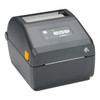
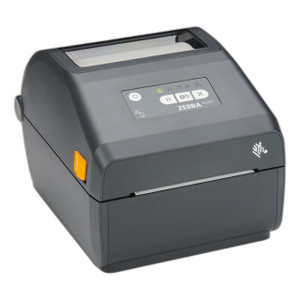
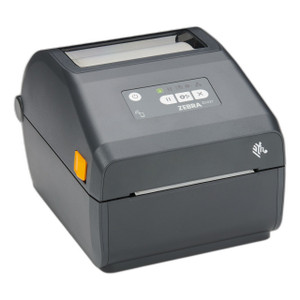
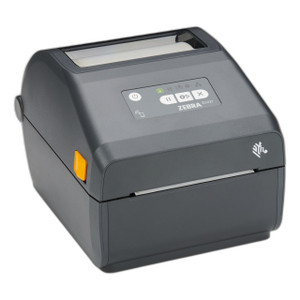
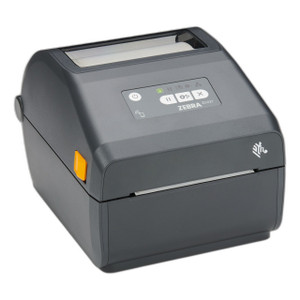
Zebra ZD4A022-D01X01EZ Direct Thermal Mobile Printer
Overview
The Zebra ZD4A022-D01X01EZ (often searched as ZD4A022 D01X01EZ) consolidates label printing and barcode capture into a single portable device designed for warehouse, receiving, and logistics workflows. With 203 dpi direct thermal output and an integrated 2D imaging engine, this unit eliminates the need to carry separate printer and scanner hardware—a meaningful reduction in field complexity and per-operator weight burden during eight-hour shifts on the dock or in picking areas.
Key Features
- 203 DPI Direct Thermal Printing: Direct thermal technology requires no ink cartridges or ribbons, so consumable costs drop significantly compared to thermal transfer or inkjet alternatives. In high-volume label environments—inbound receiving, put-away, cycle count, and shipping verification—ribbon changes are eliminated, reducing unplanned downtime and field maintenance calls.
- Integrated 2D Barcode Scanning: The built-in imaging engine captures QR Code, Data Matrix, PDF417, Code 128, Code 39, UPC, and EAN symbologies without requiring a separate handheld scanner. This consolidation reduces training overhead, lowers hardware inventory costs, and simplifies operator workflows in dynamic warehouse zones.
- Wi-Fi 802.11 Connectivity: Wireless connection to enterprise WMS platforms removes cable tether friction during mobile picking, packing, and verification operations. Real-time data synchronization ensures operators receive updated print commands and scan confirmations instantly, reducing query cycles and cycle-count reconciliation delays.
- 2750mAh Battery Capacity: Supports full eight-hour shift operations with integrated printing and scanning without mid-shift recharge. Battery duration is a practical constraint—verify specific duty cycle (label volume per hour) against your facility's workflow before deployment to confirm no auxiliary charging is needed during operational hours.
- Multi-Symbology Support: Recognizes both 1D linear codes (Code 128, Code 39, UPC, EAN) and 2D matrix codes (QR, Data Matrix, PDF417), enabling compatibility with incoming partner packaging, legacy internal labeling standards, and future 2D migration initiatives without hardware replacement.
- Portable Form Factor: Engineered for mobile use in high-traffic warehouse zones, conveyor systems, and dock environments where cable management and separate devices introduce operational friction.
Integration and Compatibility
The ZD4A022-D01X01EZ integrates with standard warehouse management systems via Wi-Fi, transmitting scan data and receiving print jobs without USB or serial tethering. The integrated 2D imaging engine reduces SKU mismatches by capturing higher-density barcode formats found on modern inbound packaging. Direct thermal technology eliminates ribbon inventory management—a modest operational gain in continuous-operation environments, but a genuine cost reduction when calculated across monthly consumables and support labor.
Deployment is most effective in facilities running barcode-driven workflows: receiving check-in, putaway verification, cycle count, and shipping label generation. If your operation still relies primarily on manual zone verification or paper-based cycle counts, the printer-scanner consolidation provides less value; reserve this unit for environments where mobility and label availability are critical operational requirements. The ZD4A022 (part of the broader mobile printer category) fits best into facilities with mature WMS integration and operator familiarity with handheld devices.
Frequently Asked Questions
Q: What barcode formats does the ZD4A022-D01X01EZ scanning engine recognize?
A: The integrated 2D imaging engine captures QR Code, Data Matrix, PDF417, Code 128, Code 39, UPC, and EAN symbologies. This breadth supports both legacy 1D barcodes on older packaging and modern 2D labels on current inbound materials.
Q: Does the ZD4A022-D01X01EZ require consumable ribbons or ink?
A: No. Direct thermal technology prints without ribbons or ink cartridges. This eliminates consumable procurement cycles and reduces field maintenance overhead, lowering total cost of ownership in high-volume label environments.
Q: How long does the 2750mAh battery last during a typical shift?
A: The battery supports full-shift operations (8+ hours) without mid-shift recharge, provided label volume and scanning frequency remain consistent with light-to-moderate duty cycles. Verify your specific label-per-hour volume with the manufacturer before deployment if throughput exceeds 50 labels per hour sustained.
Q: Is the ZD4A022-D01X01EZ compatible with our WMS platform?
A: The device connects via standard Wi-Fi 802.11 to enterprise systems supporting wireless barcode data transmission. Confirm your WMS vendor's integration support for the ZD4A022 model and wireless data protocol before purchase to avoid integration delays.
Q: Can the ZD4A022-D01X01EZ print variable-data labels for shipping and compliance?
A: Yes. The 203 dpi direct thermal output produces shipping labels, inventory labels, and compliance stickers at standard warehouse resolution. Label format and variable data are controlled by your WMS commands transmitted via Wi-Fi.
Marty AllisonPerspective based on aggregated IP Security Depot and affiliated engineering team experience.
During deployment planning for a mid-sized fulfillment operation, I evaluated the Zebra ZD4A022-D01X01EZ as a mobile label generation and verification solution. The combination of direct thermal output and integrated 2D scanning significantly reduces the hardware footprint compared to separate printer and scanner deployments—operators carry one device instead of two, which matters more than it sounds when throughput and mobility are competing demands.
Technical Highlights:
- Dual Function (203 dpi printing + 2D scanning): The integrated scan engine eliminates the need for operators to carry separate scanning devices, reducing training overhead and hardware inventory. QR Code, Data Matrix, PDF417, Code 128, Code 39, UPC, and EAN support means compatibility with incoming partner packaging and internal labeling standards without additional scanner hardware.
- Wi-Fi Architecture: Wireless connectivity removes cable management complexity in mobile picking and packing operations; battery capacity supports 8+ hour shifts without mid-day recharge, a genuine operational gain in continuous-operation environments.
- Direct Thermal Efficiency: No consumable ribbons means fewer field service calls and lower total cost of ownership in high-volume label environments. Over a year, this delta is meaningful—ribbon costs and changeover labor add up in facilities printing hundreds of labels daily.
- Symbology Breadth: Support for QR Code, Data Matrix, PDF417, Code 128, Code 39, UPC, and EAN ensures compatibility with incoming partner packaging and internal labeling standards, reducing integration friction during system migrations or partner onboarding.
Deployment Considerations:
- Battery Runtime Under Load: The 2750mAh battery supports full-shift operations, but verify label throughput (labels per hour) with your WMS before deployment. If sustained label volume exceeds 50+ per hour, confirm battery endurance against your actual duty cycle to avoid mid-shift recharge requirements.
- WMS Integration Required: The ZD4A022-D01X01EZ is not a standalone device. It requires an active WMS connection via Wi-Fi to function effectively. Ensure your WMS vendor has validated integration with this model and that your facility wireless infrastructure covers dock, receiving, and picking zones with adequate signal strength (minimum -67 dBm RSSI).
- Print Quality at Scale: 203 dpi is standard for warehouse labels but not suitable for high-resolution graphics or small fonts. If compliance labels require microprint or dense graphical content, consider a higher-resolution variant in the Zebra Zebra printer catalog.
Best-fit scenarios: Receiving and put-away verification in mid-to-large fulfillment centers, cycle count operations in multi-zone warehouses, and shipping label generation in dock environments where mobility and consumable cost reduction are primary drivers. Less ideal for facilities relying on paper-based workflows or warehouses without mature WMS infrastructure.