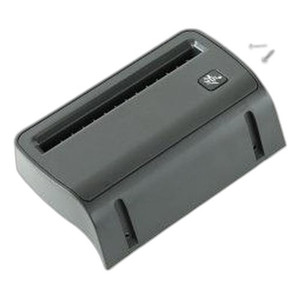
Zebra P1080383-442 Ethernet Module Upgrade Kit
The Zebra P1080383-442 is a dedicated Ethernet module upgrade kit engineered to add wired network connectivity to Zebra desktop thermal printers. This kit addresses a specific integration need: deploying deterministic, hardwired print infrastructure in environments where wireless connectivity is unreliable, network-restricted, or already oversubscribed.
Overview
Built for the ZD410 and ZD420 series thermal printers (ZD420C, ZD420D, and ZD420T models), the P1080383-442 enables direct Ethernet connectivity to corporate LANs, print servers, and warehouse management systems. The module is purpose-built for logistics operations, retail point-of-sale environments, and distributed manufacturing sites where stable, wired network infrastructure is mandated or preferred over wireless protocols. Unlike aftermarket adapters, this module integrates mechanically and electrically with Zebra's ZD series architecture—no external adapters, no firmware patches, no driver installation required.
Key Features
- 10/100 Mbps Ethernet Interface: Provides deterministic network throughput suitable for high-volume label and receipt printing. In print-intensive operations (shipping labels, compliance tags), wired Ethernet eliminates the wireless retry overhead that degrades print queue performance on RF-congested networks.
- Compatible Printer Models: Designed specifically for ZD410, ZD420C, ZD420D, and ZD420T—mechanical fit and electrical integration are verified. This eliminates the risk of incompatibility issues that arise when retrofitting third-party Ethernet adapters to unsupported printer generations.
- Drop-In Installation: No firmware updates, no software configuration, no complex setup. The printer recognizes the module upon connection. Installation is a simple module swap—downtime measured in minutes, not hours.
- Internal Power Integration: The module draws power from the printer's internal power architecture. No separate power supply, no additional wall outlets required. This reduces cable clutter and eliminates a potential failure point in high-volume environments.
- Compact Design: Minimal physical footprint preserves the printer's form factor. Workspace-efficient—critical in tight warehouse and retail locations where desktop real estate is constrained.
- Enterprise Network Integration: Connects directly to standard corporate LAN infrastructure. Compatible with SNMP monitoring, print queue management, and centralized device administration platforms commonly deployed in enterprise environments. Supports standard Ethernet protocols without proprietary gateways or cloud dependencies.
- Production-Ready: Handles high-volume thermal label and receipt printing workflows across supply chain, logistics, and point-of-sale environments. Designed for continuous duty—not a consumer-grade addition.
Integration & Compatibility
The P1080383-442 integrates seamlessly with Zebra's ZD series printer architecture. Network configuration follows standard Ethernet protocols, allowing it to work with existing SNMP monitoring tools, print queue management, and centralized device administration platforms used in enterprise environments.
This upgrade kit is compatible exclusively with ZD410 and ZD420 series printers. Earlier ZD series generations and competing thermal printer brands are not supported. Verify your printer model designation before ordering to avoid installation delays.
Integrators deploying in mixed wireless/wired environments can use the P1080383-442 alongside existing Bluetooth or serial connectivity options, depending on network architecture requirements and application-specific redundancy needs.
Deployment Scenario
This module is ideal when: your facility has stable wired Ethernet infrastructure already in place; wireless networks are RF-congested or prohibited by policy; you need guaranteed print queue throughput in high-volume label printing; or you're consolidating multiple printers on a corporate print server. It is not a substitute for mobile or portable printing—the printer remains a fixed desktop device.
What's in the Box
The upgrade kit includes the Ethernet module assembly and installation documentation. No additional networking cables, brackets, or external power supplies are required—the module integrates directly with the printer's power and mechanical interface.
Frequently Asked Questions
Q: Will the P1080383-442 work with older ZD series printers, like the ZD200 or ZD300?
A: No. The P1080383-442 is designed exclusively for ZD410 and ZD420 series printers. Mechanical and electrical compatibility is not guaranteed with earlier generations. Verify your printer model before ordering.
Q: Do I need to update printer firmware to install this module?
A: No. The P1080383-442 requires no firmware patches or driver installation. The printer recognizes the module immediately upon connection. Installation is a straightforward module swap.
Q: Can I use the P1080383-442 if my printer already has Bluetooth or serial connectivity?
A: Yes. The Ethernet module integrates alongside existing wireless or serial connectivity options. Your network architecture determines which interface you use for each print job.
Q: What network speed should I expect from the 10/100 Mbps interface?
A: The module supports both 10 Mbps (legacy networks) and 100 Mbps (standard corporate Ethernet). In practice, print queue throughput is bottlenecked by the printer's internal processor and motor speed, not the Ethernet link. The wired connection eliminates wireless retry overhead, improving print job consistency.
Q: Is a separate power supply required for the Ethernet module?
A: No. The module draws power from the printer's internal power architecture. No external power supply or additional wall outlets are needed.
Ted PerryPerspective based on aggregated IP Security Depot and affiliated engineering team experience.
I've deployed the Zebra P1080383-442 during several print infrastructure upgrades across logistics and retail networks. This upgrade kit solves a specific pain point: converting a wireless-capable or serial-only ZD420 into a hardwired, print-server-integrated device without printer replacement or firmware patching. The simplicity here is the real win—no downtime, no driver headaches, no configuration dialogs.
Technical Highlights:
- 10/100 Mbps Ethernet: Provides deterministic print queue performance in high-volume label printing. Wireless networks in busy warehouses suffer from retry overhead and RF interference—wired Ethernet eliminates both. In a facility printing 500+ labels per hour, the difference between wireless and wired is measurable: fewer print-server timeouts, more consistent job completion.
- Drop-In Design (No Firmware Updates): Unlike third-party Ethernet adapters that require serial configuration or driver installation, the P1080383-442 is recognized by the printer immediately. Installation is 5 minutes, not 30 minutes of troubleshooting.
- Internal Power Integration: Module draws power from the printer's existing supply—no additional 12VDC adapters, no tangled cable runs. One less failure point in high-utilization environments.
- ZD410 and ZD420 Specificity: This is not a universal retrofit. Mechanical fit and electrical integration are engineered for these specific models. Do not attempt installation on ZD200, ZD300, or other brands—incompatibility is the result.
Deployment Considerations:
- Model Verification is Non-Negotiable: Confirm your printer is ZD410, ZD420C, ZD420D, or ZD420T before ordering. Mixed printer fleets are common in growing operations—installing this module on a ZD300 or ZD500 will cause a DOA claim.
- Network Infrastructure Required: The module assumes you have wired Ethernet infrastructure and a print server or queue management system in place. If you're deploying this, you already have the network backbone. If you don't, wireless is still your path.
- Wireless Coexistence is Real: Many facilities want a fallback—keep Bluetooth enabled on the printer so mobile devices can still print if Ethernet is down. The P1080383-442 allows this without conflict.
This module is the right choice for enterprise warehouses, multi-site retail networks, and manufacturing facilities that have mature wired Ethernet infrastructure and need to remove wireless variability from label printing workflows. It is not a cost-saving retrofit—it's a reliability upgrade for environments where print queue determinism matters.