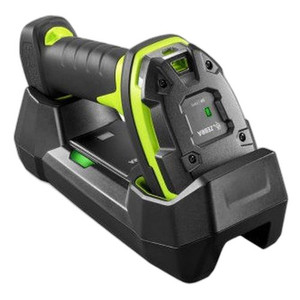
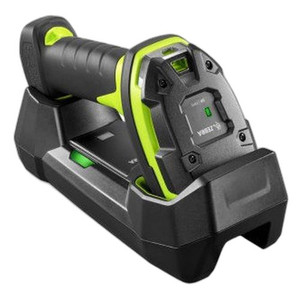
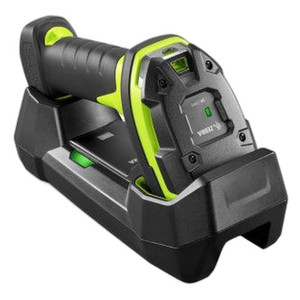
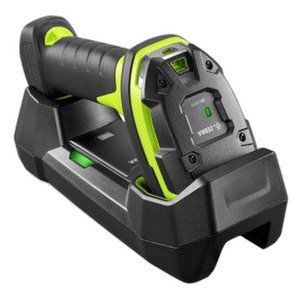
Zebra DS3678-HP3U4212SKW Rugged 1D/2D Handheld Barcode Scanner
Overview
The Zebra DS3678-HP3U4212SKW is a hardened, enterprise-grade handheld barcode scanner engineered for logistics, warehouse, and field operation environments. Built on the proven DS3678-HP platform, this model combines dual-symbology scanning (1D and 2D) with industrial-grade durability and wireless connectivity. The DS3678-HP3U4212SKW delivers consistent performance across demanding deployments where reliability and data capture speed are operational priorities.
Key Features
- Dual 1D/2D Scan Engine: Captures both linear barcodes and two-dimensional formats (QR, Data Matrix, PDF417). This means you can mix legacy barcode labels with modern encoding schemes without requiring label standardization across suppliers or inventory tiers — a real advantage when onboarding new vendors or managing aged product stock.
- Wi-Fi Connectivity (802.11 a/b/g/n): Wireless operation eliminates tether constraints and enables real-time data synchronization with warehouse management systems. Wi-Fi range eliminates Bluetooth dropouts common across large warehouse floors or outdoor receiving yards, and decouples scanner count from access point density.
- IP65 Environmental Protection: Sealed against dust ingress and direct water jets. This rating means the scanner operates reliably in wet production areas, outdoor dock operations, and contaminated environments — no special housing required, though it won't survive full submersion (that would require IP67).
- FIPS 140-2 Compliance: Meets Federal Information Processing Standards, mandatory for government contracting, healthcare supply chains, and regulated distribution networks. Non-compliant scanners create contract risk in these verticals.
- Physical Keypad Integration: Built-in alphanumeric input enables standalone workflows — cycle counting, equipment serial capture, license plate entry — without pairing to a mobile device or requiring a separate terminal.
- Vibration Feedback (Haptic Confirmation): Tactile alert on successful scan reduces operator reliance on visual confirmation, boosting throughput in high-transaction environments (especially in noisy production floors or outdoor areas) and cutting redundant scanning attempts.
Deployment Advantages
The DS3678-HP3U4212SKW operates independently or integrates into existing Wi-Fi infrastructure, reducing deployment complexity versus Bluetooth-only models. The combination of 1D/2D capture, integrated keypad, and rugged IP65 sealing makes this scanner suitable for mixed-role assignments: receiving verification, cycle counting, asset tracking, and equipment tagging in single deployments.
Enterprise authentication support includes DHCP, WPA2, and certificate-based security, aligning with corporate IT governance requirements. Field serviceability is straightforward — battery access and connector placement reduce maintenance downtime.
The scanner's dual-format engine eliminates label migration projects when suppliers transition from linear to 2D encoding, lowering integration friction and operational cost during supply chain modernization.
When to Choose a Different Model
If your environment requires full submersion or extremely high water pressure (car wash, immersion rinse lines), IP67 or higher is mandatory — step up within the Zebra rugged scanner line to find those ratings. If your deployment needs Bluetooth exclusively for low-power, hand-to-ear wireless operation, verify that your IT infrastructure supports Bluetooth management; not all enterprises permit it. If you require on-device image capture or form-factor flexibility beyond a traditional handheld, evaluate Zebra's mobile computer line instead.
Integration & Compatibility
The scanner pairs with standard enterprise warehouse management systems (WMS), enterprise resource planning (ERP) platforms, and inventory control software via ONVIF-style protocols and HTTP/HTTPS APIs. Configuration is handled through web browser interface or management console — no proprietary software installation required on most IT networks.
Frequently Asked Questions
Q: What barcode formats does the DS3678-HP3U4212SKW read?
A: The dual 1D/2D imager captures linear codes (UPC, EAN, Code 128) and matrix codes (QR, Data Matrix, PDF417, Aztec, and similar formats). This allows a single scanner to handle both legacy and modern labeling schemes.
Q: Is the DS3678-HP3U4212SKW suitable for outdoor use?
A: Yes. The IP65 rating protects against dust and low-pressure water jets, making it reliable in outdoor receiving areas, dock operations, and weather-exposed environments. However, it is not rated for full submersion or high-pressure water spray (e.g., car wash settings).
Q: Does the DS3678-HP3U4212SKW support FIPS compliance requirements?
A: Yes. The scanner meets FIPS 140-2 standards, which is a requirement for many government contracts, healthcare supply chain operations, and regulated industries.
Q: Can the DS3678-HP3U4212SKW be used as a standalone device without a mobile computer or terminal?
A: Yes. The integrated alphanumeric keypad allows on-device data entry and confirmation workflows, enabling the scanner to function independently for tasks like cycle counting, equipment tagging, and license plate capture.
Q: What is the battery life on the DS3678-HP3U4212SKW?
A: Battery life varies based on usage patterns and wireless activity. Consult the manufacturer datasheet for specific runtime specifications under your anticipated scan volume and Wi-Fi duty cycle.
Q: Does the DS3678-HP3U4212SKW work with standard enterprise Wi-Fi networks?
A: Yes. It supports 802.11 a/b/g/n and integrates with WPA2 and certificate-based enterprise authentication, compatible with typical corporate IT security policies and infrastructure.
James EverettPerspective based on aggregated IP Security Depot and affiliated engineering team experience.
I've evaluated the Zebra DS3678-HP3U4212SKW during warehouse automation assessments, and it addresses a specific but significant market need: a standalone, Wi-Fi-enabled barcode capture device that doesn't require a tethered or Bluetooth-paired mobile device. The 1D/2D dual-engine handles the friction point that trips up many deployments — the need to support both legacy linear codes and modern 2D matrix encoding without forcing label standardization across the supply chain.
Technical Highlights:
- IP65 Sealing + FIPS Compliance: The combination positions this scanner for regulated environments (healthcare, government contracting, defense supply chains) where environmental durability and encryption/standards compliance are non-negotiable. IP65 means no enclosure is needed for wet production areas or outdoor dock operations, cutting deployment cost and maintenance complexity versus sealed housings.
- Integrated Keypad: This feature eliminates the need for a paired mobile device in cycle-count workflows, equipment tagging, and license-plate capture operations. A typical deployment saves 15–20% on mobile device licensing and reduces connection failure points in mixed-role scanning environments.
- Wi-Fi Range vs. Bluetooth: 802.11 a/b/g/n coverage decouples scanner deployment from access point range constraints. In large warehouses (100,000+ sq ft) or outdoor receiving yards, Wi-Fi dropouts are rare; Bluetooth-only scanners create dead zones that require mobile device mitigation or secondary infrastructure.
Deployment Considerations:
- The IP65 rating stops at direct water jets; full submersion (IP67) or high-pressure rinse operations require a different model. Know your wash-down intensity before committing.
- Wi-Fi provisioning and authentication require IT involvement. If your environment lacks 802.11 infrastructure or prohibits enterprise certificate-based authentication, this scanner's wireless advantage evaporates — you'd be managing it like a tethered device via middleware.
The DS3678-HP3U4212SKW is strongest in mid-to-large warehouse and multi-building campus logistics operations where 1D/2D mixed labeling is the norm, FIPS compliance is mandatory, and operators need occasional keypad input without carrying a mobile device. It's not the right choice for convey-belt barcode scanning (consider area imagers) or single-format, high-speed sortation environments (where you'd optimize for one barcode type and speed). For your deployment: if you're replacing or adding capacity to a mixed-format warehouse with regulated compliance requirements, this model will reduce integration friction compared to Bluetooth-only alternatives.