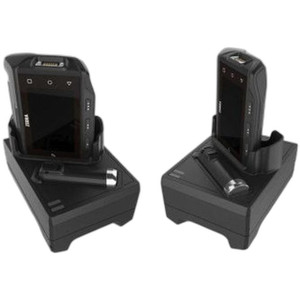
Zebra CRD-NGTC5N-5SE5D 5-Slot Ethernet Cradle
Overview
The Zebra CRD-NGTC5N-5SE5D is a multi-device charging and communication cradle purpose-built for warehouse, logistics, and field service environments where you need to charge and synchronize data on multiple handheld computers simultaneously. The design enables efficient fleet management by allowing up to five TC series mobile computers to dock at once, each receiving power and Ethernet connectivity through a single dock solution. This matters in high-volume scanning operations where downtime between shifts compounds across a team — a fully charged fleet ready for the next shift reduces operational friction.
Key Features
- 5-Slot Capacity: Charge and communicate with five mobile computers in parallel. In a 50-person warehouse operation running two shifts, rotating devices through multiple cradles eliminates the single-cradle bottleneck and ensures consistent device readiness.
- Wired Ethernet Connectivity: Direct Ethernet connection (no Bluetooth) provides stable, low-latency data transfer for synchronizing transaction logs, inventory updates, and configuration changes to each device. Ethernet avoids radio interference issues common in dense RF environments like loading docks or metal-racked warehouses.
- Simultaneous Power & Data: Delivers power and Ethernet in one dock connection per slot. Eliminates the need for separate USB sync cables or power supplies per device, reducing cable clutter and failure points in a busy warehouse.
- TC Series Compatibility: Supports Zebra TC53(e), TC58(e), TC57, and TC57(e) handheld mobile computers. If your fleet mixes TC generations or includes both standard and enterprise variants (denoted by the (e) suffix), this cradle accommodates all of them in the same dock, simplifying spare-parts management and training.
- Industrial Construction: Black finish and durable design rated for warehouse and logistics environments. Handles the vibration, dust, and accidental impacts typical of fast-paced distribution centers without degrading performance or connection stability.
- Plug-and-Deploy Integration: Mounts securely and connects to your network infrastructure with standard Ethernet cabling. No special drivers or firmware required — devices recognize the cradle as a standard Ethernet dock, accelerating deployment in existing Zebra device fleets.
Integration & Compatibility
The CRD-NGTC5N-5SE5D (often searched as CRD NGTC5N 5SE5D) is designed as a drop-in cradle for existing Zebra mobile computer deployments. It integrates directly with your network without requiring a separate management layer. Each docked device connects via standard Ethernet, so existing NVR-based or enterprise management systems that monitor network-attached devices can track and provision the mobile computers during dock time. If you are standardizing on Zebra handhelds for scanning, picking, or receiving operations, this cradle scales charging and sync operations across multiple devices without adding complexity to your infrastructure.
When to Choose a Different Model
If your operation requires fewer than five simultaneous charging slots, consider single or dual-slot Ethernet cradles from the Zebra mobile computer accessory line — they occupy less desk or cart space and may better match your dock configuration. If you need wireless charging capability or Bluetooth sync instead of wired Ethernet, explore Zebra's wireless charging alternatives. For environments where devices must charge in the field (vehicle-mounted or outside the dock), select a vehicular charging cradle or battery swap kit instead.
What's in the Box
- 1x Zebra CRD-NGTC5N-5SE5D 5-Slot Ethernet Cradle
Frequently Asked Questions
Q: Does the CRD-NGTC5N-5SE5D require any special software or drivers?
A: No. The cradle is a hardware dock that delivers power and Ethernet to each TC device. Your TC mobile computer's operating system and enterprise management platform recognize it as a standard Ethernet connection and charging port. No additional drivers are required.
Q: Can I mix different TC series models in the same cradle?
A: Yes. The CRD-NGTC5N-5SE5D supports TC53, TC53e, TC57, TC57e, TC58, and TC58e models simultaneously. A single cradle can dock a mix of these devices, simplifying management during fleet transitions or when running multiple device generations.
Q: What is the data transfer speed on the Ethernet connection?
A: The cradle provides Ethernet connectivity to each docked device. Transfer speed depends on your network infrastructure and the TC mobile computer's Ethernet capability, but Ethernet connectivity ensures low-latency, reliable data sync compared to wireless alternatives.
Q: Does the cradle include power supplies or cables?
A: The package includes the cradle unit. You will need to provide standard Ethernet cabling and power appropriate to your facility's network and power infrastructure. Consult your Zebra sales engineer or IT team to ensure your network switch and power capacity can support five simultaneous charging cycles.
Q: Is the cradle suitable for outdoor or high-moisture environments?
A: The CRD-NGTC5N-5SE5D is designed for industrial warehouse and logistics environments. For outdoor or high-moisture dock areas, consult product documentation or your Zebra representative to confirm environmental rating and whether additional weatherproofing is needed.
Q: Can I mount the cradle on a wall or mobile cart?
A: The cradle is a tabletop dock unit. Mounting options (wall brackets, cart-mount plates) may be available as separate Zebra accessories. Contact your systems integrator or Zebra sales team to discuss custom mounting configurations for your deployment.
Ted PerryPerspective based on aggregated and affiliated engineering team experience.
The Zebra CRD-NGTC5N-5SE5D solves a specific fleet management pain point: in a 50+ device warehouse operation, a single cradle becomes a bottleneck during shift transitions. This five-slot Ethernet dock eliminates that constraint by allowing parallel charging and data synchronization, which is critical if your enterprise is running real-time inventory sync or configuration pushes to all TC devices during off-hours.
Technical Highlights:
- Wired Ethernet per Slot: Five independent Ethernet connections mean zero contention for bandwidth during simultaneous data transfers. If your warehouse processes 500+ transactions per shift and each device must sync a 50MB transaction log at shift end, Ethernet avoids the throughput ceiling you'd hit with wireless or USB sync.
- 5-in-1 Charging Architecture: Delivering power to five TC devices in parallel from a single cradle eliminates cable duplication and the cost of five individual power supplies. In a facility running two 12-hour shifts, you can rotate two five-slot cradles and keep devices cycling through charge-and-sync without idle time.
- TC Generation Flexibility: Supporting TC53, TC57, and TC58 variants (with or without enterprise features) in the same dock means your fleet can upgrade device models in phases without requiring different dock infrastructure. This matters for large deployments spread across multiple facilities.
Deployment Considerations:
- Ensure your network switch has adequate Ethernet ports and power capacity to support five simultaneous 100Mbps connections. A modest PoE switch is insufficient; dedicated trunk ports or a managed switch with port aggregation is the right approach for large fleets.
- Power budgeting: five TC devices charging simultaneously can draw 8–15A at 12VDC depending on device model and battery capacity. Verify that your facility's power infrastructure and the cradle's power input can handle this load without voltage sag or thermal stress on the power supply.
- Dock placement matters. Position the cradle in a secure, temperature-controlled area (ideally near your network closet or a central dock station). Avoid high-vibration areas where repeated charging cycles could degrade connector lifespan.
Deploy the CRD-NGTC5N-5SE5D if you are running a centralized device management model (all devices return to dock at shift end for charging and sync) in a warehouse, distribution center, or logistics hub with 25+ TC mobile computers. It is overkill for small operations with under 10 devices, and it won't help if your devices need to charge in the field — but for scale, it's a force multiplier that justifies its footprint.