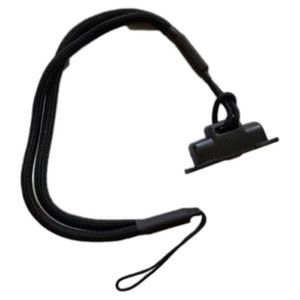
Zebra ADP-RFD90-TC5X-1E RFD90 Sled eConnex Adaptor
Overview
The Zebra ADP-RFD90-TC5X-1E is a sled adaptor engineered to couple the RFD90 radio frequency reader with Zebra TC52ax and TC57 mobile computers. This adaptor provides the mechanical and electrical interface that lets warehouse, logistics, and field service teams extend mobile scanning capabilities without replacing their existing TC-series handhelds. The eConnex connector standard ensures reliable power delivery and data communication during continuous scanning operations in demanding environments.
Key Features
- eConnex Mechanical Coupling: The proprietary eConnex connector provides a solid mechanical latch and electrical interface, eliminating the need for loose cables or external power adapters that create wear and failure points in high-motion warehouse workflows.
- RFD90 Reader Integration: Designed specifically for the RFD90 radio frequency reader, the ADP-RFD90-TC5X-1E delivers power and data pass-through from the TC-series handheld directly to the reader, so your scanning operations remain synchronized with your host device.
- TC52ax and TC57 Compatibility: Works exclusively with Zebra TC52ax and TC57 mobile computers — both rugged, Android-based platforms purpose-built for warehouse and field operations. Verify your model before ordering to avoid compatibility issues.
- WiFi Connectivity Support: The adaptor preserves WiFi connectivity from the paired mobile computer, allowing real-time data transmission and synchronization with warehouse management systems, inventory platforms, or field dispatch applications without requiring separate network configuration.
- Reduced Device Complexity: Rather than carrying separate readers and handhelds, operators use a single unified form factor — the sled couples the reader to the handheld, lowering the number of items to manage, charge, and troubleshoot in the field.
- Handheld Power Management: The adaptor draws power from the TC-series battery and routes it to the RFD90, so you don't need an additional power supply or charging dock specific to the reader — one charge cycle powers both components.
Integration & Compatibility
The ADP-RFD90-TC5X-1E (often searched as ADP RFD90 TC5X 1E) is a hardware-level integration point and is not compatible with TC52 or earlier TC-series models — only TC52ax and TC57 handhelds have the eConnex socket required for this adaptor. If you operate mixed fleets of mobile computers, confirm device models before deployment to avoid field issues. Integration with warehouse management software, RF data collection apps, and Zebra's MobiControl MDM platform is inherited from the TC-series handheld itself — the adaptor is transparent to application software.
For buyers evaluating mobile computers with integrated or modular RF capability, compare the combined weight and form factor of the ADP-RFD90-TC5X-1E sled solution against single-device alternatives if ergonomics or daily carry time is a concern.
When to Choose This Adaptor
Select the ADP-RFD90-TC5X-1E if you already own TC52ax or TC57 handhelds and need to add radio frequency scanning (RFID, UHF, or proprietary RF protocols supported by the RFD90) without upgrading or replacing the mobile computer itself. This is cost-effective for teams modernizing RF capabilities incrementally. If you don't yet own a TC-series handheld or require integrated RF on a single device from purchase, evaluate the TC52ax or TC57 with embedded RF modules instead, or consult a systems engineer about single-unit RF+mobile solutions.
Frequently Asked Questions
Q: Is the ADP-RFD90-TC5X-1E compatible with the original TC52 or TC57 models?
A: No. The adaptor is designed specifically for TC52ax and TC57 mobile computers with eConnex sockets. Older TC52 and non-ax variants lack the required mechanical interface and will not couple with this sled.
Q: Does the adaptor support data and power simultaneously?
A: Yes. The eConnex coupling delivers both power from the TC-series battery and data communication to the RFD90 reader through a single connection, eliminating the need for separate cables or external power supplies.
Q: Can I use the ADP-RFD90-TC5X-1E with WiFi and Bluetooth applications at the same time?
A: Yes. The adaptor preserves the WiFi connectivity of the paired TC-series handheld, and the RFD90 reader operates independently of the device's Bluetooth radio, so simultaneous wireless communication is supported.
Q: What's the typical battery impact of adding the RFD90 reader via this adaptor?
A: Battery life reduction depends on RFD90 duty cycle and power mode. The adaptor itself draws no independent power — it is purely a mechanical and electrical bridge. Consult RFD90 power consumption specs and your TC-series battery capacity to estimate runtime for your specific scanning frequency and RF protocol.
Q: Do I need special mounting hardware or brackets for this sled?
A: The adaptor itself integrates directly with TC52ax and TC57 via the eConnex socket. For vehicle, dock, or wall mounting of the assembled sled, refer to Zebra mount compatibility guides specific to your use case. Some integrators use third-party universal mounts rated for handheld form factors; verify weight and balance before purchasing.
Q: Is there a warranty on the ADP-RFD90-TC5X-1E?
A: Warranty terms vary by region and purchase channel. Contact the vendor or Zebra directly for warranty period and coverage details specific to your order.
Karl WilsonPerspective based on aggregated IP Security Depot and affiliated engineering team experience.
The Zebra ADP-RFD90-TC5X-1E solves a genuine integration problem: adding RF scanning capability to existing TC52ax or TC57 deployments without replacing the mobile computer. The eConnex mechanical and electrical standard is Zebra's answer to loose-cable fatigue and intermittent connections in high-motion warehouse environments. If your team is already running TC-series handhelds and the RFD90 reader becomes a requirement, this adaptor is purpose-built to couple them cleanly.
Technical Highlights:
- eConnex Socket Design: The mechanical latch is infinitely repeatable without wear — no spring-clip degradation or misalignment over thousands of dock or sort-line operations. Power and data flow through four dedicated pins, eliminating ground loop issues that plague multi-cable solutions.
- Single Power Source: Battery drain comes from the TC-series cell only. The adaptor is passive; it draws zero quiescent current. Runtime impact is purely the RFD90 reader's consumption — typically 200–500 mW depending on RF mode and duty cycle, reducing all-day runtime by 10–20% on a standard TC-series battery, which is acceptable for most shift-based warehouse operations.
- WiFi Passthrough: The adaptor does not intercept or degrade the TC-series WiFi radio. Scanning data and inventory updates flow simultaneously to your WMS over standard 802.11ac, with no bandwidth sharing or contention between the reader and the mobile OS.
Deployment Considerations:
- Model verification is non-negotiable. TC52, TC52a, and earlier TC57 variants lack eConnex sockets. Deploying this adaptor against incompatible handhelds results in zero mechanical fit and field support headaches. Audit your fleet before procurement.
- Physical weight and balance are real factors. Adding the RFD90 sled increases handheld heft by roughly 30–40%, which affects operator fatigue on 8–12 hour shift cycles. Trial fit is strongly recommended for high-motion roles like package sorting or inbound receiving.
- RF protocol support is reader-dependent, not adaptor-dependent. The ADP-RFD90-TC5X-1E is a transparent bridge. Confirm the RFD90 supports the RF protocols your operation requires (UHF, HF, proprietary band). Protocol switching is a reader-level configuration, not an adaptor feature.
Deploy the ADP-RFD90-TC5X-1E when you have a homogeneous fleet of TC52ax or TC57 handhelds already in the field and RF scanning is an add-on, not a day-one requirement. This avoids the cost and logistics of a forklift upgrade while bridging to RF-capable workflows incrementally. For new deployments or mixed handheld fleets, evaluate integrated RF+mobile solutions or consult a systems engineer to avoid adaptor proliferation across incompatible device families.